



Mastering Content Marketing in Manufacturing: Proven Strategies for B2B Growth
In today’s saturated media landscape, content arrives on every channel—smartphones, email, billboards, trade shows, social feeds, and even subtle product placements. When the line between consumer and content blurs, manufacturers must ask: what is content marketing, and how can it drive B2B results?
This guide distills the science behind data‑driven content and shows how manufacturers can leverage thoughtful, targeted assets to elevate brand awareness, nurture prospects, and accelerate purchase decisions.
Defining Content Marketing
Content marketing goes beyond assembling a library of assets. It is the precise, data‑guided delivery of material that aligns with buyer intent and follows the buyer’s journey—awareness, consideration, decision—through every touchpoint.
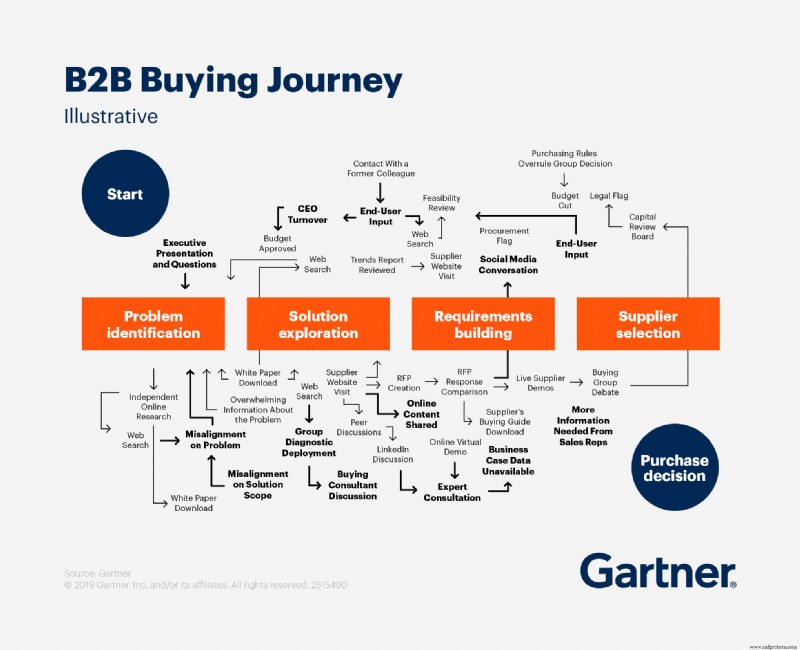
At its core, a manufacturer’s content strategy is simple: if a prospect performs action A, trigger asset 1. Yet, Gartner’s B2B buying journey chart reminds us that the process is intricate, involving multidisciplinary teams and extended sales cycles—often several months. An “always‑on” mindset is essential because 75% of B2B buyers prefer a rep‑free experience and conduct the bulk of their research online.
So, It’s Complex. Where to Begin?
Success starts with a deep understanding of your customer. Personal relationships still matter in manufacturing, but they are not scalable and can evaporate when personnel change. Data‑driven insights allow you to place content where prospects naturally congregate, inviting them to your owned properties.
Surveys
Surveys conducted by a third‑party provider can reach beyond your existing CRM, gathering demographics and behavioral data from your ideal customer profile. These insights enable precise audience segmentation and role‑specific content.
Assessments
Expert reviews of your assets—from downloadable PDFs to email templates—benchmark against competitors, best practices, and your strategic goals. Focus on alignment with both short‑term objectives and long‑term vision.
Analytics Tools
Tools like Google Analytics reveal where traffic originates and how users interact with your content. Use this data to refine future placements and content formats.
Conversations
Qualitative research—focus groups, one‑on‑one interviews—uncovers the motivations behind buyer behavior. Engage employees, prospects, customers, and even detractors to surface pain points and unmet needs.
Market Intelligence
Industry reports and government data help you assess your competitive position, identify portfolio gaps, and spot emerging opportunities. Independent analysts offer unbiased trend analysis and strategic insights.
Developing Customer Personas
With research in hand, craft detailed personas that map roles, challenges, motivations, and information channels. Personas keep your content focused on how your product solves real problems.
- Avoid assumptions – Let data drive the narrative, then apply manufacturing expertise to deepen insights.
- Don’t overgeneralize – Provide enough context to inform content, timing, and placement without creating a dissertation.
- Balance demographics and psychographics – Combine job titles, age, and location with pain points, values, and preferences.
- Honor the decision‑making team – Target personas around functional categories (finance lead, supply chain manager, procurement specialist) rather than rigid job titles.
Pro tip: Use archetypal images instead of real names, and only include demographic details when they influence buying behavior.
Planning the Content Landscape
Once you understand the buyer’s journey and your personas, structure your content around three strategic axes:
By Buyer Journey Stage
Allocate assets to build awareness, influence preference, or accelerate purchase. If your brand is well‑known but you face fierce competition, invest in comparative case studies, demos, and checklists that showcase unique value.
In Response to Market Events
Leverage trade shows, industry publications, and paid social to capture attention when prospects are actively evaluating solutions. Timely campaigns that spotlight competitor missteps or supply‑chain disruptions can convert hesitant buyers.
When Game‑Changers Emerge
Position your brand as thought leader when new technologies—robotics, AI, or talent shortages—reshape the market. Publish whitepapers, executive blogs, and keynote material to demonstrate expertise and guide decision‑makers.
Managing a Large Content Portfolio
Break the workload into clear, outcome‑driven stages. Align content spending with corporate goals and seasonality. A structured yearly plan with quarterly milestones ensures focus and prevents scope creep.
- Define business objectives for the fiscal year and link them to revenue targets.
- Prioritize high‑impact initiatives that you can execute flawlessly.
- Identify critical dates—product launches, M&A activity, trade shows—and anticipate market shifts.
- Choose a thematic focus for the year that guides all content decisions.
- Develop a one‑year roadmap, breaking it into quarterly objectives using a clear rubric: We’ll drive [journey stage] for [audience] solving [pain point] with [solution] to deliver [benefit].
- Identify a flagship asset each quarter and generate supporting content (blogs, webinars, spec sheets, demos).
- Define KPIs—awareness, engagement, pipeline growth—and monitor performance.
- Deploy assets across preferred channels and measure inbound impact.
Source: HubSpot
Cutting Through Chaos with Empathy
Manufacturing buyers are driven by both facts and emotions. A Google/CEB study found that 70% of B2B customers form emotional connections with over half of their business partners. Empathy—understanding buyers’ values, reputational stakes, and time pressures—is essential to crafting content that resonates.
Psychological research, such as Daniel Kahneman’s Thinking, Fast and Slow, shows that 90% of financial decisions are emotion‑based. Your content should acknowledge these emotions while presenting data that supports rational choices.
Leveraging AI and Automation for Efficiency
A robust content strategy can elevate brand awareness, generate qualified leads, and build long‑term trust. Generative AI enhances content relevance, while automation ensures timely delivery across channels.
Modern tools integrate AI for audience segmentation, personalized newsletters, landing pages, and scheduled posting. Automated A/B testing delivers instant insights into what resonates.
While AI can accelerate research and ideation, human oversight remains critical for authenticity. Many marketers use AI to draft content but rely on humans for final refinement. Emerging studies indicate that audiences often prefer AI‑generated product descriptions in ad campaigns over human‑written versions, suggesting AI’s growing acceptance.
As the market evolves, staying familiar with AI‑powered tools and their ethical considerations will be essential.
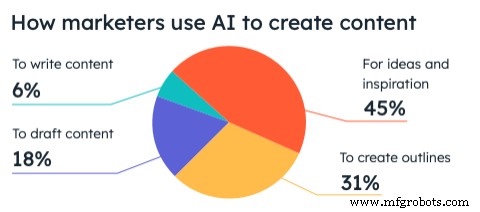
Source: HubSpot State of Marketing Report, 2024
Partner with a Manufacturing‑Focused B2B Marketing Agency
A tailored content marketing strategy builds authority and trust. Forbes reports that 74% of companies see increased lead generation when they invest in high‑value content.
As a seasoned B2B marketing firm, we partner with manufacturers to connect with new audiences through targeted strategies and deep market research. Let us help you translate expertise into measurable growth.
Contact us today to elevate your manufacturing marketing strategy.
Industrial Technology
- WCS vs WMS: Key Differences Explained – Camcode
- 2021 Industry Insight: March 2021 Comprehensive Update
- UC3844 Integrated Circuit: Expert Guide & Full Pinout Overview
- IoB Interviews Jessica Tyler – President of Cargo & VP Operations Innovation at American Airlines
- Choosing Multi-Cavity Injection Molding: Is It the Best Fit for Your Project?
- Maximize Asset Reliability: Choosing a CMMS with Seamless Compatibility
- Top 5 High-Impact-Resistant Plastics for Industrial Applications
- Avoid These 3 Common RFQ Pitfalls to Maximize Your Investment
- Key PCB Design Principles for Automotive Electronics
- Voltage and Current in a Practical Circuit: Understanding Their Relationship