



Laser Cutting & Bending vs Welding: Which Is More Cost‑Effective for Sheet Metal Fabrication?
Custom enclosures or brackets are traditionally assembled by welding, but evolving sheet‑metal technologies invite a fresh look at this convention.
In many cases, pairing laser cutting with CNC‑controlled bending delivers comparable structural integrity while cutting overall cost. The key is to identify when this approach truly pays off.
This guide dissects the true cost contrasts, pinpoints the part families that benefit most, and outlines how to evaluate the best fabrication route before you start production.
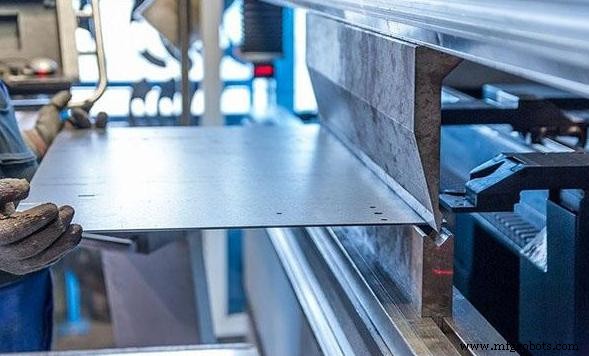
Why More Manufacturers Are Re‑Evaluating Traditional Welded Assemblies
For anything more sophisticated than a flat bracket, welded assemblies have been the go‑to for decades. Yet two converging trends are nudging engineers to reconsider.
Rising Fabrication Labor Costs
Welding is a highly skilled discipline. Recruiting and retaining expert welders has become costlier over the past decade, and that trend only accelerates.
Welded fabrication also demands fixture set‑up, post‑weld grinding, and multiple inspections before a part can leave the shop. These hidden steps inflate the final price far beyond the initial quote.
Advances in Laser Cutting and Bending Technology
Modern fiber‑laser systems can carve intricate geometries with tight tolerances at unprecedented speeds. Concurrently, CNC press brakes deliver uniform bends with minimal operator input.
The synergy of these tools expands the range of geometries that can be produced without a single weld and at a competitive cost.
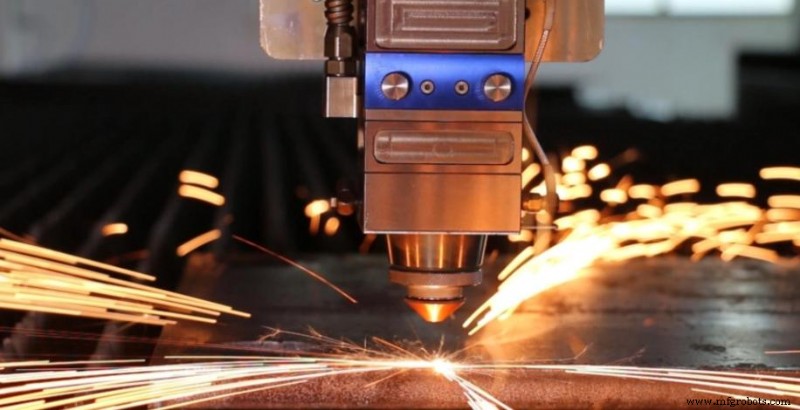
Laser Cutting + Bending vs Welded Assemblies: Where the Costs Really Come From
To compare fairly, it helps to trace where each method accumulates expenses.
Cost Drivers of a Welded Assembly
- Multiple components: Every separate piece must be cut, deburred, and fixtured before welding can begin.
- Welding labor: The largest single cost driver, encompassing skilled time, consumables, and process oversight.
- Surface finishing: Welds rarely leave the table clean; grinding, sanding, and coating add time and cost.
- Assembly complexity: More joints mean more opportunities for misalignment, dimensional drift, and rework.
Cost Drivers of a Bent Sheet Metal Part
- Material utilization: A single flat blank is cut and formed into shape, reducing waste and offcuts.
- Laser cutting service costs: Predictable and competitive, especially for repeat orders with stable designs.
- Bending operations: CNC‑controlled press brakes offer consistent cycle times and reduce setup variability.
- Tooling considerations: Most bends are handled with standard tooling; unusual profiles may need custom dies.
Here’s a quick comparison across key cost factors:
Comparison Table
Cost Factor | Laser Cut & Bent Part | Welded Assembly
Number of Components | Lower | Higher
Assembly Labor | Minimal | Significant
Welding Cost | None | Required
Surface Finishing | Limited | Often Required
Inspection Effort | Lower | Higher
Rework Risk | Lower | Higher
When geometry allows, reducing part count delivers greater savings than merely optimizing the welding process.
Which Parts Are Better Suited for Bending Instead of Welding?
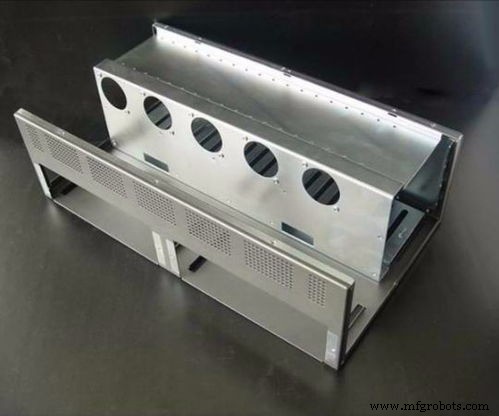
Parts That Benefit Most from Laser Cutting and Bending
- Electrical enclosures and control boxes: Box‑like designs with uniform walls and flanges are ideal for multi‑bend forming from a single blank.
- Equipment covers and cabinets: Their uniform shape can be produced with a minimal number of joints.
- Mounting brackets and housings: Often simple enough that welding adds cost without structural advantage.
These part types share a geometry that can be manufactured from flat sheet through a sequence of straight bends, eliminating or reducing assembly.
Design Characteristics That Favor Bending
- Straight bends: Avoid curves or compound bends to keep forming straightforward.
- Consistent bend radii: Uniform radii reduce tooling adjustments during the run.
- Moderate material thickness: Most setups work best in the 0.5‑6 mm range.
- Accessible bend locations: Features that the press brake die can reach without interference from adjacent geometry.
Situations Where Welding Remains the Better Choice
- Very thick materials where bending force becomes impractical.
- Large structural frameworks designed to support heavy loads.
- Complex 3D geometries that cannot be unfolded from a flat blank.
- High‑load applications where weld reinforcement is structurally necessary.
Beyond Cost: Comparing Manufacturing Performance
Cost is vital, but lead time and quality consistency often determine whether a project stays on schedule.
Lead Time and Production Efficiency
- Laser cutting + bending: Fewer process stages mean less time moving between operations, shorter queue times, and faster prototyping iterations.
- Welding: Each joint adds time for fixture preparation, arc ignition, and post‑weld finishing.
For products that can be fabricated from a single sheet, bending typically shortens the manufacturing cycle by eliminating multiple assembly steps.
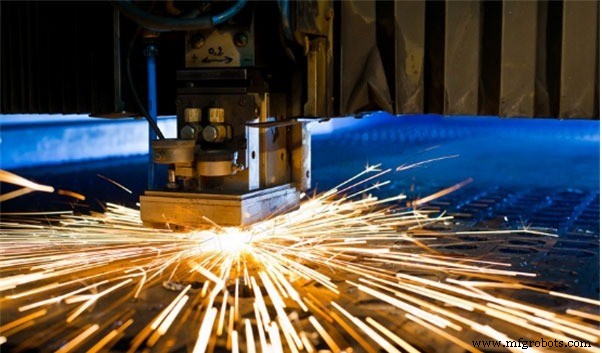
Quality Consistency and Repeatability
- Laser cutting + bending: CNC control delivers repeatable toolpaths; bend locations are program‑driven, reducing operator variance.
- Welding: Heat input can distort nearby features, and dimensional variation depends heavily on operator skill and process control.
Both methods can produce high‑quality parts when managed properly, but bent parts tend to offer more predictable dimensional consistency at higher volumes.
Use the table below to quickly assess which manufacturing approach best matches your part design and application needs.
Design Characteristic | Laser Cutting & Bending | Welding Preferred
Thin to Medium Sheet Metal | ✅ |
Multiple Flanges | ✅ |
Simple Box Structures | ✅ |
Thick Plate Construction | | ✅
Structural Frames | | ✅
High Load Requirements | | ✅
How Engineers Decide Which Option Delivers the Best Value
Engineering teams weigh three core dimensions:
- Geometry: Can the part be unfolded from a flat blank and formed with standard bends? If yes, bending is viable.
- Structural requirements: Does the application need weld‑joint reinforcement, or will a bent flange suffice?
- Economics: When labor, inspection, rework, and lead time are factored in, which method emerges ahead over the full production run?
In custom sheet‑metal projects, the cheapest material isn’t always the lowest cost choice; design decisions that streamline processes, reduce labor, and minimize quality risk yield the greatest savings.
Making the Smart Call for Your Next Fabrication Project
Choosing between laser cutting with bending and welded assemblies isn’t always obvious, but asking early “can this be bent instead of welded?” can save significant time and cost downstream.
For many enclosures, covers, brackets, and housings, a carefully engineered bent part is cheaper, faster, and more dimensionally consistent than a welded assembly.
That said, eliminating welding entirely isn’t always necessary. The most economical design often combines laser cutting, bending, and a few strategically placed welds, trimming unnecessary joints to realize savings.
JTR offers laser cutting service, precision sheet metal bending, and welded fabrication under one roof, and collaborates with engineering teams to evaluate these trade‑offs. If you’re working through a design and want a straightforward assessment of which approach makes sense for your project, contact us to discuss your needs.

Industrial Technology
- Teach‑Free Path Planning for 2‑Axis Gantries Using MATLAB & PLCnext
- SLA vs. SLS: Choosing the Right Plastic 3D Printing Tech for Your Project
- Mastering Solder Mask Design: 6 Essential Steps for Long-Lasting PCBs
- Bionic Sportsmen: Cutting-Edge Prosthetics Empowering Athletic Equality
- Designing a High‑Gain Differential Amplifier with NPN Transistors
- Harness Industry 4.0: Proven Strategies for Building a Winning Digital Roadmap
- Solid State Relays (SSRs): A Professional Guide for Electronics Engineers
- How Businesses Are Harnessing Blockchain for the Next Digital Revolution
- Driving Success: How Innovation Transforms Metal Fabrication
- Understanding Ransomware: How It Works & Why It Matters