



Why Are Circuit Boards Printed? A Deep Dive into Their History and Modern Manufacturing
Before modern electronics, engineers had to connect components by hand—a labor‑intensive, error‑prone process that slowed progress in radios, early computers, and household appliances. Manual, point‑to‑point wiring was difficult to repair, and the risk of accidental shorts was high. The turning point came with the introduction of the printed circuit board, where conductive pathways were etched onto a substrate, allowing designers to automate the routing of signals.
The adoption of printed circuit boards (PCBs) marked a revolution in both design and manufacturing. By embedding copper traces into a non‑conductive base, engineers could produce a fully routed circuit with a single, reproducible step. This breakthrough improved reliability, reduced assembly time, and opened the door to mass production of increasingly complex electronics.
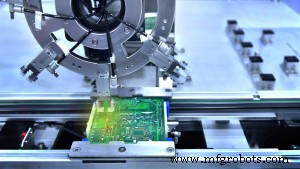
The Origins of Printed Circuit Boards
In 1936, Austrian engineer Paul Eisler patented the first printable circuit board, featuring a non‑conductive substrate with a copper circuit layer on top. While Eisler’s early prototypes were rudimentary compared to today’s multilayer PCBs, the core concept—printing the circuit before assembly—remains unchanged.
The transition to printed technology eliminated the variability of hand‑wiring and enabled precise, repeatable designs that are essential for everything from consumer gadgets to aerospace systems.
How Is a Circuit Board Printed Today?
Modern PCB manufacturing starts with a sheet of copper laminated onto a fiberglass‑reinforced epoxy material, most commonly FR-4. The process is tightly controlled to ensure consistent quality.
1. Design and Gerber Files
Engineers create a digital layout using computer‑aided design (CAD) tools, which generate Gerber files—binary or ASCII files that describe every copper trace, pad, via, and drill hole. These files are the master instructions for the entire production line.
2. Drilling
Based on the Gerber data, computer‑guided drills create precise holes for through‑hole components or internal vias. The board is then cleaned to remove debris, ensuring optimal adhesion of subsequent layers.
3. Creating Copper Traces (Etching)
A photosensitive resist coats the copper surface. Light exposes the desired pattern, and a chemical etchant removes the unprotected copper, leaving behind the complex network of conductive traces that define the circuit.
4. Solder Mask and Silkscreen
After etching, a solder mask—typically green but also available in blue, red, or black—is applied to insulate the traces and prevent solder bridges. A silkscreen layer is then printed to label component pads and guide technicians during assembly.
The Value of Printed Circuit Board Assemblies
A high‑precision PCB accelerates assembly, shrinks device footprints, and streamlines mass production. From smartphones to satellites, PCBs are the backbone of modern electronic performance.
Printing also enables full automation of the subsequent assembly phase. Pick‑and‑place machines can deposit thousands of components with millimeter‑scale accuracy, followed by reflow soldering and automated inspection to deliver reliable, high‑yield products.
The Role of Printing in Modern PCB Manufacturing
Today, “printed circuit board” describes both the etched copper patterns and the entire manufacturing workflow that supports miniaturization and high‑performance electronics. As devices become ever smaller and more demanding, PCB technology continually evolves to meet those challenges.
From early radios to cutting‑edge supercomputers, the invention of printing circuit paths has reshaped electronics forever. For engineers and manufacturers alike, it remains a foundational element of any robust electronic design.
Industrial Technology
- 9 Key Reasons Facilities Managers Are Moving From Spreadsheets to CMMS
- DVIRC Welcomes Bernadine Hawes to NIST MEP Advisory Board; Announces Leadership Appointments
- Types of Mechanical Power Transmission Systems: A Comprehensive Overview
- Polyurethane ROV Bucket Covers: Robust Protection for Subsea Operations
- Sustainable Solutions for Tackling Excess Apparel in Retail
- Understanding 3D Printing: Principles, Types, and Key Applications
- Comprehensive Guide to Coupling Types: Definitions, Applications, and Construction
- Why Employee Initiative Is Your Company's Most Valuable Asset
- Boost Industrial Efficiency with BLE‑Powered Real‑Time Location Systems
- Mastering TIG Welding on Magnesium: A Safe, Step‑by‑Step Guide