



Mastering Urethane Casting: Key Design Principles for Reliable, Cost‑Effective Parts
Published on January 9, 2024
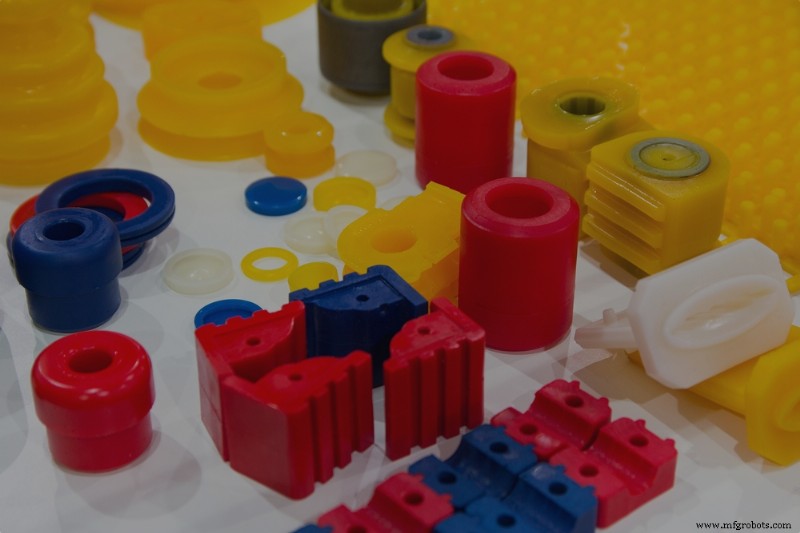
Urethane casting is a versatile, cost‑effective manufacturing method that rivals the precision of injection molding while dramatically reducing tooling time and expense. By using flexible silicone molds, manufacturers can produce high‑quality, end‑use parts in days rather than weeks, making this approach ideal for bridge tooling, low‑volume runs, rapid prototyping, joint fabrication, and intricate details such as raised lettering.
The process begins with a master pattern—typically a 3‑D printed replica of the final part. The pattern is fully encapsulated in liquid silicone, cured, and then sliced into halves. After removing the pattern, the mold is ready for a second cast with a suitable urethane resin.
Polyurethane resins can match, and often exceed, the performance of thermoplastics used in injection molding. However, achieving consistent, high‑performance parts requires disciplined design for manufacturability (DFM). Below are the most critical guidelines to ensure success.
Tolerances
All manufacturing processes exhibit some variation, so designers must account for it. Urethane cast parts typically meet tolerances of ±0.015 in or ±0.003 in per inch—whichever is larger. In most cases, a shrinkage rate of +0.15 % is expected due to thermal expansion of the resin and the silicone mold’s heat response.
Sharp corners or fine lettering may round slightly during cooling, which can affect detail definition. To preserve sharpness, consider finishing the master pattern with a micro‑texture or SPI finish before molding. Post‑processing options such as polishing, custom finishes, or pigmenting (including Pantone‑matched colors) are also available, though they can increase cost.
Wall Thickness
Maintain a minimum wall thickness of 0.040 in (1 mm). For very small components, walls as thin as 0.020 in (0.5 mm) can be achieved, but larger parts will need thicker walls to maintain structural integrity.
Uniform wall thickness minimizes shrinkage variability and reduces the risk of deformation during curing. Only introduce variable thickness when absolutely necessary.
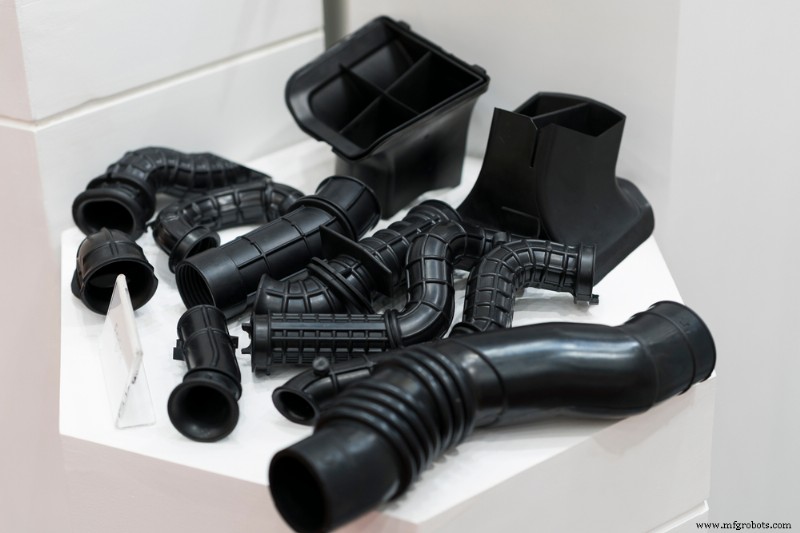 Urethane casting is commonly used for bridge tooling, low‑volume production runs, rapid prototyping, fabricating joints, and manufacturing parts with fine details (such as raised lettering).
Undercuts and Draft
Unlike metal injection molds, silicone molds accommodate undercuts with minimal risk of damage. Draft angles are also less critical, but incorporating 3–5 degrees of draft can reduce mold stress and extend mold life.
Ribs
Ribs strengthen parts but must be properly oriented. As a rule of thumb, a rib’s height should not exceed three times its width, and the rib’s width at the wall attachment should be 40–60 % of the wall thickness. All interior corners should have a fillet radius of at least 25 % of the wall thickness to maximize bending stiffness.
Bosses
Bosses provide reliable mating points for screws, pins, and other fasteners. Use a base radius of roughly 25 % of the wall thickness to prevent fastener burn‑in. Interior boss corners should have a 0.060 in (1.5 mm) fillet radius to avoid sink marks. Keep boss height below 60 % of the nominal wall thickness to limit shrinkage.
Leverage the Benefits of Urethane Casting Today
Urethane casting delivers short lead times, low cost, and design flexibility—only if design and manufacturing best practices are followed. Attention to material properties, tolerances, and geometric considerations is essential, especially when scaling production.
At SyBridge, we combine agile manufacturing with deep expertise to reduce lead times and boost operational efficiency for product teams of all sizes. Our process blends multiple techniques to meet your specific needs while maintaining the highest quality standards.
Contact us today to discover how urethane casting can accelerate your product development.
Industrial Technology
- E3.series 2021: New Panel Design Tools & 3D Export Features
- Industry 5.0: Redefining Manufacturing for the Future
- 555 Timer PWM DC Motor Speed Controller – Build & PCB Design Guide
- The Rise of the Revenge Economy: How Post‑Pandemic Spending is Reshaping Markets
- Unlocking Global Supply Chain Visibility with Advanced TMS Solutions
- Optimizing Your Manufacturing Marketing Budget: Smart Spending Strategies
- Enhancing Product Quality with Mold Flow Analysis in Injection Molding
- The Ultimate Guide to Remote Control Car Circuits: Build, Troubleshoot, and Master Your RC Vehicle
- Harnessing Edge Analytics: Empowering IoT Edge Architecture for Real‑Time Insight
- Understanding PCB Impedance: Definition, Significance, and Practical Implications