



Harnessing Edge Analytics: Empowering IoT Edge Architecture for Real‑Time Insight
What is Edge Analytics?
Edge analytics is a method used to collect, process, and analyze data at some non-central point within a network—at the edge of the network—rather than on the cloud or within another centralized system. Edge analytics usually occurs at or near to a sensor, network switch, peripheral node, or some other connected device. The decentralized, local nature of edge analytics has a benefit over more traditional big data methods in that it is much faster, leading to quicker, more accurate business intelligence while also lightening the load on the network.
In this model, the bulk of information is analyzed at the edge, and only the most relevant and critical information is then uploaded to the cloud for slower, deeper analysis. Edge analytics is primarily the product of a growing number of IoT devices that both require faster data analysis, sometimes in remote, unconnected areas, and can, themselves, perform edge analytics. In a way, edge analytics is a type of closed IoT data analysis ecosystem that has the ability to use a smart gateway to access the “outside world,” usually the cloud.
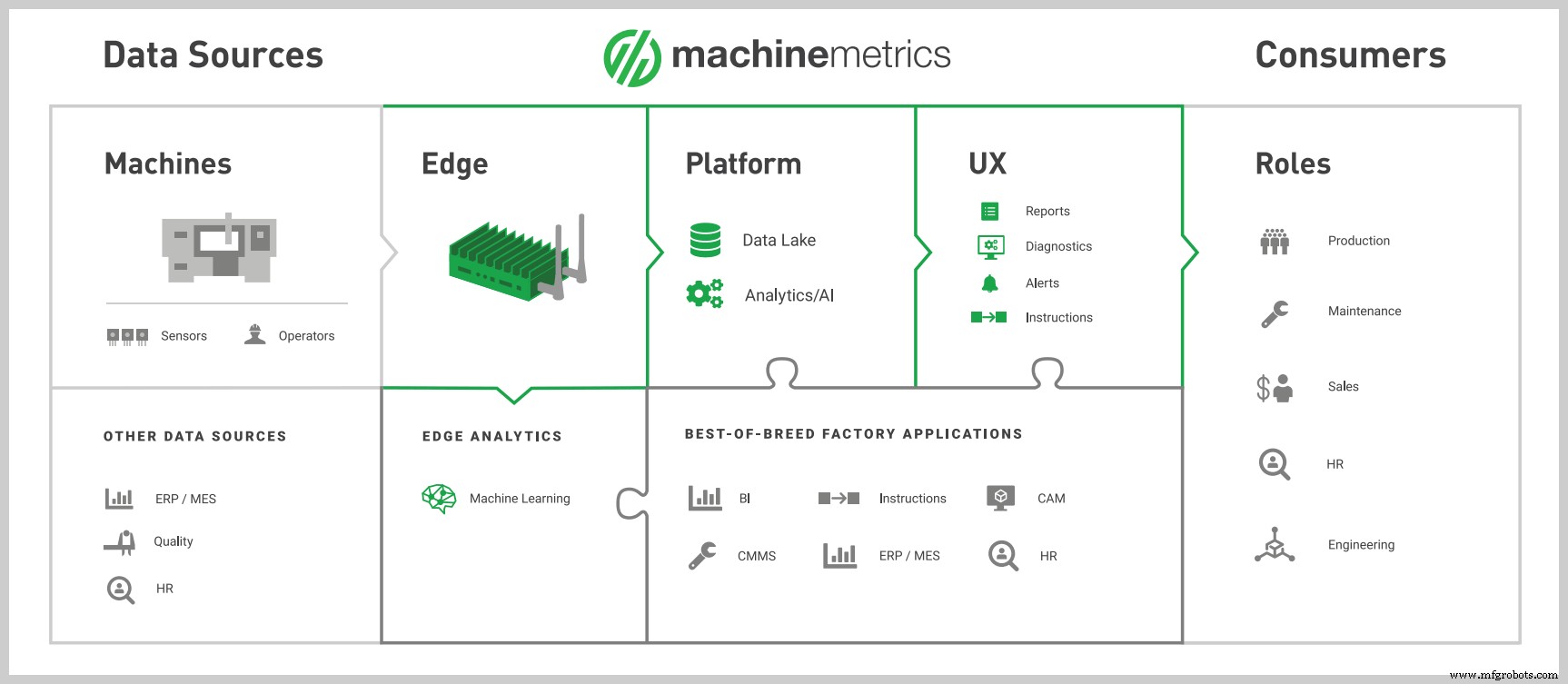
Edge Analytics in the Internet of Things.
IoT Edge Analytics Use Cases
IoT edge analytics are most beneficial to systems that require fast turnaround of data in order to guide functionality, IoT systems that collect massive swaths of data, and IoT devices that must function off-network for reasons of remote deployment or data security.
One prime example of edge analytics in action is the case of a military drone deployed in a remote location. Although technically the drone can reach the outside world using satellite communications, data transfer speeds are slow—far too slow to effectively provide real-time feedback. Instead, edge analytics allow for near-instant feedback to ensure a safe mission, while critical data can still be securely uploaded afterward for further analysis.
Industrial IoT also utilizes edge analytics. In a manufacturing environment leveraging the edge, edge analytics can be used to monitor machine health in real-time to detect anomalies that might indicate a failing tool as well as to monitor and provide feedback on production initiatives. The speed of edge analytics for IoT-enabled manufacturers is especially beneficial to prevent major safety incidents, reduce scrap part production, and to provide real-time statistics to production workers to better help everyone stay on track toward a goal. This is in comparison to cloud computing that, while it has its place in a manufacturer’s IoT strategy, would be too slow to offer the same levels of feedback and protection.
The IoT Edge Architecture
The IoT edge architecture consists of a variety of devices that each play their role in a smart environment. They include:
Sensors
Sensors are the types of “things” people usually think of when they think of the Internet of Things. Sensors on the IoT measure variables such as temperature, light, location, moisture, and anything else that collects data from a physical object such as a piece of manufacturing equipment.
Actuators
Actuators are what make changes within the IoT edge architecture. Think light switches, water valves, computer commands—anything that can make something else happen such as turning on a light or distributing a software update.
Smart Devices
Many people are familiar with common smart devices like smartphones and tablets. Other examples of smart devices that live within IoT edge architecture include microcontrollers like Arduinos and single board computers like the Raspberry Pi.
Smart Gateways
This is a critical component of IoT edge architecture. Smart gateways are like traditional IoT gateways in that they enable data transfer between local devices and the cloud, but with additional “smart” features. These devices utilize common field protocols such as Bluetooth and wi-fi (among others) and can translate between these to cloud protocols like MQTT and HTTP. Industrial IoT Gateways can send local data to the cloud for storage and analysis as well as analyze local data for low-latency intelligence such as real-time anomaly detection.
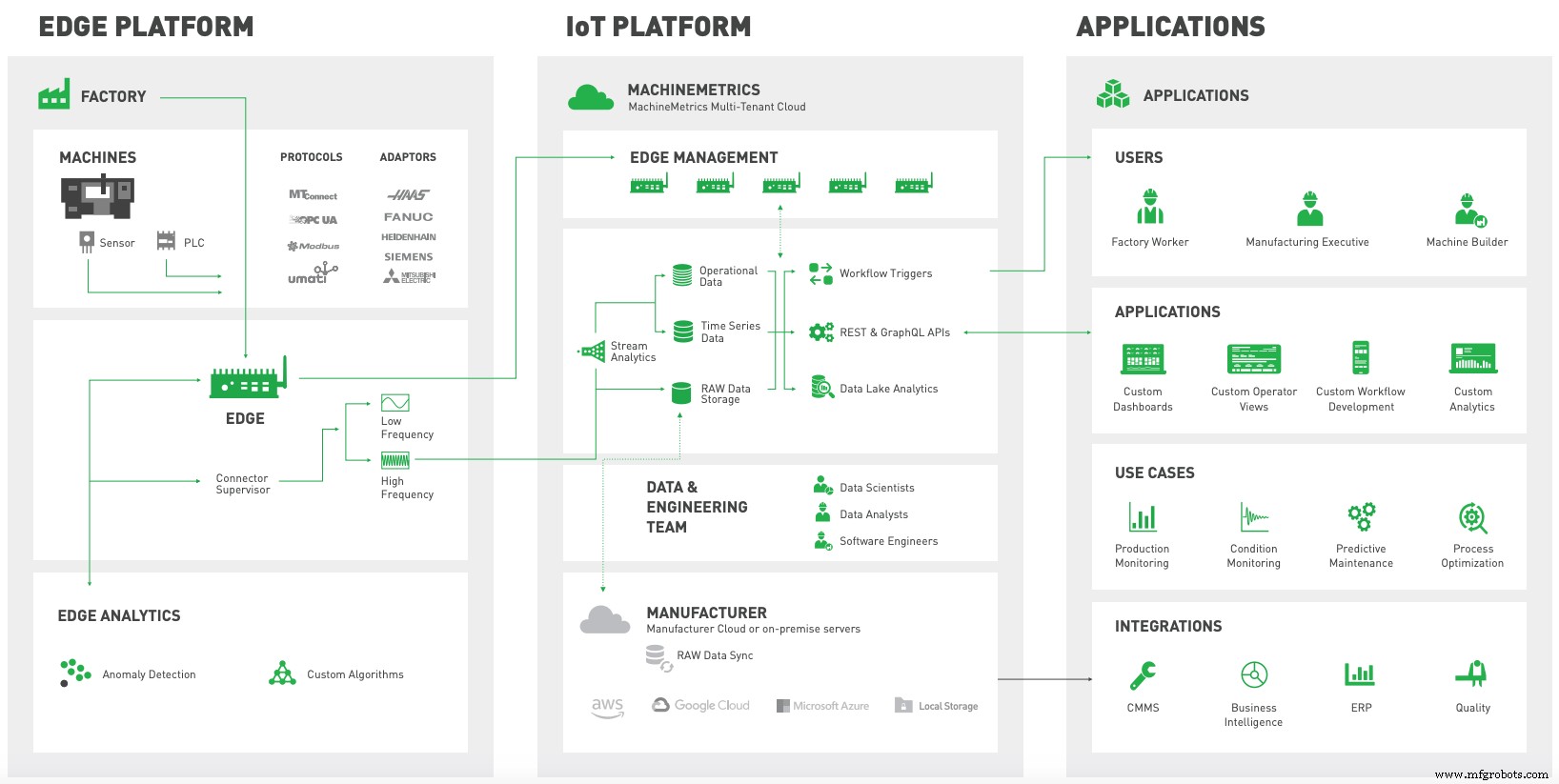
Edge Computing for IoT architecture.
Further Reading on Edge Analytics
For a more in depth look at edge computing and analytics, including a deep-dive on edge platforms, edge devices, and the importance of the edge for manufacturing, read our eBook: "The Edge: A New Frontier for Manufacturing Analytics." Or explore the MachineMetrics Edge Platform.
Industrial Technology
- How 5G Fuels IoT: Current State, Opportunities, and Key Challenges
- Edge Computing: The Architecture Driving Tomorrow’s Intelligent Networks
- From Edge to Cloud: Mastering IoT Data Pipelines
- Edge Computing & IoT Strategy Insights from IoT World 2019
- 5G & IoT: Driving Next-Gen Supply Chain Resilience
- Sprint and Ericsson Launch 5G-Ready IoT Edge Intelligence Platform
- Edge Computing Demystified: Architecture & Enterprise Deployment Strategies
- How IoT and Edge Computing Complement Each Other
- IoT, AI, and Edge Computing Revolutionize Oil Industry Operations
- Optimizing PLCnext with Azure IoT Edge: Edge Analytics & Cloud Integration