



Polymer Additive Manufacturing Technologies: Expert Guide & Comparison
Published on July 7, 2022
Originally published on fastradius.com on July 7, 2022
Choosing the right additive manufacturing process can be daunting, given the breadth of available technologies and the variety of materials they can work with. Our engineering team has distilled this complexity into a set of concise, data‑rich charts that highlight the strengths, limitations, and ideal use‑cases for each polymer AM method.
Below you’ll find a high‑level comparison of the following categories:
- Vat polymerization: stereolithography (SLA) and Carbon® Digital Light Synthesis™ (DLS)
- Powder bed fusion: selective laser sintering (SLS) and HP Multi‑Jet Fusion (MJF)
- Material extrusion, material jetting, and binder jetting
Scroll further to explore the specific capabilities of each technology, including resolution, build speed, material compatibility, and post‑processing requirements.
Vat Polymerization – SLA & Carbon® DLS
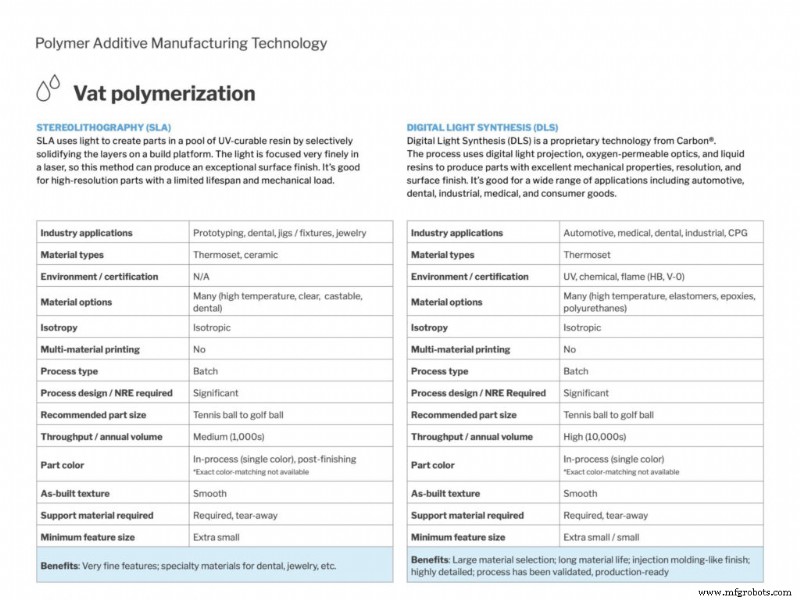
Vat‑polymerization processes use a liquid resin that is selectively cured by light. SLA offers micron‑level detail and excellent surface finish, making it ideal for functional prototypes, medical devices, and intricate tooling. Carbon® DLS provides the same precision with the added benefit of full‑color output and rapid cycle times.
Powder Bed Fusion – SLS & HP MJF
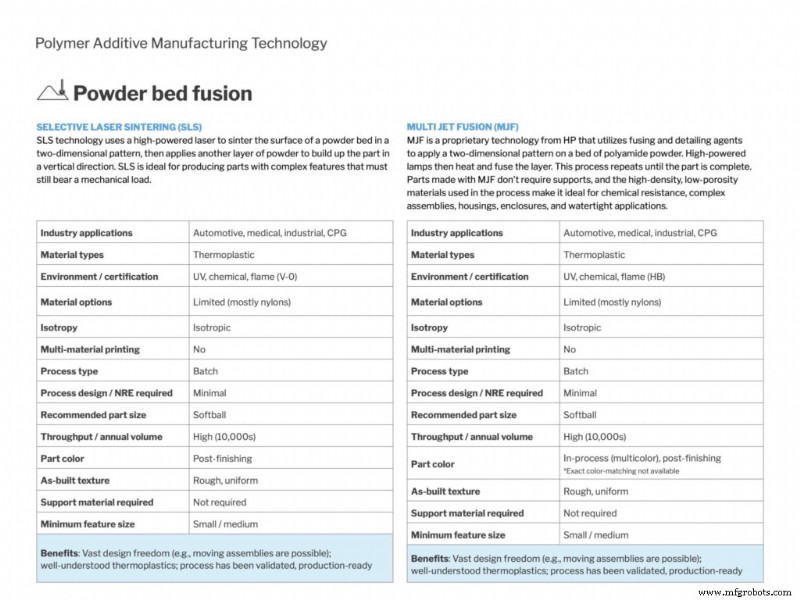
SLS melts polymer powder layer by layer, enabling the production of robust, mechanically strong parts without the need for support structures. HP MJF further accelerates build speed by using inkjet‑style deposition of binders and photoinitiators, delivering high‑volume, low‑cost components for end‑use applications.
Material Extrusion, Jetting & Binder Jetting
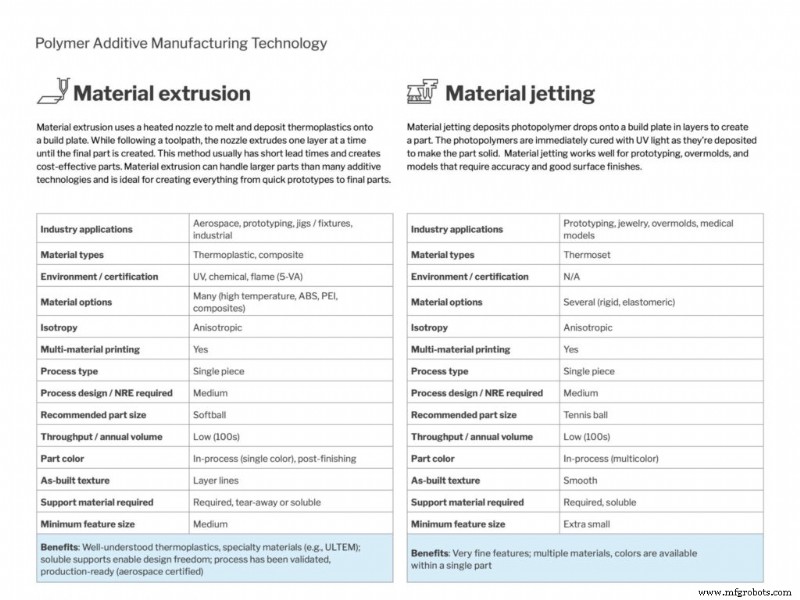
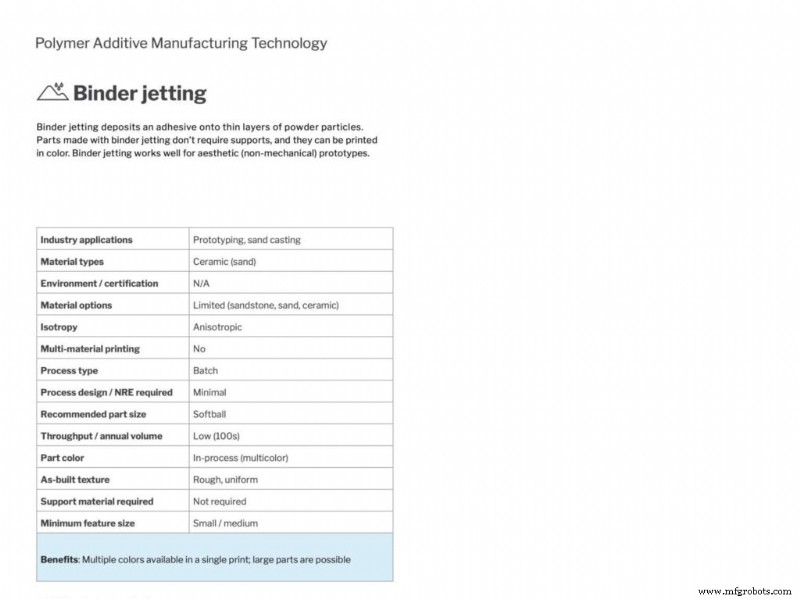
Material extrusion (e.g., FDM) remains the most widely adopted AM technique for rapid prototyping and low‑volume production. Material jetting delivers sub‑millimeter accuracy and smooth surfaces, while binder jetting offers large‑scale, cost‑effective builds, especially for metal‑filled polymers.
Need help selecting the best technology for your application? Contact our engineering experts or log in to your SyBridge Technologies account to compare manufacturability, costs, and lead times across platforms.
Related Articles
Industrial Technology
- Expert Guide to Designing Snap‑Fit Joints for Efficient Product Assembly
- Streamline Hospitality Operations with Advanced Inventory Management Software
- Enhancing Manufacturing Agility in a Post-Pandemic Economy
- Optimizing Drilling and Milling of CFRP Composites in Aerospace
- Unifying Customer Experience with Product Information Management
- How to Build a Touch‑Activated Lamp: A Complete Guide
- Avoid the Pitfall: Why Cheap PCBs Cost More in the Long Run – Insights from 9 Years of Experience
- How Prototype Manufacturing Accelerates Startup Success: 6 Key Benefits
- Lean Manufacturing Demystified: Boost Efficiency with Flexible Automation
- Mastering Wheel Hub Machining in Fusion 360: A Practical Guide