



Polypropylene vs. Nylon: UV Resistance for Outdoor Applications
Published on September 21, 2022
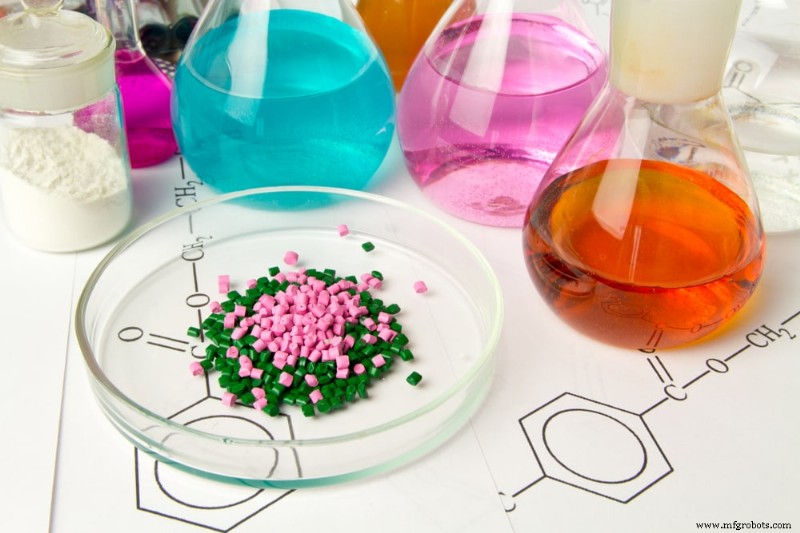
Originally published on fastradius.com on September 21, 2022
Today’s market offers a wide array of thermoplastics, from acrylic to polyetherimide. Two of the most widely used in manufacturing—polypropylene and nylon—warrant a closer look, especially when durability under sunlight is a concern.
Polypropylene is a low‑cost, crystalline thermoplastic prized for its toughness and versatility. It’s a go‑to material for medical devices, food containers, packaging, and water‑pipe systems. While injection molding and CNC machining dominate its production, 3D printing of polypropylene is increasingly common. However, its tendency to warp and its limited UV resilience mean that designers should weigh alternative materials for projects requiring prolonged outdoor exposure.
Nylon shares many of polypropylene’s manufacturing pathways—3D printing, injection molding, and CNC machining—but excels in high‑friction applications. It is fabricated as sheets, fibers, filaments, or films and often replaces low‑strength metals in aerospace, automotive, and textile sectors.
When components will be exposed to the sun, UV resistance becomes a critical selection criterion. UV‑sensitive plastics can discolor, lose mechanical strength, and develop brittleness, leading to premature failure. Though no polymer is entirely immune to UV, additives and coatings can mitigate damage by absorbing or blocking harmful wavelengths.
Understanding UV‑Resistant Plastics
UV‑resistant plastics are engineered to absorb or scatter UV radiation, thereby preserving mechanical properties. Stabilizers, blockers, and absorbers are commonly integrated into formulations to trap free radicals, prevent photon penetration, or convert UV energy into harmless heat.
Polypropylene’s UV Performance
Polypropylene’s excellent chemical resistance, low moisture uptake, and high impact strength make it ideal for many indoor applications. However, it is highly susceptible to UV wavelengths in the 290–300 nm, 330 nm, and 370 nm ranges. Exposure to high‑intensity UV for as little as six days can reduce its tensile strength by up to 70 %, rendering parts brittle and prone to fracture. In practice, outdoor polypropylene components typically degrade within months of continuous sun exposure.
Incorporating additives such as zinc oxide or titanium dioxide fibers can block or absorb UV radiation, extending service life. Protective coatings and sealing strategies further shield the material, though bonding polypropylene to other substrates remains challenging due to its low surface energy.
Even with reinforcement, polypropylene remains inferior to naturally UV‑resistant polymers like acrylic or HDPE for long‑term outdoor use.
Nylon’s UV Characteristics
Like polypropylene, nylon degrades under sustained UV exposure, with discoloration and loss of strength. Its vulnerability centers on the 290–315 nm band. Variants such as nylon 6/6 are less UV‑stable than nylon 6 or nylon 12, underscoring the importance of selecting the appropriate grade for a given application.
Engineering solutions—stabilizers, blockers, and absorbers—can significantly enhance nylon’s resistance. Advanced formulations featuring hindered amine light stabilizers (HALS) and carbon black blockers are common in outdoor applications.
Choosing the Right Material
When UV exposure is a factor, polypropylene typically degrades faster than nylon, but both can be fortified. Consider the following additives:
- Stabilizers: HALS trap free radicals, preventing chain scission.
- Blockers: Carbon black or titanium dioxide blockers physically shield the polymer from UV rays.
- Absorbers: Benzophenones and benzotriazoles convert UV energy into heat.
Beyond UV resilience, other attributes influence material choice:
- Polypropylene offers superior moisture resistance, electrical conductivity, and lower melt viscosity, making it ideal for injection molding.
- Nylon provides higher melt viscosity, excellent electrical insulation, and greater flexibility for complex geometries.
Part Production with SyBridge
SyBridge’s engineering team can evaluate your project’s UV requirements and recommend the most suitable polymer—be it polypropylene, nylon, or a more UV‑stable alternative such as polytetrafluoroethylene, polyimide, acrylic, HDPE, or polycarbonate. We guide you from design through manufacturing, ensuring your parts meet performance expectations.
Contact us to discuss how our expertise can bring your project to fruition.
Industrial Technology
- Mastering Microcontrollers: Structure, Functionality, and Practical Applications
- Mastering Complex Number Arithmetic: Essential Operations & Techniques
- Valve Selection 101: Essential Guide to Choosing the Right Valve
- Carriage Bolts Explained: A Complete Beginner’s Guide
- Harnessing Machine Learning for Industrial Innovation
- Save‑A‑Lot Boosts Distribution Center Efficiency with Camcode Floor Labels
- Researchers Develop Breakthrough Transparent Solar Cells with Superior Efficiency
- TPA & Anti-Exposure Suits: Essential Thermal Protection for Rescue Personnel
- Ensuring Machine Safety with Variable Speed Drives: Key Functions & Best Practices
- Custom Titanium Furniture Crafted from Reclaimed Metals