



Polycarbonate (PC): From Production to Performance – A Comprehensive Guide
Published on September 28, 2022
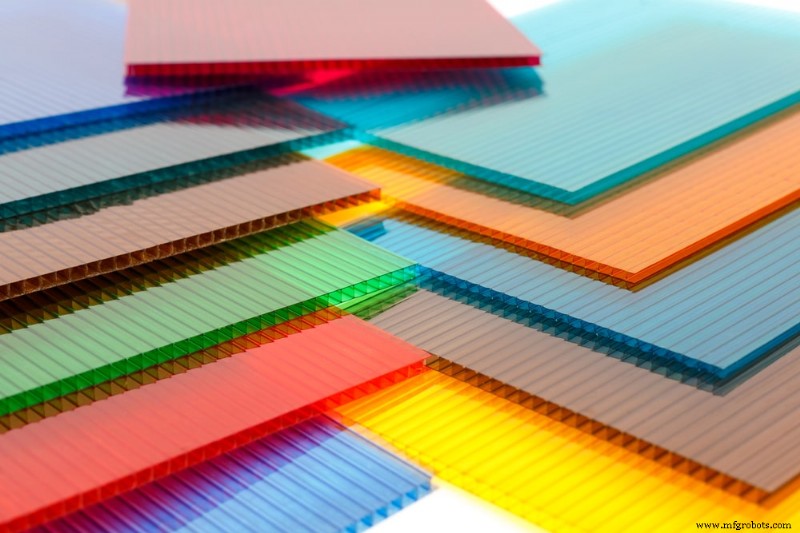
Previously published on fastradius.com on September 28, 2022
Since its development in the mid‑20th century, polycarbonate has become a mainstay of modern manufacturing. Global production now reaches roughly 2.7 million tonnes per year. Over the decades, companies have engineered a range of grades—some reinforced with glass fibre, others fortified with UV stabilisers—to meet specific performance needs.
Polycarbonate is an amorphous thermoplastic that delivers exceptional resistance to heat, impact and a broad spectrum of chemicals. Its toughness and dimensional stability make it the material of choice for components that must endure repeated sterilisation or high mechanical loads, such as automotive parts and medical devices.
How Polycarbonate Is Manufactured
While the basic chemistry remains the same, manufacturers differ in their process details. Traditional production relies on the condensation polymerisation of bisphenol A and carbonyl chloride, a highly toxic reagent. Many firms now substitute diphenyl carbonate to eliminate that hazard.
Regardless of the carbonyl source, the reaction begins with bisphenol A dissolved in sodium hydroxide, which is then mixed with the carbonyl chloride or diphenyl carbonate in an organic solvent. Polymerisation generates a liquid polymer that is subsequently precipitated—often by adding ethanol—or evaporated to form solid granules.
Polycarbonate is typically supplied as rods, cylinders or sheets and can be shaped by thermo‑forming, extrusion, blow‑moulding or, most commonly, injection‑moulding. Its thermoplastic nature allows repeated heating and cooling without significant degradation, making it ideal for complex, high‑volume parts.
During injection‑moulding, polycarbonate requires high temperatures and pressures. Typical melt temperatures fall between 280 °C and 320 °C, with mould temperatures from 80 °C to 100 °C. These ranges shift with grade; high‑heat polycarbonate may need 310 °C–340 °C melt and 100 °C–150 °C mould, while a PC‑ABS blend melts at 240 °C–280 °C and moulds as low as 70 °C.
Key Properties & Mechanical Specifications
All polycarbonate grades share several hallmark traits: exceptional toughness, lightweight construction and impressive thermal stability. They can retain their impact resistance up to 140 °C, allowing repeated autoclave sterilisation. Transparency is above 90 %, and chemical resistance covers diluted acids, oils, greases, aliphatic hydrocarbons and alcohols.
Typical values for a standard grade are:
- Specific gravity: 1.21
- Melt temperature: 295 – 315 °C
- Mould temperature: 70 – 95 °C
- Heat deflection temperature: 137 °C at 0.45 MPa
- Tensile strength: 61 MPa
- Flexural strength: 90 MPa
- Shrinkage: 0.5 – 0.7 %
- Rockwell hardness: 118R
Potential drawbacks include sensitivity to prolonged exposure to water above 60 °C, susceptibility to surface scratches, higher manufacturing cost compared to some alternatives, and vulnerability to diluted alkalis and certain aromatic or halogenated hydrocarbons. Formulations lacking UV stabilisers may yellow over time when exposed to sunlight.
Common Everyday Applications
Polycarbonate’s resilience and optical clarity make it a favourite in the automotive sector, where headlamp and turn‑signal lenses must survive frequent impacts. In the medical field, the material powers incubators, dialysis housings, blood filters, reservoirs, oxygenators and surgical instruments. Its transparency aids clinicians in monitoring fluid flow and blood conditions.
Household appliances such as mixers, hair dryers, refrigerators and electric razors also rely on polycarbonate. Other uses span exterior lighting, machinery guards, protective gear, bullet‑proof glass, fuse boxes, TV housings, roofing, skylights, greenhouses, luggage, eyeglasses and beverage containers—including baby bottles and refillable water bottles.
Getting Started with Polycarbonate
Choosing the right polycarbonate grade is critical. Partnering with an experienced manufacturer like SyBridge can help product teams navigate the material’s nuances and select the best formulation for their application. If you’re curious whether polycarbonate fits your next project, create an account and upload your part files or contact us today to get started.
Industrial Technology
- Blitzscaling: Master Rapid Expansion for Your Startup
- Seamless Integration of Renewable Energy into the Power Grid
- How Power Plants Cut Equipment Manufacturing Costs with Effective Maintenance Management – 5 Proven Strategies
- Step‑by‑Step Automatic UPS Wiring for Partial Loads with Main Power Backup
- Essential Guide to Designing Effective Jigs and Fixtures
- High‑Current PCBs: Build Reliable Boards for Heavy‑Load Electronics
- Vertical vs. Horizontal Milling Machines: A Comprehensive Comparison for Shop Owners
- From Schematic to PCB: A Comprehensive Altium Designer Workflow
- The Role of a Maintenance Director: Responsibilities & Impact
- Choosing the Right Inverter Size for Your Home Appliances: A Practical Guide