



Durometer Explained: A Practical Guide to Plastic and Elastomer Hardness
Published on May 23, 2023
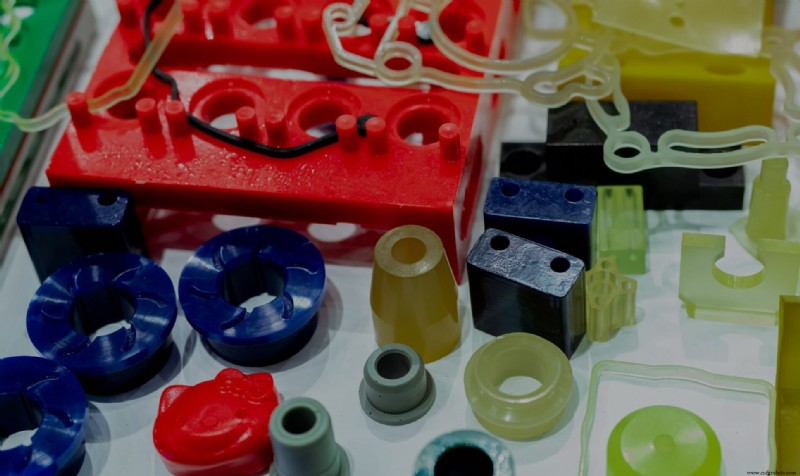
At the outset of any development effort, engineers and product teams must scrutinize the mechanical profile of every candidate material. Beyond the basic physical, chemical, and mechanical data sheets, factors like environmental resilience and long‑term durability also shape performance. A holistic assessment drives higher quality products and tighter schedules and budgets.
For plastics, durometer—or Shore durometer—provides a key gauge of material hardness. Below is a concise primer that equips engineers and product teams with the essential insights.
What is Durometer?
Durometer is the industry‑standard metric for quantifying the hardness of elastomers and plastics. It reflects how resistant a material is to deformation when subjected to indentation or abrasion.
To obtain a durometer reading, a simple handheld tester—resembling a round tire‑pressure gauge with a calibrated spring‑loaded needle—presses into the material until it reaches its limit. The depth of penetration directly translates to a number on the chosen Shore scale.
While the durometer range spans 0–100, it is dimensionless; the values are purely comparative within a single scale. Lower scores denote softer materials, higher scores denote harder ones. For instance, 90A polyurethane tubing is noticeably firmer than 70A tubing.
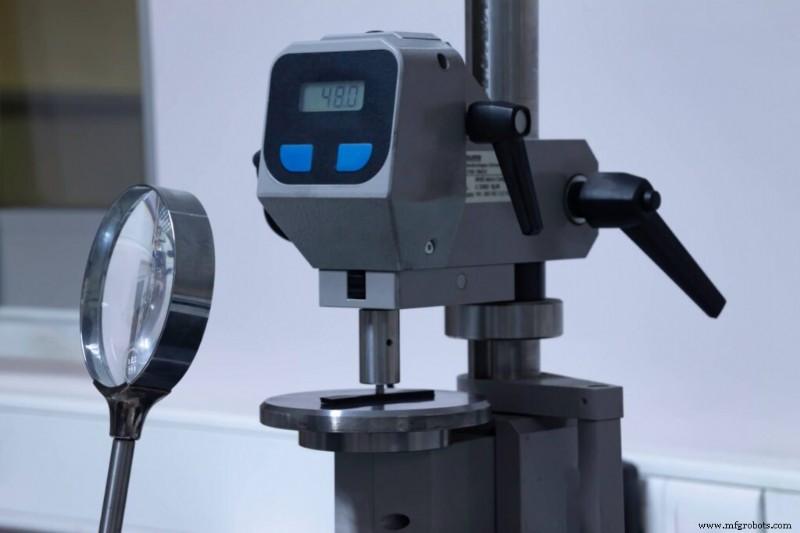
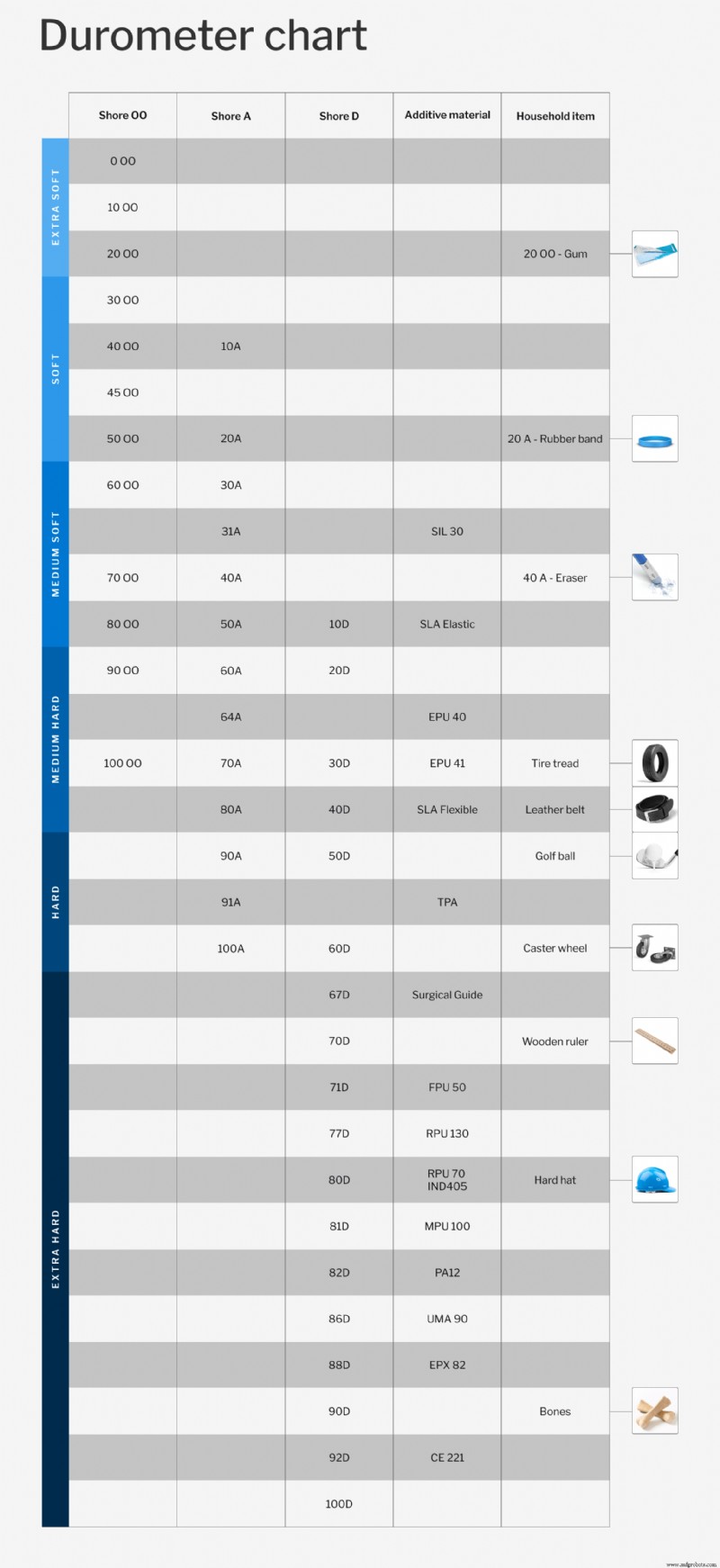
Different Shore scales were developed to provide a common reference for engineers. The three most frequently used scales are Shore 00, Shore A, and Shore D. Shore 00 captures the softness of gels and very soft rubbers; Shore A spans the spectrum from very soft to hard flexible rubbers; Shore D is reserved for hard rubbers and rigid plastics.
Durometer does not equal flexibility; it is an indirect measure of stiffness. It offers a quick sense of a material’s feel but cannot predict the exact flex or bend of a finished part. Moreover, numbers on distinct Shore scales are not interchangeable.
For instance, an 80 on Shore 00 would feel like a pencil eraser, whereas an 80 on Shore D would be comparable to a hard hat. The identical numeric value masks vastly different physical properties, underscoring why comparisons must stay within the same scale.
How Durometer Hardness Factors Into Material Selection
Material selection begins with the intended end‑use and project specifications. These criteria trim the candidate list and indicate which Shore scale is relevant. For load‑bearing parts that must sustain weight over time, designers should skip Shore 00 and focus on Shore A materials in the 70–100 range or the full Shore D spectrum.
Hardness must be weighed against cost and manufacturability. Although harder alloys may incur higher material or machining expenses, post‑processing hardening techniques can elevate the final durometer without compromising machining ease.
Hardness alone does not predict strength, corrosion resistance, or sealing capability. Stiffness and compression‑modulus data provide a clearer picture of a rubber’s sealing performance than durometer values.
A thorough material audit should assess density, compression‑force deflection, application force, thickness, and durometer to ensure the chosen material meets all functional and performance criteria.
Durometer Considerations for Injection Molds
In injection molding, the mold rubber’s Shore hardness critically influences part release. Selecting a rubber that balances flexibility and durability ensures easy demolding of both the master and castings.
Using a 70A durometer elastomer to mold a part with thin, angled sections can be risky; its stiffness, comparable to a car tire, may hinder clean extraction. A lower Shore A rating—around 30A or less—provides the necessary pliability for delicate geometries.
Durometer Considerations for Additive Manufacturing
In additive manufacturing, knowing a part’s durometer helps benchmark it against conventional injection‑molded plastics. This comparison offers a practical sense of the material’s expected performance.
Some AM resins report two values: an instant durometer and a five‑second durometer. For instance, parts produced with Carbon’s Digital Light Synthesis (DLS™) may not reach their final hardness until after curing. In‑house or at‑home printers will see the change, whereas partners handling the final cure may not. Awareness of this post‑curing evolution is essential when selecting AM materials.
Get Started With SyBridge
In short, durometer is a dimensionless, standardized metric that ranks elastomer and plastic hardness within a single Shore scale. While higher values signify increased hardness, cross‑scale comparisons are invalid.
When a project demands a particular hardness or softness, durometer becomes a vital selection criterion—but it should not stand alone. A comprehensive review of design and performance parameters, coupled with the expertise of an experienced manufacturing partner, yields the optimal material choice and accelerates development.
SyBridge brings decades of manufacturing, engineering, and supply‑chain knowledge to help teams deliver products that meet every requirement. Partnering with us streamlines material selection, shortens time‑to‑market, and controls costs. Reach out today to begin.
Industrial Technology
- Designing Energy Transmission Systems: Key Considerations & Constraints
- 5 Expert Tips to Ace Your Virtual Job Interview – Infographic
- Mastering Post Processors: A Comprehensive Guide for Machining Professionals
- From Edison’s Lamp to the Audion: The Early Evolution of Vacuum Tubes
- Securing PPE During COVID and Extreme Weather: Strategies for Military and First Responders
- PCB Technologies: The Next Frontier in Printed Circuit Boards
- AI Generates Realistic Meal Images from Text-Based Recipes
- STK500: Your Trusted Solution for Safe AVR Microcontroller Programming
- Special-Output Logic Gates: Complementary, Tristate, and Bilateral Switches
- Unlock Production‑Grade Additive Manufacturing with Smart DFAM Design