



Draft Angle in Injection Molding: Design Guidelines & Critical Importance
Injection molding remains the go-to method for high‑volume, rapid production of complex parts. A single geometric feature— the draft angle—plays a pivotal role in ensuring those parts meet quality, cost, and performance expectations.
In this article we demystify draft angles: what they are, why they matter, and how to design them for optimal results. By following these guidelines, you’ll avoid costly defects, reduce cycle times, and achieve the finish you need.
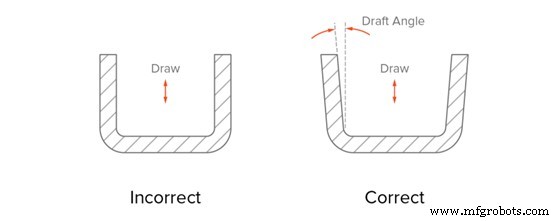
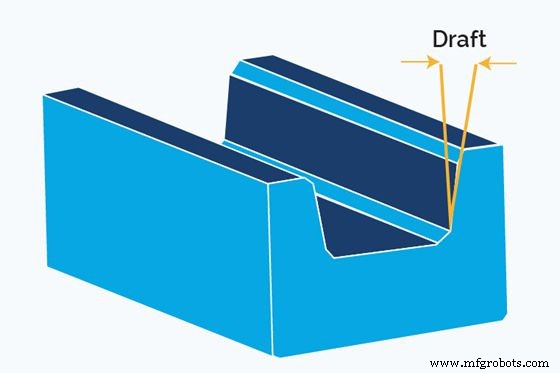
The draft angle is the intentional taper applied to the walls of a mold, measured in degrees relative to the part’s drawing direction. While the angle is a mold feature, it is also visible on the finished component. Engineers typically target around 1.5°, though values between 0.5° and 10° are common for specialized parts.
Why Draft Angle Matters in Injection Molding
Smooth Part Ejection
During ejection, the part contacts the mold walls, creating friction that can deform the surface, increase required ejection force, and shorten tool life. A proper draft angle releases the part instantly as the ejector pins push it outward, eliminating contact and friction.
Without a draft, the part slides along the mold, compromising surface finish, tolerances, and leading to higher ejection forces.
Warping Prevention
As a part separates from the mold, a vacuum can form if there is no draft, pulling the part inward and causing warping. The draft allows air to flow in immediately, preventing vacuum formation and keeping the geometry flat.
Superior Surface Finish
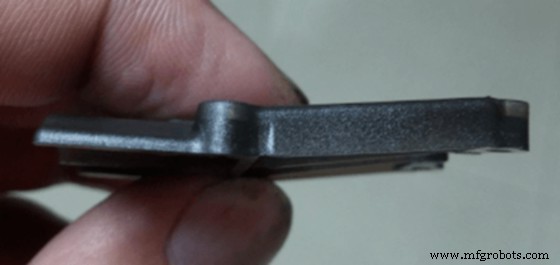
By eliminating rubbing against the mold, the draft preserves fine surface details and reduces the need for post‑process finishing. When dealing with textures, the draft must accommodate not just the gross shape but also the fine protrusions.
Reduces Deep Draw and Flash
Deep draw—when the mold halves separate along a line that cuts into the part—poses a risk of part sticking. A larger draft angle mitigates this by easing separation and reducing flash.
Cost Savings
Draft angles reduce warping, improve surface quality, and lower ejection forces. These benefits translate into fewer rejects, less machining, and reduced tool wear, ultimately cutting both production and maintenance costs.
Design Guidelines for Draft Angles
Choosing the right draft angle requires balancing functional, aesthetic, and manufacturability concerns. Below are proven rules of thumb.
1. Mechanical Fits & Thermal Shrinkage
Draft angles affect how a part shrinks during cooling. External faces move outward, while internal faces pull inward, potentially altering dimensional tolerances. Ensure that the drafted geometry still meets fit requirements after shrinkage.
2. Texture‑Driven Draft
The rougher the surface texture, the larger the draft needed to avoid abrasion during ejection. For mirror finishes, 0.5° is typical. Increase the draft by 0.4° for every 0.1 mm of added roughness, up to 10° for extreme patterns.
3. Depth‑Based Draft
Deeper features generate more vacuum risk. Add 1° of draft for every inch of part depth (≈25 mm). Adjust slightly for material or part size but this rule holds for most cases.
4. Core‑Cavity Approach
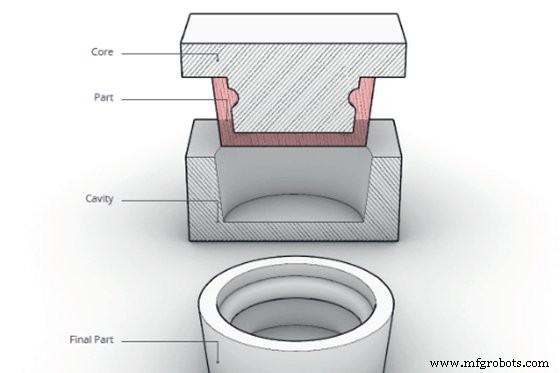
When an outer surface must remain smooth while the interior may be rough (e.g., protective housings), apply a slightly larger draft to the core. The core shrinks into the mold, while the outer surface detaches cleanly.
Quick Reference: Draft Angle Tips
- Start with a 1.5° draft for most parts.
- Draft both cavity and core; core draft can be 0.2–0.5° higher.
- Add 1° per inch of depth.
- For each 0.1 mm of roughness, increase draft by 0.4°.
- Apply draft to all vertical features: walls, ribs, louvers, undercuts.
- Use the core‑cavity method for aesthetically smooth exteriors.
- Include drafts on side‑drawn features as well.
- Hard, abrasive materials warrant larger drafts than soft, ductile ones.
Conclusion
Draft angles are more than a mold detail—they are the foundation of reliable, high‑quality injection‑molded parts. By incorporating the guidelines above, you’ll reduce defects, lower costs, and improve overall manufacturing performance.
WayKen Rapid Manufacturing specializes in precision mold design and rapid tooling. Our services include detailed DFM analyses, accurate simulation of draft angles, and turnkey production solutions. Contact us today to accelerate your injection‑molding projects.
FAQs
When should I include a draft angle?
Draft angles should be considered from the earliest design stage—ideally during conceptual sketches and prototype development—to guarantee manufacturability and part integrity.
Can I skip draft angles?
Omitting draft angles is risky. While small parts with tight tolerances might tolerate it, the risk of warping, surface defects, and higher tooling wear makes it inadvisable in most cases.
What are positive vs. negative drafts?
A positive draft means the part tapers toward the mold cavity (wider at the base). A negative draft tapers outward, which is rarely used in injection molding due to ejection challenges.
Industrial Technology
- Discover Your Network Security Key: Easy Steps to Find and Protect Your Wi‑Fi
- Transistor Latch Explained: A Complete Guide to Building and Using Latch Circuits
- Discover Why These Aluminum Alloys Are Ideal for CNC Machining
- Why Clean Machining Coolant Matters: 5 Essential Benefits
- Tesla's Virtual Power Plant: Transforming the Global Energy Grid
- Industrial-Grade FFF vs Desktop 3D Printers: Key Differences Explained
- Advancements in High-Pressure Water Jet Cutting: A Decade of Innovation
- How Industrial IoT Cuts Costs: 5 Proven Strategies for Manufacturers
- Intimidator Group's Growth: How CoreValue Assessment Catalyzed Transformation in Arkansas
- Mastering Modern Woodworking: Trends, Tech, and Techniques