



Mitigating Battery Management System Failures: Strategies to Prevent Thermal Runaway
What is thermal runaway in Li‑ion battery systems? And how do battery management systems help mitigate failure for improved safety? Learn more in this technical article.
Li‑ion batteries are generally safe when operated in controlled environments. However, the safety assurance is only as good as the battery management system (BMS) and the cell manufacturing process. In practice, BMSs are not infallible, so designers must prioritize resilient BMS architecture to counteract the inherent physics of Li‑ion chemistry.
Building on our earlier overview of BMS fundamentals, this article explores failure modes, particularly thermal runaway, and presents proven mitigation strategies. We also preview emerging BMS components that align with the evolving demands of high‑density battery technologies.
Thermal Runaway in Battery Management Systems
Thermal runaway is a critical failure mode that can culminate in fire hazards. In a BMS, it can be triggered by hardware faults or firmware bugs. For instance, a forgotten stop command in the cell balancer may allow a cell to over‑discharge indefinitely. Even if the system detects the anomaly and triggers a fuse, the continued discharge can compromise the separator, creating an internal short circuit during the next charging attempt.
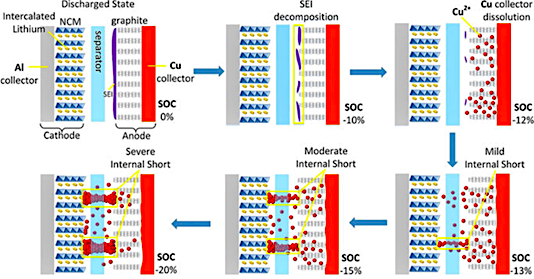
Figure 1. Formation of internal copper shorts due to over‑discharge. Image courtesy of Xuning Feng
An internal short may escape detection if the initial contact presents high resistance yet permits a substantial self‑discharge current. The resulting high‑current event heats the cell. When the temperature exceeds ~60 °C, the cell can burst and ignite, propagating heat to adjacent cells and triggering a chain reaction—this is thermal runaway.
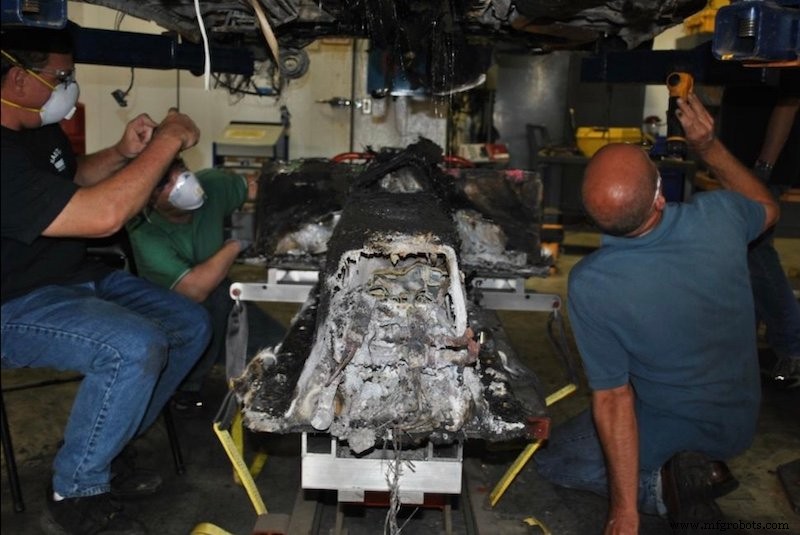
Figure 2. A burnt high‑energy battery pack from a 2011 Chevrolet Volt. Image from the Chevrolet Volt Battery Incident Overview Report
Failure Mitigation
Deploying an external watchdog that monitors the microcontroller (MCU) can detect fatal errors and initiate a system reset, as illustrated in Figure 3.
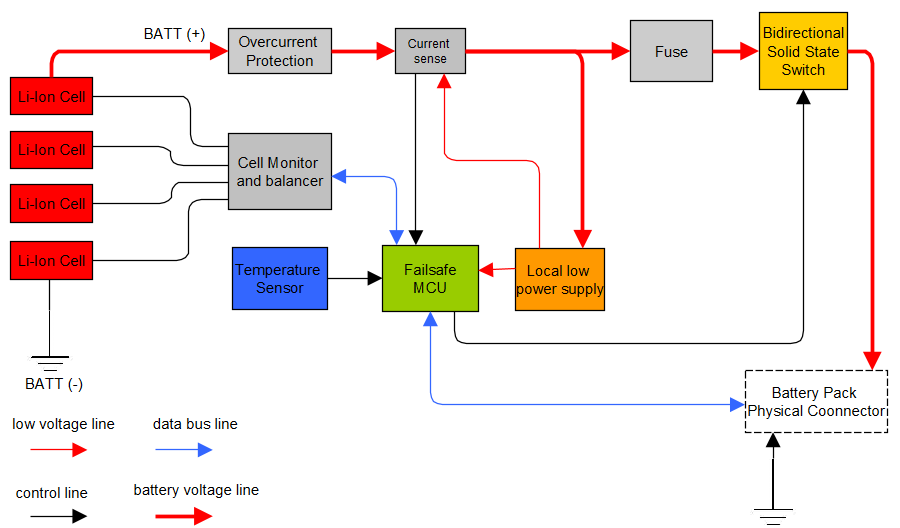
Figure 3. Typical BMS block diagram with MCU watchdog implementation
If the MCU remains responsive but a critical command is missed, a cell‑monitor‑based watchdog can intervene, as shown in Figure 4.
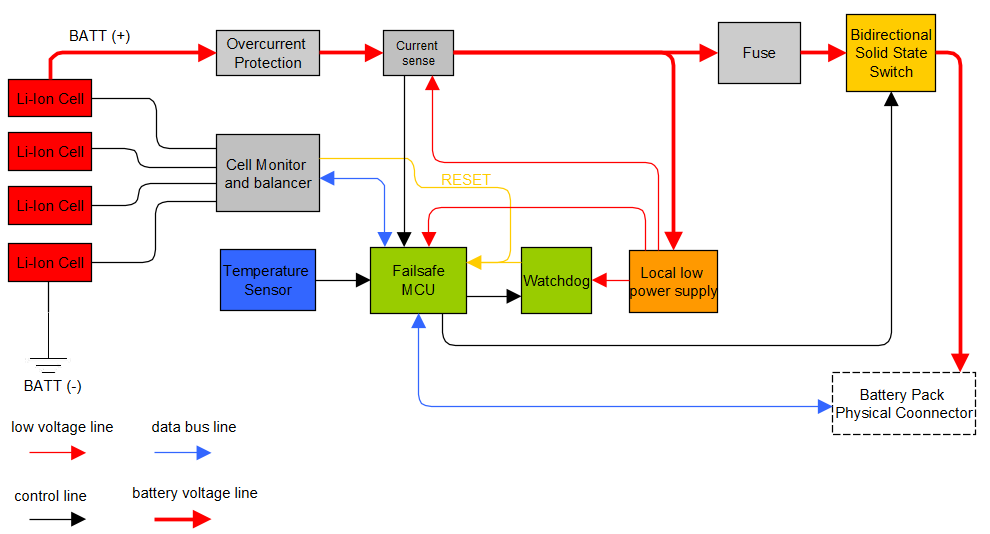
Figure 4. BMS block diagram with comprehensive watchdog implementation
In scenarios involving latch‑up from electromagnetic interference or radiation, a watchdog that triggers a full power cycle—rather than merely a logic reset—provides a more robust safeguard, though this architecture is less common.
Additional Solutions for Mitigating BMS Failure
As energy densities rise, the margin for error shrinks. Precise state‑of‑charge estimation must incorporate cell impedance measurements. A recent method from Panasonic employs localized AC stimulation to monitor electrochemical impedance in real time, eliminating the need for an unloaded voltage reference and calibration.
Another reliability improvement is the adoption of FRAM for Coulomb‑counter buffers. Because FRAM retains data across power cycles, firmware loses fewer critical measurements during unexpected resets.
Ultimately, the chemistry of the cell plays a pivotal role; next‑generation chemistries beyond Li‑ion can offer enhanced safety margins.
For deeper insights into battery systems, feel free to comment below.
Industrial Technology
- Mitigating Battery Management System Failures: Preventing Thermal Runaway in Li‑Ion Batteries
- Understanding Single Point of Failure: A Clear, Professional Guide
- Automating IoT in Sustainable Apparel: Bridging Manpower Gaps with Digital Tags
- Advanced Drayage Management System: Optimizing Supply Chain Efficiency
- Enhancing Library Operations with RFID Technology: A Comprehensive Overview
- 5 Key Advantages of a Warehouse Execution System for Modern Supply Chains
- Enhancing Facility Reliability with Failure Code Management
- Understanding CMMS: The Key to Smart Maintenance Management
- 5 Essential Considerations for Heat Treating Metal Parts
- Key Factors for Designing a Reliable Compressed Air Piping System