



Advanced Cockpit Displays: The F/A‑18 Super Hornet’s Touchscreen Innovation
Engineering the Future of Fighter Jet Cockpits
In the high‑stakes environment of military aviation, display systems are more than just screens—they’re critical interfaces that can mean the difference between mission success and failure. This article examines the cutting‑edge display architecture of the F/A‑18 Super Hornet, drawing on firsthand insights from former Navy pilot and engineer Matthew Dominick.
From PalmPilot to Flight Decks
Touchscreens entered mainstream consumer electronics in the early 1990s, with the PalmPilot launching in 1992 as one of the first widely available PDAs. Its simple interface—memos, calendar, address book, and to‑do lists—demonstrated the power of touch interaction. The PalmPilot’s hardware, including the Burr‑Brown ADS7843 controller, relied on capacitive redistribution and SAR ADCs, setting a foundation that would later influence high‑reliability aerospace displays.
The F/A‑18 Super Hornet Display Architecture
Matthew Dominick, who flew the Super Hornet while assigned to a Navy Strike Fighter Squadron, describes the cockpit’s single, large‑area “glass cockpit” that replaced the multiple displays of the Block II variant. Pilots can arrange, resize, and customize display formats via an intuitive touchscreen, reducing workload and enhancing situational awareness.
Unlike earlier models, which combined a central screen with roughly 20 tactile pushbuttons that provided instant mechanical feedback, the Super Hornet’s touchscreen offers visual confirmation through brightened key images. However, the lack of tactile feedback requires pilots to maintain visual focus on the display, which can increase cognitive load.
Dominick notes that in mission‑critical operations, a failure rate of even 4–5 % in touch response is unacceptable. He cites a benchmark of 50 ms latency: “If a touch doesn’t produce a response within 50 ms, the pilot is likely to press twice, leading to errors.”
During an interview on Moore’s Lobby, Dominick reflected on the frustrations of unreliable touchscreens: “Have you ever used a touchscreen device and it didn’t give you the response you expected?” He emphasized that a 4–5 % failure rate is a major design flaw and that pilots rely on latency thresholds of around 50 ms.
Design Lessons for Future Aerospace Displays
- Immediate Feedback: Tactile or haptic cues significantly improve pilot trust and reduce reaction time.
- Low Latency: Sub‑50 ms response is essential for maintaining operator confidence.
- Adaptive Layouts: Customizable screens help pilots prioritize critical data.
The U.S. Navy has recently upgraded its fleet with Block III Super Hornets, integrating refined display technologies that address some of these challenges.
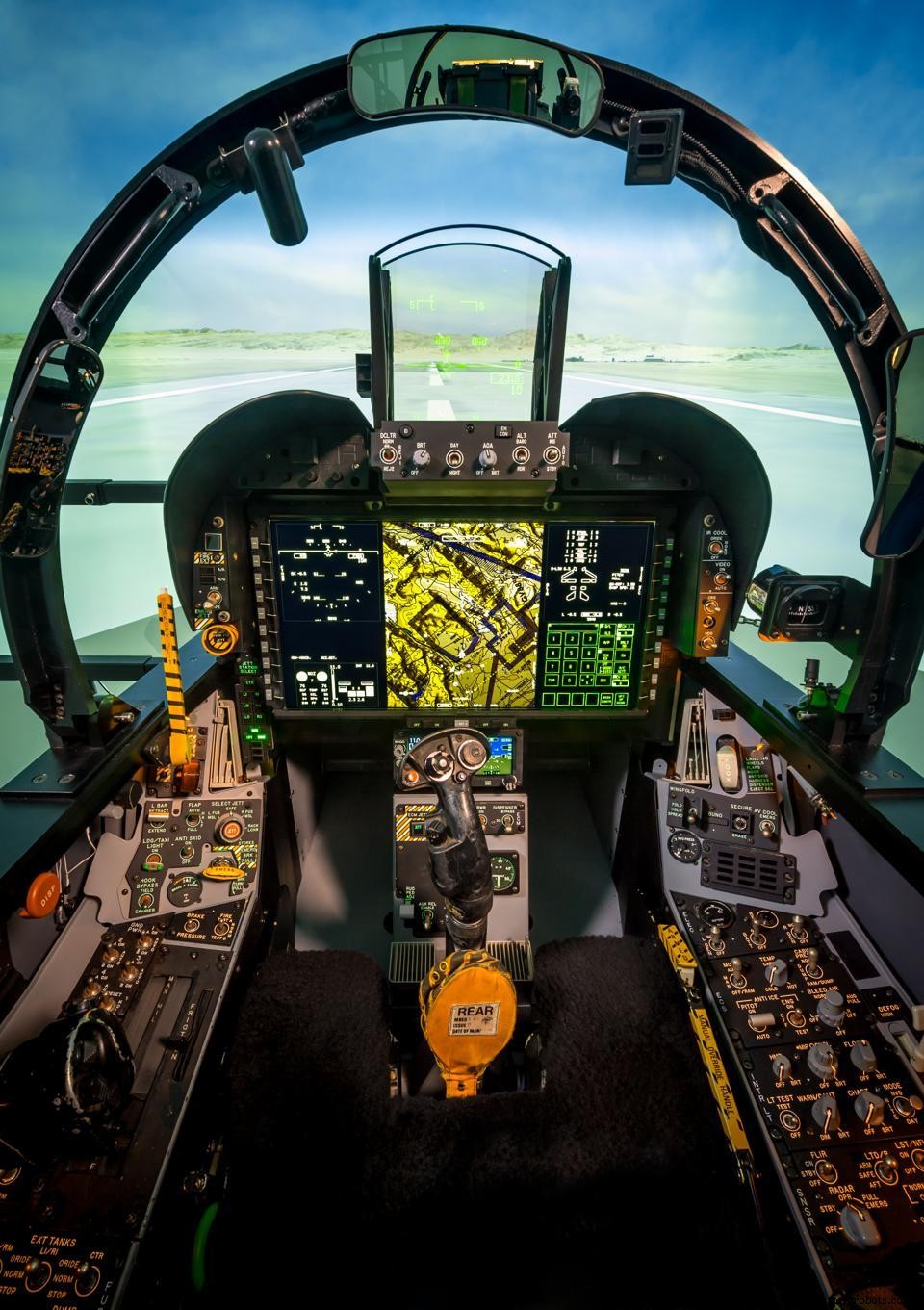
Figure 1. The Advanced Cockpit of the Block III Super Hornet. The center display replaced four separate panels in the Block II version. (Image from Boeing)
In the next article, we’ll explore the evolution of the “glass cockpit” concept and its broader impact on aerospace display design.
Industrial Technology
- Schaeffler Leads Innovation in Industrial-Scale Hydrogen Production
- From Analog to LCD: How Space Shuttle Glass Cockpits Evolved
- Revolutionary Liquid‑Crystal Inside‑Crystal Design Promises Ultra‑Energy‑Efficient Displays
- Revolutionizing Food Production: Two Key Industry 4.0 Technologies
- Why Smart Factories are Essential for Modern Manufacturing
- How Digital Innovation Drives Productivity in Modern Manufacturing
- Precision Tube Bending for Aerospace Excellence
- Sand Casting for Heavy Equipment: Precision, Durability, and Versatility
- Investment Casting in Aerospace: Precision, Efficiency, and Sustainability
- Sand Casting in Automotive: High Quality, Low Cost, and Volume Flexibility