



From Analog to LCD: How Space Shuttle Glass Cockpits Evolved
In the final part of our Glass Cockpit series, we examine the journey of display technology in SpaceX’s Crew Dragon and its predecessors.
Throughout this series we have explored the fundamentals of touchscreen displays and their application in the F/A‑18 Super Hornet. This installment culminates in a deep dive into the digital “glass cockpit” that has revolutionized spaceflight interfaces, moving from analog dials to LCD panels and touchscreens.
The “Glass Cockpit”
Unlike the F‑18, space missions face no threats from enemy aircraft or hostile ground targets. Nevertheless, the complexity of spacecraft systems demanded a cleaner, more intuitive cockpit. The Space Shuttle Atlantis was one of the first to adopt a glass cockpit layout, featuring integrated digital displays that simplified flight data and reduced pilot workload.
My first encounter with a glass cockpit came during a visit to NASA’s Johnson Space Center in Houston. I met former astronaut Dr. Lee Morin—now head of NASA’s Crew Interface Rapid Prototype Lab (RPL) for the Orion program—who explained the RPL’s role in providing rapid, iterative feedback between crew, contractors, and NASA partners.
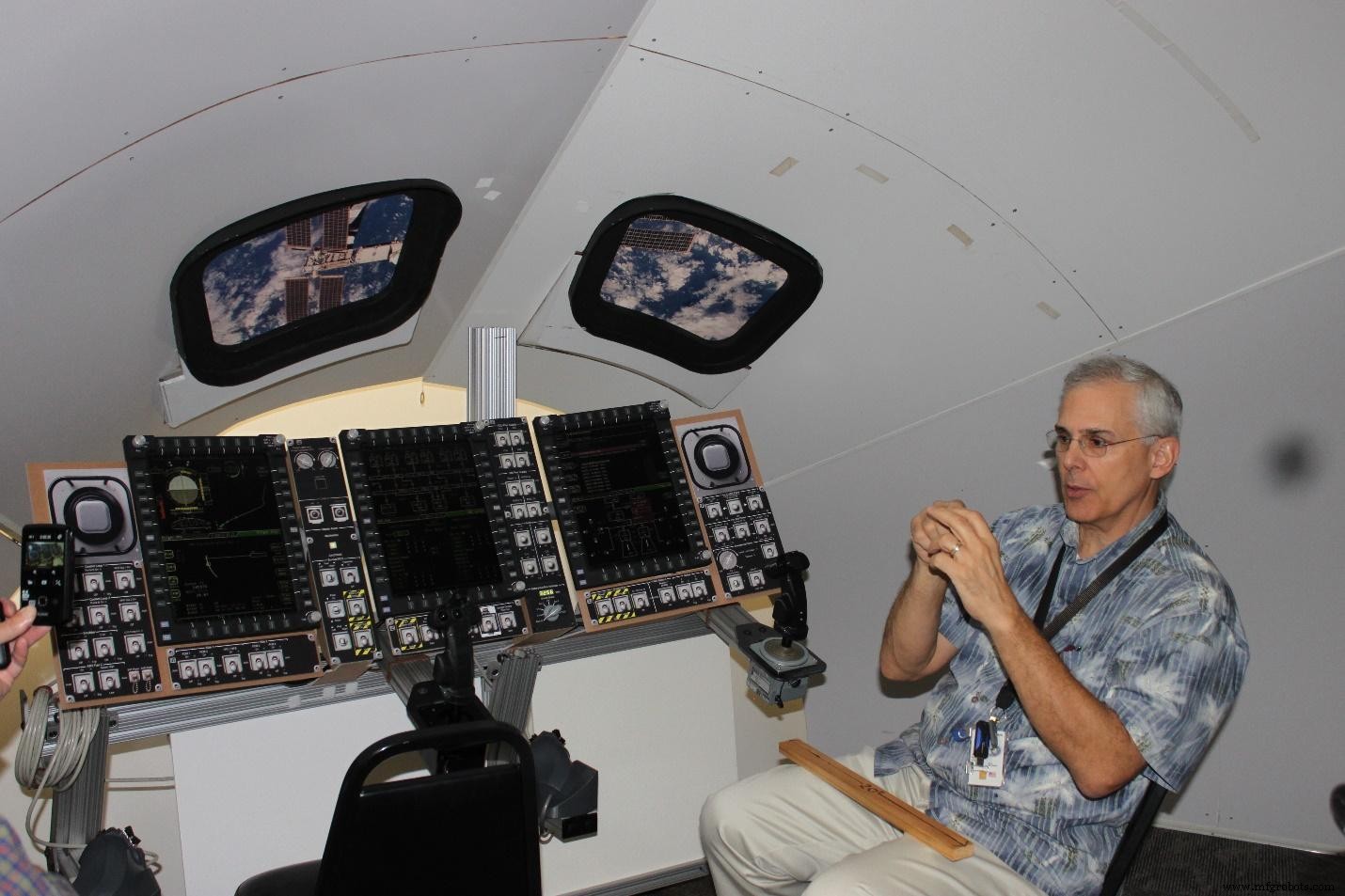
Figure 5. Dr. Lee Morin explaining the three‑screen glass cockpit design for Orion (Image by Loretta Taranovich)
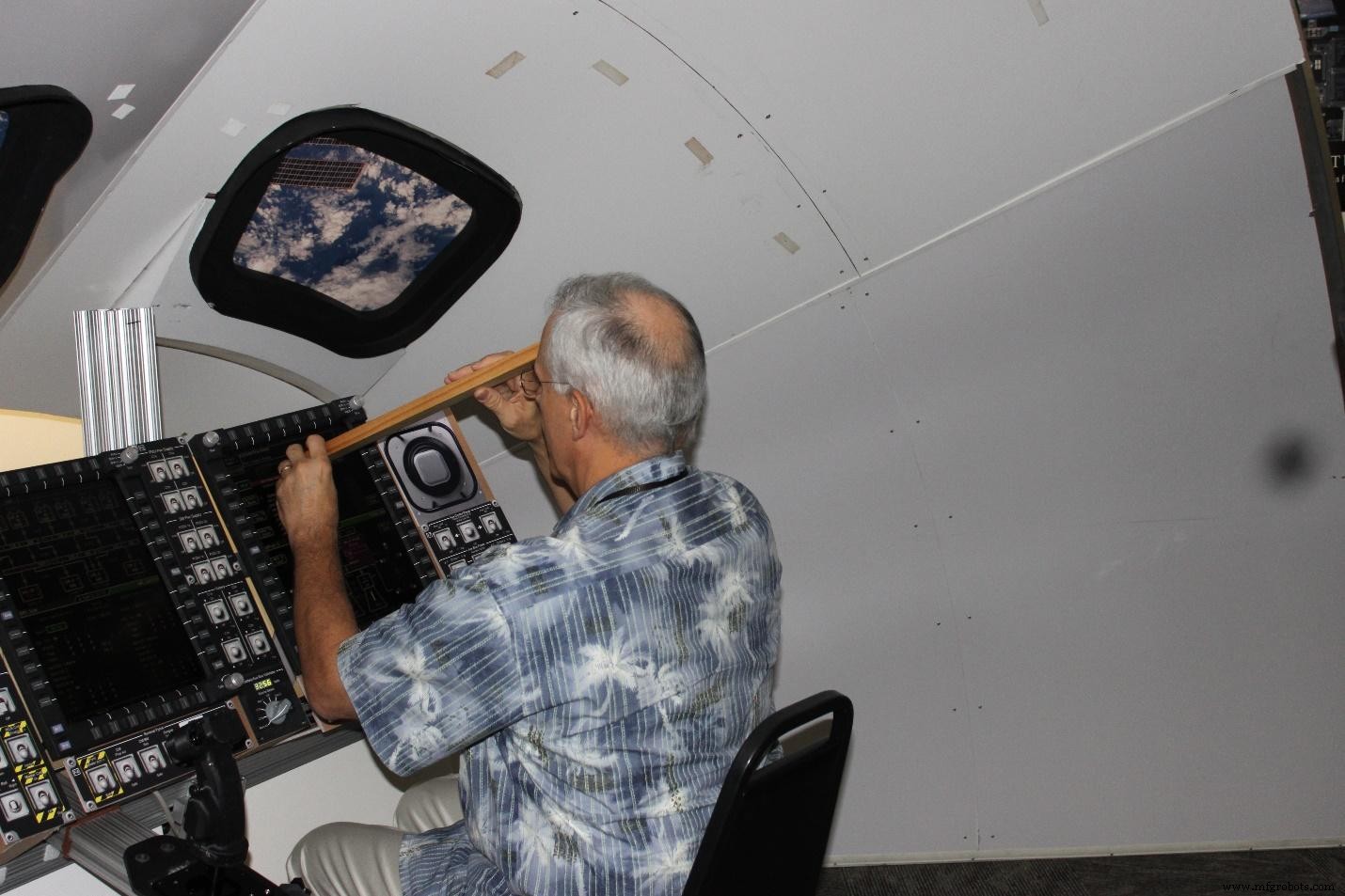
Figure 6. Morin discussing optimal display distance and angle for astronauts (Image by Loretta Taranovich)
In the 1970s, commercial aircraft typically housed over 100 instruments and controls, cluttering the pilot’s field of view. NASA Langley Research Center partnered with industry leaders to design a glass cockpit that would reduce pilot workload during critical phases and enhance situational awareness. Boeing supplied experienced engineers, while Rockwell Collins delivered the hardware, achieving a balance between advanced computer systems and human factors.
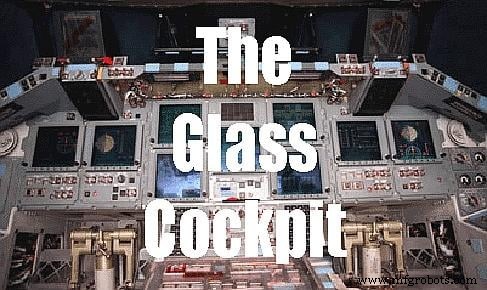
Figure 7. Orion’s computer system and glass cockpit modeled after the Boeing 777, a proven aircraft platform that ensures cost‑effectiveness and safety (Image courtesy of NASA)
SpaceX’s Crew Dragon Controls
SpaceX’s Crew Dragon introduced a robust touchscreen interface that addressed early reservations about touchscreens in space. Extensive collaboration with astronauts guided the ergonomic placement of controls and the tactile feedback of the displays. Demo‑2 astronauts worked closely with SpaceX engineers to refine the touch input system, ensuring reliable operation and minimizing the risk of accidental inputs.
Astronaut Matthew Dominick highlighted this collaborative culture on the All About Circuits/Moore’s Lobby podcast, noting how “the commercial guys put the CAD/design team right next to the factory floor” to iterate design in real time.
These advancements mark a new era in spaceflight, prioritizing astronaut safety and operational efficiency as humanity ventures to the International Space Station and beyond.
Featured image: the cockpit of Space Shuttle Discovery, courtesy NASA.
Industrial Technology
- Why Molybdenum Dominates Glass Manufacturing
- Metallic Glass: The Ultra‑Strong, Ultra‑Soft Alloy Bridging Metals and Glass
- Advanced Cockpit Displays: The F/A‑18 Super Hornet’s Touchscreen Innovation
- Glass Fiber Performance: Physical, Mechanical & Chemical Properties Explained
- How Composite Materials Shaped Space Exploration
- Precision Machining Technologies: Advancing Accuracy & Efficiency
- Boost Production Efficiency with Effective Display Boards on the Shop Floor
- Industry 4.0 Unveiled: History, Benefits, and Key Technologies
- Glass Waterjet Cutting: Precision, Clean Cuts & No Finishing Required
- Glass-to-Metal Seal Challenges in Electronics: Prevention & Detection