



Intermediate Bus Architecture: A Space‑Saving Power Design Technique
Intermediate Bus Architecture: A Space‑Saving Power Design Technique
Power electronics has evolved from mercury‑arc rectifiers to modern IGBTs, driving demand for smaller, cost‑effective systems in clean energy, EVs, and data centers. One emerging solution is the Intermediate Bus Converter (IBC), which can shrink PCB footprints while keeping efficiency high.
While the Distributed Power Architecture (DPA) remains the industry standard for point‑of‑load (POL) designs, the Intermediate Bus Architecture (IBA) offers a two‑stage approach that lets designers use low‑voltage, low‑inductance POL converters. This reduces inductor size, cuts cost, and can halve the total solution area.
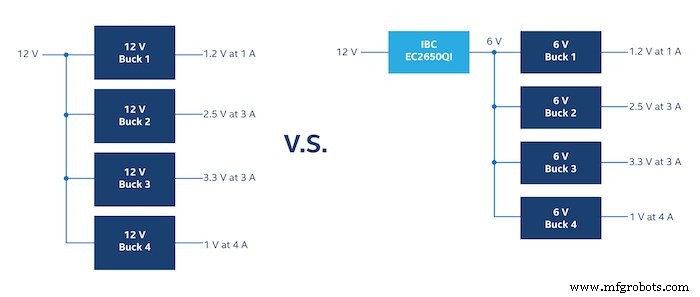
Figure 1. One‑stage traditional DPA vs. 2‑stage IBA
The trade‑offs between IBA and DPA depend largely on the number of power rails:
| IBC Architecture | DPA Architecture | |
| Cost | Lower cost from smaller inductors and POL converters | Higher cost due to high‑voltage process and larger inductance |
| Efficiency | Lower system efficiency from the first conversion stage | Higher efficiency without an intermediate stage |
| Solution Size | Smaller total footprint | Larger footprint |
| Power Density | Higher power density | Lower power density |
| # of Rails | Ideal for 3+ output rails | Ideal for <3 output rails |
To illustrate the approach, Intel’s EC2650QI 12‑to‑6 V Intermediate Bus Converter and Enpirion PowerSoCs are used as reference designs.
| Specifications | Features |
| VIN: 8 – 13.2 V | Up to 94 % efficiency |
| VOUT: VIN / 2 | 0.9 mm height |
| 6 A continuous output current | 36 W output power per bus converter |
| 150 mm² solution size | Parallel capable (up to four for 144 W total) |
Multi‑Stage Power Conversion: Reducing PCB Size
In a single‑stage 12 V → 3.3 V conversion, the downstream DC‑DC module must tolerate at least 20 V, necessitating a high‑voltage process and a larger inductor. Switching at a higher frequency to keep ripple low increases losses, further inflating size.
A two‑stage IBA first steps 12 V down to 6 V, allowing the next POL module to run on a 10 V process. This reduces inductor size and cost, and improves thermal performance.
Managing the Two‑Stage Efficiency Penalty
System efficiency hinges on the IBC’s performance. Intel’s EC2650QI achieves up to 94 % efficiency via a switched‑capacitor topology. For example:
- Direct 12 V → 3.3 V at 3 A: 92 % with the EN2340QI.
- 12 V → 6 V: 94 % with the EC2650QI.
- 6 V → 3.3 V at 3 A: 95 % with the EN6340QI.
- Overall two‑stage efficiency: 0.94 × 0.95 = 89.3 %.
Although the two‑stage path drops efficiency slightly, the space savings can outweigh the loss. Designers can further tune the design by selecting low‑current IBCs, using larger POL converters, or hybridizing small and large POLs.
When to Adopt IBA?
IBA is most advantageous when you need to accommodate three or more rails while keeping PCB area and cost low. A typical case study shows:
| 1‑Stage with Large POLs | 2‑Stage with Small POLs |
| Efficiency: ~87 % | Efficiency: ~84 % |
| Total solution size: 800 mm² | Total solution size: 390 mm² |
Replacing two small POLs with larger, more efficient EN6362QIs raises efficiency to ~85 % while keeping the footprint 26 % smaller than DPA.
Customizing IBA for Your Design
IBA provides flexibility: use high‑efficiency IBCs, parallel devices, and tailored POL selections to balance size, cost, and performance. Intel’s EC2650QI can be paralleled up to four units, delivering 144 W at only 150 mm² per device.
Additional Resources
- Intel Enpirion information page
- Introduction to Intel Enpirion Power Solutions
- EC2650QI product page
- Intel EC2650QI Overview Video
Industry Articles provide expert insights and are subject to editorial guidelines.
Industrial Technology
- Unlock Global Growth: How Exporting Drives Sales & Innovation for Manufacturers
- Modern Apprenticeships: Driving Manufacturing Success in a Talent-Shortage Era
- Blockchain for Manufacturers: Unlocking Transparency, Trust, and Efficiency
- Boost Warehouse Efficiency: How Automation Empowers Workers, Enhances Safety, and Drives Profit
- How Spend‑Management Solutions Empower Private Universities
- Leveraging AI to Strengthen Business Cybersecurity
- How Tracking Software Enhances Worker Safety and Prevents Fines
- Tiny PCBs: Pushing the Limits of Compact Circuit Design
- Save $2.2 Trillion Annually: How Polyurethane Coatings Prevent Corrosion
- Mastering High‑Speed PCB Power: Analyze and Eliminate Impedance for Reliable Performance