



Advanced Process Control Systems for Industrial Efficiency
Process Control System
A process is broadly defined as an operation that uses resources to transform inputs into outputs. It is the resource that provides the needed energy to the process for the transformation to occur. In the context of an industry the term ‘process’ as used in the term ‘process control’ refers to the methods of changing and refining of raw materials that remain in a solid, liquid, gaseous, fluid or slurry state to create end products of specified properties. The raw materials during the process are transferred, measured, mixed, heated or cooled, filtered, stored or handled in a way so that the desired output is obtained. During the process the raw materials undergo physical and chemical changes for their conversion into the end products. Normally an industry operates a number of processes where each process exhibits a particular dynamic (time varying) behaviour that governs the transformation. The dynamic behaviour is determined by the physical and chemical properties of the inputs, the resource and the process itself.
Process control refers to the methods that are employed for controlling the variables of the process or processes used in the manufacturing of a product. It is the act of controlling a final control element to change manipulated variable to maintain the process variable at a desired set point. These variables can be in process inputs, in process parameters and in process output. Control of the process is done to reduce its variability for getting aimed product quality, improving the production rates, increasing the efficiency of the process, facilitating protection of the environment and ensuring safety of the men and equipment employed for the process.
A corollary to the process control is that a controllable process must behave in a predictable manner. For a given change in the manipulated variable the process variable must respond in a predictable and consistent manner.
A process control system has got the following objectives.
- Process control system is central for the maintenance of the quality of the product. Process control system maintains the parameters of the process within the close limits to obtain products of consistent specifications from the process. Without control of the process, quality of the product may vary and the product may get rejected.
- Process control system is to preserve the safety of personnel, equipment and environment.
- Process control system should meet and maximize the equipment productivity and hence the production.
- Process control system should also ensure that the consumption of raw materials, energy and utilities remain within the specified consumption norms for the process.
- Process control system is also required to keep the cost of the production under control overcoming the constraints put on the process by the environment. The control of the cost is to be achieved without compromizing on the safety and product quality.
To give the desired output, a process is to operate within the set parameters. The process is said to be in stable operation if it is operating within specified range of the set parameters. However there can be deviations from set parameters during the process operation. These deviations are called disturbances. Disturbances are caused due to uncontrolled changes in the process inputs which can be feed condition, utility supply pressure or temperature, catalyst activity, heat transfer efficiency etc. When a process experiences disturbances then there are deviations in the process variables and then the process becomes unstable.
Industrial processes are normally dynamic in nature and hence a process control system usually has dual tasks. Through process control system an operator (i) monitors certain process conditions indicators and (ii) induces changes in appropriate variables in order to improve process conditions. Control is exercised to maintain desired conditions in the process system by adjusting selected variables in the process system. A specific value or range is used as the desired value for the variable to be controlled. It is always better to utilize the simplest control system which can achieve the desired objectives. The design of a process determines how it will respond dynamically and how it can be controlled.
A process has normally got the following four types of variables.
- Input variables – These are those variables that independently stimulate the process system and thereby induce change in the internal conditions of the process. These variables can be manipulated variables or can be disturbance variables.
- Output variables – These are those variables by which an operator obtains information about internal state of the process.
- Control variables – These are those variables which are used by the operator for manipulation to keep the process under control.
- State variables – These are the minimum set of variables which are essential for completely describing the internal state (or condition) of a process.
The process need to be monitored by the operator so as to ensure that the process operates in the stable condition and gives the desired output. For monitoring, the conditions (process parameters) of the process system are measured. For this operator is to depend on instruments. Further each system has a control calculation which is also called algorithm. The results of calculation are implemented for process to function correctly. The instruments used for controlling a process can be sensors, transmitters, controllers and final control element.
- Sensors are those instruments which carry out the functions of vision, hearing etc. These instruments measures temperature, level, flow, composition etc. These are thermocouples, differential pressure meters, gas analyzers etc.
- Transmitters are like neurons. They transmit signals like air signals or electric signal etc.
- Controllers – controllers do the function of brain. Controllers can be pneumatic, electronic, or digital computers.
- Final control element – These carry out the function of muscles. These are control valves, pumps, compressors, conveyors, relay switches etc.
A block diagram showing different control elements is at Fig. 1
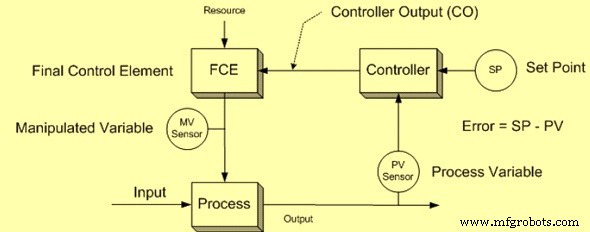
Fig 1 Block diagram showing various control elements
There are two main reasons for control. The first reason for control is to maintain the measured variable at its desired value when disturbances occur. The second reason for control is to respond to changes in the desired values of the process parameters. The desired values are those values which are needed for the process to run in stable form to produce specified product in an economic and safe way without adversely affecting the environment.
The design of the plant and equipment greatly influences the process control activities. It is also essential for the process to provide good dynamic performance. It is necessary that all the instruments and testing equipments are periodically and correctly calibrated. Calibration of the instruments and testing equipment should trace back to national standards. Sensors are to be correct and fast acting with capacities suiting the equipment and process needs. A process can be controlled either manually or automatically with the help of necessary instrumentation. Most of the automatic controls are implemented with electronic equipment which uses levels of current or voltage to represent values to be communicated.
For a good process control, it is necessary that the system should be responsive and only few disturbances should occur. In a responsive process control system, controlled variables responds quickly to adjustments in the manipulated variables. In such system frequency of disturbances also gets reduced. One should remember that an operator can control a parameter only if it is measured hence location and selection of the sensors are very important. Sensors should measure variables rapidly, reliably and with sufficient accuracy.
Manufacturing process
- M-TECH: Advanced CNC Control System for Apollo Routers
- Control System Migration Success: Expert Strategies for a Seamless Transition
- Integrated Control Systems: Enhancing Safety and Efficiency in Automation
- Advanced Automation, Control, and Modeling in Basic Oxygen Steelmaking
- High-Performance Blast Furnace Automation, Measurement, and Control Solutions
- Advanced Automation and Control Systems for Sintering Plants
- Mastering Process Control: Precision & Safety in Technological Manufacturing
- Statistical Process Control (SPC): A Comprehensive Guide to Quality Management
- Eight Proven Steps to Diagnose and Fix Your Process Control System
- PLC vs DCS: Choosing the Right Control System for Your Automation Needs