



The Kazoo: From Ancient Mirliton to Modern Plastic Toy – History, Manufacturing & Future
Introduction
A kazoo is a mirliton—a small, resonant tube that amplifies the human voice through a vibrating membrane. Though often seen as a playful toy, its roots trace back to the African mirliton of the 1800s.
Background
Unlike conventional brass or woodwind instruments, the kazoo is a wind instrument that relies on the player’s humming to produce sound. The instrument consists of an open‑ended, tapered tube, a turret section that houses a thin resonating membrane, and no valves or buttons. When a musician hums, the vibration of the voice causes the membrane to buzz, creating the kazoo’s distinctive timbre.
History
The modern kazoo was likely derived from an African instrument called the mirliton. African tribes used it as a voice disguiser during religious ceremonies. In the United States, a modified version became a popular African‑American folk instrument during the 1840s.
In 1844, Alabama Vest patented the first kazoo design and had it manufactured by clockmaker Thaddeus von Clegg. Their prototype was showcased at the 1852 Georgia State Fair, sparking regional popularity. The 1900s saw large‑scale production pioneered by Emil Sorg and Michael McIntyre. McIntyre’s 1914 company received a manufacturing patent in 1923 and remains operational today as the Original American Kazoo Company.
Today, plastic has become the standard material for most kazoos, replacing earlier versions made of metal, wood, or glass.
Raw Materials
- Body: Primarily high‑molecular‑weight thermoplastics such as polypropylene and high‑density polyethylene (HDPE). These polymers are reinforced with fillers to improve rigidity and reduce weight, and colorants are added for visual appeal.
- Metal Kazoos: Stainless steel, silver, or gold for premium models, though they are costlier and less common.
- Resonating Membrane: Historically wax paper, now advanced silicone‑based films that offer durability and consistent vibration.
Design & Manufacturing
The production process centers on precision injection molding and meticulous assembly:
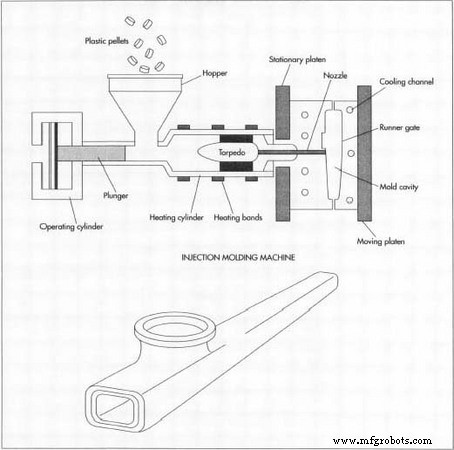
- Molding: Thermoplastic pellets are melted in an injection‑molding machine, poured into a highly polished steel mold, and cooled. The mold is designed slightly larger to compensate for plastic shrinkage.
- Assembly: The turret, membrane, and body are glued or snapped together. For metal kazoos, stamped sheet metal parts are assembled directly.
- Decoration: Logos and designs are applied via direct labeling or silk‑screen printing, ensuring the ink dries before the instrument exits the machine.
- Packaging: Finished kazoos are boxed with instruction booklets or blister‑packaged, then palletized and shipped to distributors.
Quality Control
Quality checks occur at every stage. Random sampling and visual inspections confirm that parts meet size, shape, and finish specifications. Dimensional measurements with vernier calipers, micrometers, and microscopes ensure tolerance compliance.
Future Directions
Upcoming innovations aim to enhance durability, expand design variety, and streamline production:
- Higher‑grade plastics for longer‑lasting membranes.
- Character‑themed kazoos to attract new audiences.
- Ultraviolet‑curable plastics to reduce the need for injection molding.
- Automation upgrades to increase throughput and reduce labor costs.
These advances will help kazoos maintain relevance in both educational and entertainment contexts.
Manufacturing process
- The Harp: From Ancient Roots to Modern Masterpieces
- Expanded Polystyrene Foam (EPF): Production, Properties, and Sustainability
- Mastering Raspberry Pi Sensors: A Practical Guide to Electronics and Communication Protocols
- HSV Clock: Vibrant, Customizable Timepiece for Arduino Enthusiasts
- Build a Multifunctional Arduino RC Transmitter: Step‑by‑Step DIY Guide
- Hydrogen Steelmaking: Reducing Carbon Footprint in Iron & Steel Production
- Understanding Thread Cutters: Types, Uses, and Applications
- Understanding Quarries: Types, Uses, and Global Distribution
- Understanding Skeleton Keys: Types, Uses, and Historical Significance
- Inside Calipers: Definition, Uses, and Key Features