



Proven Food Safety Strategies for Safe Material Handling
The American food industry is enormous. It takes a lot to feed American consumers safely. Food is the one common denominator 330 million of us have. Every day, we dine on food to stay healthy and enjoy life. To do that, it’s critical we safely handle our food supplies as well as protect our food-handling workers.
According to the United States Food and Drug Agency (FDA), over 48 million Americans fall ill every year after consuming tainted foods. FDA statistics say one in six U.S. citizens gets sick every year from bad food products. The agency reports 128,000 are severely impacted annually and end up hospitalized from some form of food poisoning. Sadly, 3,000 of these innocent people die after ingesting dangerous food.
The vast majority of food-related illnesses are preventable. As with accidents occurring in the food handling lines, contaminated and spoiled foods don’t have to happen. They can be nipped in the bud as long as products are safely handled, especially in a warehouse environment. Food safety — and worker safety — are imperative.

- Recalls: The FSMA gives FDA inspectors full authority to recall any unsafe food product released from a warehouse into the mainstream American market. That’s not just cross-contaminated or perishing products. Mislabeled and improperly packaged products that pose a public safety risk are immediately recalled. The onus is on the warehouse to facilitate recalls. They must order immediate shutdown in any hazardous situation, recall the products and refund customer money.
Clearly, the Food and Drug Administration takes American food safety seriously. In keeping with modern trends and technology, the FDA maintains a searchable database. Website visitors can easily check on recall status or report any problems with food safety.
Contact us online
Give us a call at 800-350-0011
Food Safety Handling and the Occupational Health and Safety Organization
While agencies like the Food and Drug Administration and the Department of Agriculture focus on food safety and the health risks to consumers, another federal department pays attention to worker safety to those involved in the warehouse and food material handling industry. Food safety is a two-way street. While those enjoying the best American products need frontline protection, so do those employed in the storage, handling and distribution business.
The United States Occupational Health and Safety Administration (OSHA) is America’s frontline protection agency for all workers. The warehouse and food handling industry pose a high risk for worker safety, and OSHA has particular guidelines to keep warehouse workers safe while they provide safe foods to the public. OSHA aims for a win-win situation.
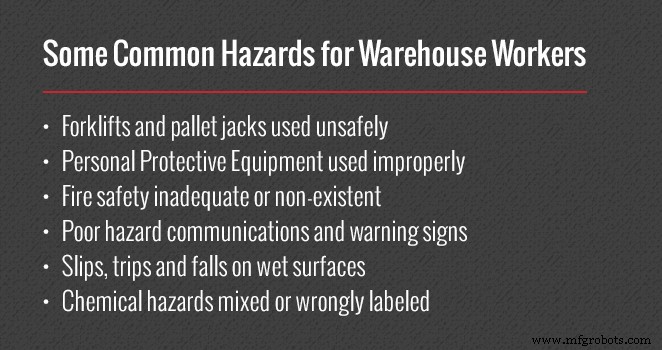
Since its inception in the 1950s, OSHA has significantly reduced American worker injuries. OSHA’s publication Warehousing: Worker Safety Series identifies the most common potential hazards for warehouse workers, including those in the food industry:
- Forklifts and pallet jacks used unsafely
- Products improperly stacked on racks and pallets
- Personal Protective Equipment (PPE) used improperly
- Energy sources not locked out and tagged out (LOTO)
- Fire safety inadequate or non-existent
- Muscular-skeletal disorders (MSD) from repetitive motion
- MSDs from improper manual material handling
- Poor hazard communications and warning signs
- Improper guards around openings in floors and walls
- Lack of guards or insufficient guards on moving equipment
- Ladders not set properly when working at height
- Slips, trips and falls on wet surfaces
- Poor housekeeping where debris accumulates
- Chemical hazards mixed or wrongly labeled
Food and Material Handling Safety Tips
Every warehouse manager and owner realizes the connection between end-use food safety and worker safety in the production line. Taking precautions within the warehouse is the key to prevention of problem products being released to the public and maintaining safe work sites. Good managers know that promoting worker safety and providing them with safe and sanitary equipment is the answer to this two-pronged approach.
No doubt your facility has a safety committee and an occupational health and safety plan. OSHA mandates these necessary safety tools, but OSHA can’t prescribe specific steps for your particular facility, nor can OSHA give you a list of the best equipment to handle material and ship it safely to the consumer. However, OSHA and many private worker safety organizations can give you helpful tips on how to safely handle food to protect the public and your workers. Here are some excellent food and material handling safety tips:
- Prevent contamination: Cross-contamination is a leading cause of food spoilage. Safe food material handling begins with being aware of contamination potentials and taking steps to prevent two or more food products from interacting. Your best solution is isolating products, so there’s no chance of one type of product leaving traces in another. Using specialized pallets, solid or collapsible containers, or even custom bins and boxes ensures you’ve accomplished safe and sanitary food warehousing and manufacturing.

- Pay attention to packaging: Most food products come in soft packaging, like sacks or cardboard boxes. These packaging materials might be great for sanitary food material handling, but they stand little chance against impacts from material handling equipment like forklifts or even mechanized lifts. The best way to keep food packaging safe during transport and protect against cross-contamination or temperature fluctuations is using sturdy sanitary food-handling tools like solid plastic or aluminum pallets.
- Use sanitary food distribution equipment: If you’re in the food distribution business, you’re no stranger to the debate about having old wooden pallets in your facility. Wood pallets still dominate the warehouse and material handling industry. However, many food distributors are changing from wood pallets to sanitary plastic and metal pallets that easily wash and reuse. Decontaminating wood pallets is difficult, if not impossible, to do in a sanitary food shipping environment.
- Use stainless steel equipment: Stainless steel is a marvelous metal. It’s universally used throughout food preparation, cooking and serving industries. Stainless steel also finds its way into most safe food shipping applications. Stainless steel has a tight grain that resists food staining. It’s easy to wash, decontaminate and ensure safe food distribution. Must-have safe, stainless steel food-handling equipment pieces include sanitary lift tables and scissor lifts.
- Use aluminum safe food handling equipment: Along with stainless steel, aluminum has enormous applications in food safety distribution. Aluminum handcarts, pallets and containers are corrosion resistant and lightweight. These sturdy material handlers are relatively inexpensive for your return on investment. Aluminum is a sanitary material that withstands endless washing and returns to service.
- Consider wire containers and shelving: Trapped residual food scraps are prime candidates for breaking down, decomposing and harboring bacteria. Wire shelving and containers are prime choices for warehouse owners involved in safe food manufacturing and storage. Wire mesh especially with inverted support channels lets food particles fall through where they can be swept or vacuumed up. Your rate of food contamination will drop drastically when you use mesh shelves and collapsible mesh containers.

- Control your temperature: Take the “danger zone” warning seriously. The Department of Agriculture has an informative paper on food safety information that warns of food safety dangers when temperatures rise above +10 degrees Fahrenheit. Make sure your refrigeration controls are accurate. Always maintain the proper temperature, whether you’re handling frozen or chilled food. Neglecting this will lead to FSMA infractions, probable recalls and certain profit loss.
- Watch for pests: Even the best-maintained warehouses can have pest infestations. That might be insects, birds, rodents or reptiles. Pests have an uncanny ability to ride, hitch or sneak into food distribution facilities. If you have the slightest indication of pest problems arising, get into extermination mode immediately. Wood materials like shipping pallets offer great pest refuge. Your best proactive action is replacing your wood pallet inventory with plastic and aluminum pallets.
- Train your workers: Trained workers are safe workers. This slogan might not attribute to any particular person, but the truth is eternal. When warehouse workers train properly, they’re far more likely to work safely. That’s for both workers’ personal protection and protecting food products for safe manufacturing and distributing. All workers’ training should follow a set program where workers receive instruction in safe operating procedures, demonstrate proficiency and then test to ensure they retain knowledge.
- Create standard operating procedures: SOPs, or standard operating procedures, are the backbone of all modern warehouse operations. For warehouse food safety and worker safety, it’s critical you have SOPs written that clearly explain a procedure’s purpose and the steps to safely do it. SOP examples include how to safely operate lift tables and hand carts, load pallets, stretch-wrap them and properly wash used plastic or metal pallets before returning them to service.
- Clean and sanitize material handling equipment: Don’t take a chance on unsanitary material handling equipment that can contaminate your products and ultimately make people sick. Also, don’t take a chance on injuring your workers by having them wash and sanitize equipment manually. Mechanized washing does a thorough job that’s tough to do by hand safely. Make sure your plastic pallets, carts, lift tables and other warehouse food safety tools are clean and adhere to safe industry standards.
- Partner with Cherry’s Industrial Equipment: This might be the most practical food safety and material handling tip. Cherry’s Industrial is America’s leading supplier of safe warehouse and material handling equipment. Cherry’s Industrial Equipment is your go-to partner for all types of warehouse food safety supplies that protect both workers and consumers. Partnering with us provides invaluable food safety insurance.
Contact us online
Give us a call at 800-350-0011

Cherry’s Food-Safe Material Handling Equipment
Cherry’s Industrial Equipment takes both food safety and worker safety seriously. Like the Food and Drug Agency, the Department of Agriculture and the Occupational Safety and Health Administration, Cherry’s believes in core values of safety for consumers and workers. That’s why we supply high-quality material handling equipment that meets demanding food safety requirements and complies with the Food Safety Modernization Act.
At Cherry’s, we don’t supply material handling equipment that’s merely compliant. We’re committed to safe food warehousing. All our food and worker safety supplies exceed normal standards, and that’s the way we do business. Consider these safe food-handling products from Cherry’s Industrial Equipment:
- Plastic pallets: Plastic is a safe, dependable and reusable pallet material. Many food processing facilities use plastic pallets to limit contamination and reduce risk. They also minimize worker risk due to lack of splinters, lighter weight and easier handling than with wood pallets.

- Aluminum pallets: When you need stronger support for heavier weights yet still require lightweight material for handling food safety, aluminum pallets are your best selection. Aluminum cleans easily and offers sanitary protection you can’t get with wood. Plus, aluminum pallets have an indefinite lifespan for long-term economics.
- Hand carts: No safe food distribution facility operates without hand carts. These basic tools for mechanized material handling save workers from MSD injuries while remaining clean, enhancing distribution food safety. Aluminum hand carts are lightweight, roll easily and wash clean with minimal effort.
- Lift tables: Cherry’s sanitary lift tables have corrosion-resistant construction. Stainless steel has a long life, cleans up quickly and falls into regulatory compliance. Whether you’re looking for a spring-activated, mechanical table or a scissor lift, Cherry’s has a food-safe model that’s worker-friendly.
- Bins and boxes: Safely storing and transporting food products is easy with Cherry’s Industrial FDA-approved containers. You can store, organize and transport food safely with agricultural, bulk storage and fixed wall containers. We can provide you with specialized meat containers or custom storage solutions.
- Wire containers: Our wire containers give you clean spaces that let air flow and contaminants fall. Collapsible wire containers easily set up and break down. You get improved visibility to container contents, storage versatility and excellent return on your food safety investment.

Equipment for Extra-Stringent Cleanliness and Sanitation Practices
When you need to ensure a particularly high quality of cleanliness and sanitation in your facility, Cherry's Industrial Equipment recommends the following solutions:
- Stainless steel equipment: As we've discussed above, stainless steel equipment offers the benefit of being exceptionally easy to keep clean and sanitary. It is easy to disinfect and offers few tiny crevices where bacteria and viruses could hide. Using stainless steel equipment like lift tables, scissor lifts, pallet trucks and hand trucks helps prevent the transmission of disease and keep products clean and safe.
- Plastic pallets: Plastic pallets are exceptionally sanitary, so they are one of the safest materials for transporting and storing raw foods. Unlike wood pallets, which can retain moisture and provide hospitable environments for bacteria and viruses to thrive in, plastic pallets help resist the growth of pathogens. They are also easy to clean and sanitize, and their smooth surfaces offer few nooks or crannies that could harbor viruses and bacteria.
- Washing equipment: Washing equipment helps save time and labor. Compared to washing by hand, washing equipment cleans very quickly, so it frees employees to attend to other tasks. Washing equipment also promotes proper sanitation in the workplace by cleaning often-used items thoroughly to prevent the transmission of bacteria and viruses. Its high performance and reliability make it indispensable when you need to ensure the most sanitary equipment for food transportation and storage.
- High-speed equipment: High-speed equipment — such as high-speed pallet retrievers — is useful because it helps you save time if you have employees out sick. With even a few employees out sick, the burden on other employees increases substantially, and the absence of several ill employees can send a workplace scrambling to get everything done. High-speed equipment helps speed up operations and lets employees accomplish necessary tasks while still giving them time to take care of themselves by washing their hands.
- Floor tape: If you need employees and customers to give each other space for health and safety reasons, using floor tape is an excellent strategy. Floor safety tape and aisle markings help improve organization and communication by directing people as to where they can safely stand. You can also use floor tape to direct customers to in-demand items so they spend less time wandering the store, trying to find what they need.
Cherry’s Industrial Equipment Is Your Supplier for Manufacturing Food Safety
Cherry’s Industrial Equipment provides the best protections for food safety manufacturing. We know supplying safe food to American consumers depends on worker safety in the warehouse and all along the food supply chain. For four decades, Cherry’s Industrial has forged alliances between customers and equipment to be the American leader in safe material handling equipment.
We take pride in supplying you with safe equipment that fits in your budget. We offer you exceptional service. Our sales team works with you to solve your safe food material handling challenges, some of which require a custom solution. That's where we excel.
Contact Cherry’s Industrial Equipment today. For food safety and worker safety protection, call us at 877-350-2729. Or contact us through our online form.
Manufacturing process
- Top 6 Essential Warehouse Safety Practices
- Mastering Material Handling Safety: Best Practices for Efficient, Risk‑Free Operations
- Essential Warehouse Safety Guidelines for Managers & Staff
- Essential Drum Handling Safety Guidelines for Warehouse and Jobsite Workers
- Expert Guide to Lift Table Safety: Protect Workers & Boost Productivity
- Expert Cleaning Guidelines for Material Handling Equipment
- Expert Tips for Safe & Efficient Raw Material Handling
- Essential Sheet Metal Safety Guidelines for Workplace Protection
- Enhancing Food Industry Efficiency Through Expert Material Handling Equipment Fabrication
- Understanding Material Handling: Key Concepts & Best Practices