



Expert Cleaning Guidelines for Material Handling Equipment
If you own material handling equipment and use it in your facilities, you need to keep it clean and sanitary. It's crucial for the reputation of your company and the quality of the products you store and transport to have hygienic standards you follow. The best material handling companies make sure their facilities and equipment are as clean as possible, especially in times where fears of spreading diseases or foodborne illnesses are high.
To keep your material handling equipment clean and meet high hygienic standards, you should start by knowing why proper cleaning practices are crucial to a company's success. Most importantly, you need to be aware of the steps to take to clean material handling equipment correctly.
Jump Links
- Why Are Proper Cleaning Practices Important?
- Efficient Ways to Clean Material Handling Equipment
- Tips for Proper Cleaning
- Plastic Pallet Cleaning Tips
- Browse Material Handling Equipment From Cherry's
Why Are Proper Cleaning Practices Important?
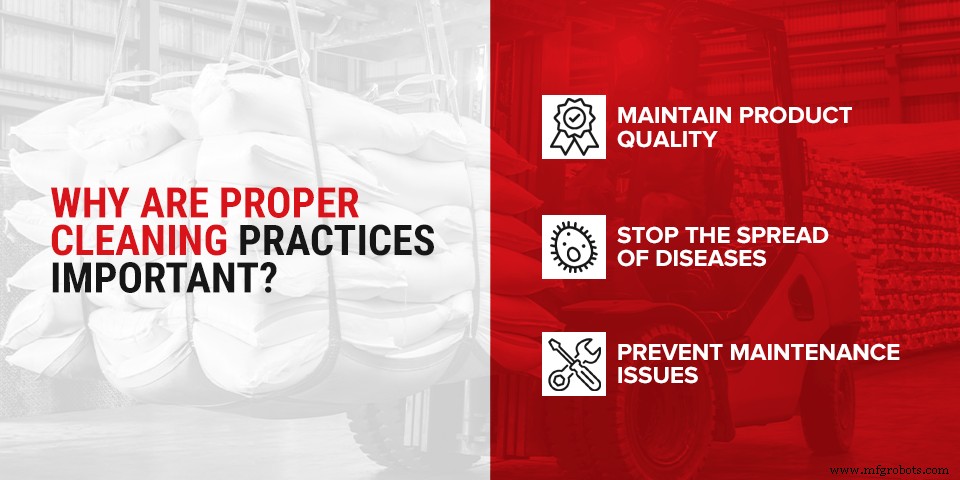
Keeping your facilities clean and free from contaminants is a must for any companies looking to maintain their product quality and prevent diseases from spreading. Equipment that isn't cleaned correctly can also end up needing repairs and maintenance earlier than expected. Learn more about the importance of implementing proper cleaning practices below:
1. Maintain Product Quality
Companies that don't keep a clean workspace run the risk of products becoming dirty and their overall quality harmed. For companies handling pharmaceuticals and food products, proper cleaning practices are even more critical. For instance, food that gets on material handling equipment can spoil and cause other food products to rot as well.
Foodborne pathogens can also contaminate your material handling surfaces, leading to compromised future batches. Pharmaceutical drugs need to be in highly controlled environments, and contaminants on material handling equipment can make it so they have to be discarded. Through proper cleaning and sanitizing, you can ensure your surfaces stay clean and your products aren't harmed due to contaminants from the previous handling.
2. Stop the Spread of Diseases
At times where viruses and other diseases are spreading, you must keep your material handling equipment as clean as possible. Since some viruses can live on surfaces, it's vital that warehouses regularly clean and sanitize their material handling equipment. It's no surprise the Centers for Disease Control and Prevention take cleaning facilities very seriously and have many best practices employers should be following.
3. Prevent Maintenance Issues
Another primary reason proper cleaning practices are so important is the ability to keep your equipment running correctly. Cleaning is a form of preventative maintenance that is crucial for a piece of equipment's durability. If you don't clean your equipment, dirt and other contaminants can build up on the machine and begin to harm it.
Cleaning your machines regularly also makes it easier to spot potential issues. By cleaning, it's much more likely you notice the parts of your device needing repair or replacement. If you want your machines to stay in good condition, proper sanitation is a must.
Efficient Ways to Clean Material Handling Equipment
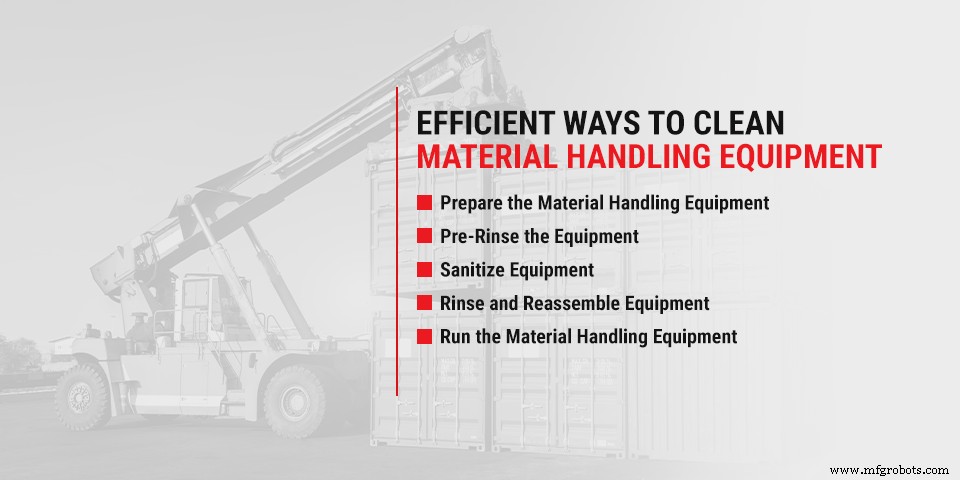
While each type of material handling equipment likely has its own cleaning requirements, there are some standard cleaning practices you can follow. All staff members who handle cleaning should be well-versed in common material handling sanitation tips. Below, you can find the steps you should follow to keep your material handling equipment sanitary:
1. Prepare the Material Handling Equipment
To begin the cleaning process, remove any packing material or other types of products from the material handling equipment you're looking to clean. You don't want products to get in the way or get damaged by water or sanitation material, so it's essential to remove them from the material handling systems. Besides removing products and packing material, you should also shut down the equipment to ensure safe cleaning.
If the equipment has guards and covers, you'll likely need to remove them to be able to reach all the sections of the system. You may also need to partially or completely disassemble the system to clean it properly. Conveyor belts and screens may need to be removed and sanitized on their own.
2. Pre-Rinse the Equipment
Once you've disassembled or removed recommended components from the equipment, you can begin the cleaning process by pre-rinsing surfaces. Follow the manufacturer's recommendations for the right temperature and pressure of the water you use. This water should also be potable, meaning it's been treated and fit for consumption. Rinse the material handling equipment until you can't see any more leftover product or dirt on it.
3. Sanitize Equipment
After thoroughly rinsing the equipment, you can move on to washing it with a cleaning agent. The equipment manufacturer should also provide recommendations on the right cleaning agent and its proper concentration. Follow recommendations for its contact time, temperature and pressure to ensure you're appropriately sanitizing the equipment. After applying the sanitizing solution, take care that it doesn't have to time dry on the equipment.
4. Rinse and Reassemble Equipment
Before the solution can dry, rinse it off with potable water. Ensure all the material handling equipment has been rinsed off entirely and doesn't have any remaining chemical solution on it. Leftover chemical solutions can be corrosive if left for a long time or can damage products the equipment handles. Once you're sure all the sanitizing product has been rinsed off, you can reassemble any parts of the equipment you removed during the cleaning process. Reattach any components you may have washed separately, ensuring everything is put back in its right place.
5. Run the Material Handling Equipment
With the equipment reassembled, you should make sure everything runs smoothly. Turn the equipment on and check to see if it's been reassembled correctly and the system is working. Loose parts may indicate your clamps aren't tight enough or that you installed a part incorrectly. If you've been cleaning a vibratory conveyor, take a moment to see if the strokes and speeds are at the appropriate levels.
To further optimize your cleaning process, you can link up your cleaning schedule with your lubrication cycle. By doing so, you can save time and ensure the material handling equipment is in top condition. High-pressure washes can remove a piece of equipment's lubrication. Because of this, it's a good idea to re-grease or lubricate the various components of the equipment after washing is complete.
Tips for Proper Cleaning
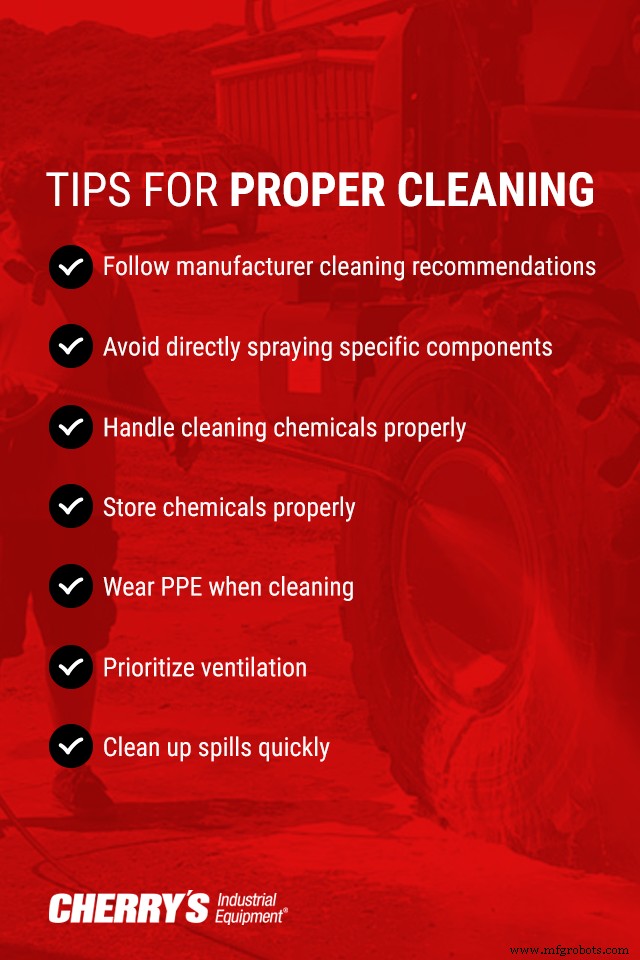
In addition to following the steps above, there are a few tips you should pay attention to as you sanitize your equipment. Be aware of the best practices for storing chemicals, wearing protective gear and having a well-ventilated space to keep staff and equipment safe. Check other top tips for how to clean material handling equipment below:
- Follow manufacturer cleaning recommendations: It's best to follow the manufacturer recommendations when it comes to cleaning equipment. Manufacturers will often have strict requirements for the amount of pressure and temperature of water used. You should also stick to the cleaning agent and chemical concentration recommendations they suggest, so you don't damage the equipment while you're cleaning it.
- Avoid directly spraying specific components: If you use a pressure washer to spray your equipment, you shouldn't direct a high-pressure stream at certain components. Control panels, stroke indicator labels, electrical components, pneumatic parts, warning labels and valves should all be avoided, as too much pressure could damage them. When you need to clean these components, only use a mid-pressure nozzle. For cleaning the area between bearing blocks, only use a low-pressure nozzle.
- Handle cleaning chemicals properly: While chemical cleaning products are crucial to sanitizing your equipment, they can also be dangerous to your staff and equipment if mishandled. Before you have your staff use the chemicals to clean off equipment, ensure they're aware of a product's warnings and are following instructions.
- Store chemicals properly: All your chemical containers should be labeled clearly to keep employees from using them for the wrong purposes. The chemicals should be stored in containers and cabinets made with the right material, as well as in a storage area that's well-ventilated and cool. Pay attention to the class of chemicals, such as bases and acids, as they should be stored separately.
- Wear PPE when cleaning: Personal protective equipment (PPE) is essential for proper cleaning. PPE for the face, like respirators, face shields and goggles should be worn to protect against vapors, fumes and mists that could be harmful to a staff. To protect the rest of the body from chemical burns and other harmful chemical effects, staff members may need to wear PPE like gloves, full-body suits or aprons. Additionally, chemically resistant footwear is often needed to protect against detergents on the floor.
- Prioritize ventilation: It's best to work with chemicals in a well-ventilated space. Make sure there's plenty of airflow through the room and ensure the chemicals won't stay in the air after cleaning.
- Clean up spills quickly: If spills occur in the course of cleaning, make sure to mop them up immediately. The chemicals should be cleaned promptly, as they can damage surfaces if left too long.
Plastic Pallet Cleaning Tips
Plastic pallets are some of the most commonly used pieces of material handling equipment in warehouses. Plastic pallets help store many different types of products and often hold biodegradable materials. Biodegradable food products, for instance, can cause cross-contamination across different food items if the pallets aren't appropriately cleaned. Since pallets are essential to properly storing and transporting products throughout a warehouse, it's crucial to keep them clean.
Take a moment to review the top methods for keeping plastic pallets sanitized:
1. Wipe Pallets Down
One of the most basic methods of cleaning pallets is wiping them off with an all-purpose cleaner and rag. Wiping off pallets can often work for removing light amounts of dirt and soiling. If there are heavier spots of debris or other contaminants present, you can sometimes get them off with vigorous scrubbing.
For certain products that aren't as susceptible to contaminant transfer, this method of cleaning can be acceptable. It offers the advantage of being a fairly simple cleaning process. One of the primary downsides to this method is how slow it is to complete, as staff has to wipe off and scrub the pallet manually. Another major disadvantage is that wiping pallets can often lead to missed contaminants staying on the pallets due to human error.
2. Pressure Wash Pallets
To make the cleaning process easier for staff and get a more thorough cleaning, many companies invest in power washers. This equipment emits a stream of water that can be set to a variety of pressures to assist with cleaning pallets. If you clean the pallets around other products or equipment, water will usually permeate the area, so this method is not ideal for sections of the warehouse you need to keep dry.
Pressure washers are designed to take on heavily soiled pallets due to the level of pressurized water they can shoot towards dirty areas. Pressure washers can often be used with detergents to thoroughly sanitize the pallet, removing many germs or hidden contaminants.
3. Automated Washers for Pallets
If you want to keep pallets clean and maintain maximum efficiency, consider automated washers designed for pallets. Automated pallet washers wash pallets with water and detergents to remove contaminants. They use hot water at a high pressure to rinse off the pallets. Some even dry your pallets after the wash cycle, making it so you can immediately use the pallet after the process is complete. Another major benefit to automated washers is that they keep the water contained within the machine, keeping the surrounding area dry.
You can quickly feed pallets through these automated washers, allowing the machine to sanitize the pallet with minimal effort on the part of your staff. This sanitation process makes sure your company doesn't lose productivity and efficiency with labor-intensive cleaning processes. Automated washers also minimize the amount of manual labor used in the cleaning process, freeing up staff for other purposes.
Browse Material Handling Equipment From Cherry's
At Cherry's Material Handling, we know how crucial hygienic material handling equipment is for your business. When you invest in equipment designed for easy cleaning, you can improve your workflow and sanitation with increased effectiveness and efficiency. Our transportation and storage equipment, such as our plastic pallets, metal bulk containers and collapsible plastic containers, are all made with easy-to-clean materials.
Browse material handling equipment to find the type that works for you. If you have any questions while browsing, feel free to contact us for assistance.
Manufacturing process
- Four Key Types of Material Handling Equipment for Efficient Operations
- Effective Cleaning & Disinfection Tips for Construction Equipment Cabs
- Expert Guide to Sanitizing Forklifts and Tractor Cabs
- Essential Industrial Pallet Handling Tips for Efficient Warehouse Operations
- Proven Food Safety Strategies for Safe Material Handling
- Essential Drum Handling Safety Guidelines for Warehouse and Jobsite Workers
- Expert Tips for Safe & Efficient Raw Material Handling
- Proven Safety Guidelines for Heavy Equipment Operations
- Enhancing Food Industry Efficiency Through Expert Material Handling Equipment Fabrication
- Understanding Material Handling: Key Concepts & Best Practices