



Understanding Welding Fume: Hazards and How to Safely Reduce Exposure
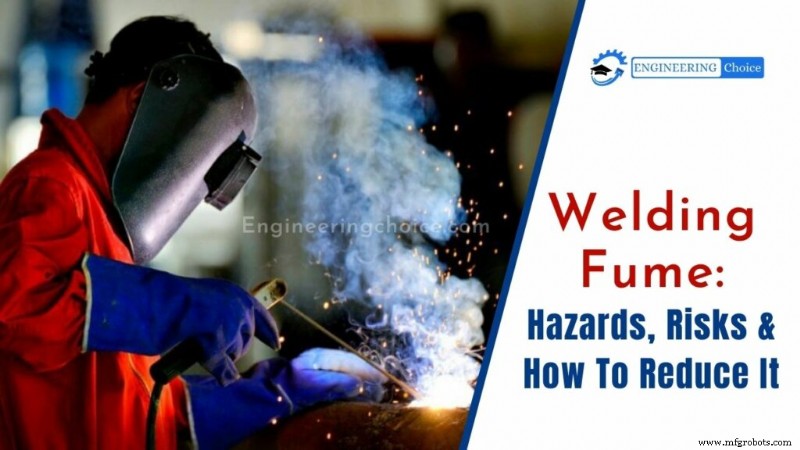
Welding joins materials together by melting a metal workpiece along with a filler metal to form a strong joint. The welding process produces visible smoke that contains harmful metal fume and gas by-products.
This fact sheet discusses welding operations, applicable standards, and suggestions for protecting welders and coworkers from exposure to the many hazardous substances in welding fume.
What are welding fumes?
Welding fumes are a complex mixture of metallic oxides, silicates, and fluorides. Fumes are formed when a metal is heated above its boiling point and its vapors condense into very fine, particles (solid particulates). Welding fumes generally contain particles from the electrode and the material being welded.
Welding fume is a varying mixture of airborne gases and fine particles. The composition of the mixture depends on the welding method and the products that are welded. Gases that may be released include for instance:
- Shielding: Argon, Helium, Nitrogen, Carbon Dioxide.
- Process: Nitric Oxide, Nitrogen Dioxide, Carbon Monoxide, Ozone, Phosgene, Hydrogen Fluoride, Carbon Dioxide.
Also, it may contain a lot of fine particles of metallic oxides, fluorides, and metals, such as Aluminum, Antimony, Arsenic, Beryllium, Cadmium, Chromium, Cobalt, Copper, Iron, Lead, Manganese, Nickel, Molybdenum, Silver, Tin, Titanium, Vanadium, Zinc.
Factors that affect worker exposure to welding fume
- Type of welding process
- Base metal and filler metals used
- Welding rod composition
- Location (outside, enclosed space)
- Welder work practices
- Air movement
- Use of ventilation controls
Three factors determine the risks
The level of the risk, if no adjuvant ventilation and protective measures are taken, depends on three factors:
- The Toxicity of The Fume
- The Concentration of The Fume
- For How Long the Fume Has Been Inhaled.
1. Toxicity of the welding fume
The toxicity of the fume varies. As said, it depends on the type of welding process, the welding materials used, and what kind of material is being welded. We will write more about fumes from, for instance, mild steel welding, stainless steel welding or welding of metals that are coated, and about the fume development in specific welding products and processes.
2. Concentration of the welding fume
The concentration of the fume and the harmful substances are the highest in the plume of fume that rises from the welding point. The faster this fume is eliminated by ventilation, the better.
3. Duration of inhaling welding fumes
How long a welder may be inhaling such a fume depends on the time he is actually welding. Some fabricators weld one or two hours a day, others weld all day long. A simple calculus, also called the arcing time, shows the longer one welds, the more fume is being produced, and the greater the danger of inhaling the mixture of airborne gases and fine particles.
Welding fumes can cause serious diseases
It is pretty obvious that it is potentially dangerous to inhale such welding fumes. And if you are not convinced, read the many scientific studies and reports stating that welding fumes can cause all kinds of physical complaints and serious diseases such as cancer, asthma, and even symptoms of Parkinson’s disease.
Health effects of breathing welding fume
- Acute exposure to welding fume and gases can result in eye, nose and throat irritation, dizziness and nausea. Workers in the area who experience these symptoms should leave the area immediately, seek fresh air and obtain medical attention.
- Prolonged exposure to welding fume may cause lung damage and various types of cancer, including lung, larynx and urinary tract.
- Health effects from certain fumes may include metal fume fever, stomach ulcers, kidney damage and nervous system damage. Prolonged exposure to manganese fume can cause Parkinson’s–like symptoms.
- Gases such as helium, argon, and carbon dioxide displace oxygen in the air and can lead to suffocation, particularly when welding in confined or enclosed spaces. Carbon monoxide gas can form, posing a serious asphyxiation hazard.
Source and Health Effect of Welding Fumes
| Fume Type | Source | Health Effect |
| Aluminum | Aluminum components of some alloys, e.g., Inconel, copper, zinc, steel, magnesium, brass, and filler materials. | Respiratory irritant. |
| Beryllium | Hardening agents are found in copper, magnesium, aluminum alloys, and electrical contacts. | “Metal Fume Fever.” A carcinogen. Other chronic effects include damage to the respiratory tract. |
| Cadmium Oxides | Stainless steel containing cadmium or plated materials, zinc alloy. | Irritation of respiratory system, sore and dry throat, chest pain, and breathing difficulty. Chronic effects include kidney damage and emphysema. Suspected carcinogen. |
| Chromium | Most stainless-steel and high-alloy materials, welding rods. Also used as the plating material. | Increased risk of lung cancer. Some individuals may develop skin irritation. Some forms are carcinogens (hexavalent chromium). |
| Copper | Alloys such as Monel, brass, bronze. Also some welding rods. | Acute effects include irritation of the eyes, nose, and throat, nausea, and “Metal Fume Fever.” |
| Fluorides | Common electrode coating and flux material for both low- and high-alloy sheets of steel. | The acute effect is irritation of the eyes, nose, and throat. Long-term exposures may result in bone and joint problems. Chronic effects also include excess fluid in the lungs. |
| Iron Oxides | The major contaminant in all iron or steel welding processes. | Siderosis – a benign form of lung disease caused by particles deposited in the lungs. Acute symptoms include irritation of the nose and lungs. Tends to clear up when exposure stops. |
| Lead | Solder, brass, and bronze alloys, primer/coating on steels. | Chronic effects to the nervous system, kidneys, digestive system, and mental capacity. Can cause lead poisoning. |
| Manganese | Most welding processes, especially high-tensile steels. | “Metal Fume Fever.” Chronic effects may include central nervous system problems. |
| Molybdenum | Steel alloys, iron, stainless steel, nickel alloys. | Acute effects are eye, nose, and throat irritation, and shortness of breath. |
| Nickel | Stainless steel, Inconel, Monel, Hastelloy, and other high-alloy materials, welding rods, and plated steel. | The acute effect is irritation of the eyes, nose, and throat. Increased cancer risk has been noted in occupations other than welding. Also associated with dermatitis and lung problems. |
| Vanadium | Some steel alloys, iron, stainless steel, nickel alloys. | The acute effect is irritation of the eyes, skin, and respiratory tract. Chronic effects include bronchitis, retinitis, fluid in the lungs, and pneumonia. |
| Zinc | Galvanized and painted metal. | Metal Fume Fever. |
Source and Health Effect of Welding Gases
| Gas Type | Source | Health Effect |
| Carbon Monoxide | Formed in the arc. | Absorbed readily into the bloodstream, causing headaches, dizziness, or muscular weakness. High concentrations may result in unconsciousness and death |
| Hydrogen Fluoride | Decomposition of rod coatings. | Irritating to the eyes and respiratory tract. Overexposure can cause lung, kidney, bone, and liver damage. Chronic exposure can result in chronic irritation of the nose, throat, and bronchi. |
| Nitrogen Oxides | Formed in the arc. | Eye, nose, and throat irritation in low concentrations. Abnormal fluid in the lung and other serious effects at higher concentrations. Chronic effects include lung problems such as emphysema. |
| Oxygen Deficiency | Welding in confined spaces, and air displacement by the shielding gas. | Dizziness, mental confusion, asphyxiation, and death. |
| Ozone | Formed in the welding arc, especially during plasma-arc, MIG, and TIG processes. | Acute effects include fluid in the lungs and hemorrhaging. Very low concentrations (e.g., one part per million) cause headaches and dryness of the eyes. Chronic effects include significant changes in lung function. |
Source and Health Effect of Organic Vapors as a result of Welding
| Gas Type | Source | Health Effect |
| Aldehydes (such as formaldehyde) | Metal coating with binders and pigments. Degreasing solvents | Irritant to eyes and respiratory tract. |
| Diisocyanates | Metal with polyurethane paint. | Eye, nose, and throat irritation. High possibility of sensitization, producing asthmatic or other allergic symptoms, even at very low exposures. |
| Phosgene | Metal with residual degreasing solvents. (Phosgene is formed by the reaction of the solvent and welding radiation.) | Severe irritant to eyes, nose, and respiratory system. Symptoms may be delayed. |
| Phosphine | Metal coated with rust inhibitors. (Phosphine is formed by the reaction of the rust inhibitor with welding radiation.) | Irritant to the eyes and respiratory system can damage kidneys and other organs. |
Reducing exposure to welding fume
- Welders should understand the hazards of the materials they are working with. OSHA’s Hazard Communication standard requires employers to provide information and training for workers on hazardous materials in the workplace.
- Welding surfaces should be cleaned of any coating that could potentially create toxic exposure, such as solvent residue and paint.
- Workers should position themselves to avoid breathing welding fume and gases. For example, workers should stay upwind when welding in open or outdoor environments.
- General ventilation, the natural or forced movement of fresh air, can reduce fume and gas levels in the work area. Welding outdoors or in open work spaces does not guarantee adequate ventilation. In work areas without ventilation and exhaust systems, welders should use natural drafts along with proper positioning to keep fume and gases away from themselves and other workers.
- Local exhaust ventilation systems can be used to remove fume and gases from the welder’s breathing zone. Keep fume hoods, fume extractor guns and vacuum nozzles close to the plume source to remove the maximum amount of fume and gases. Portable or flexible exhaust systems can be positioned so that fume and gases are drawn away from the welder. Keep exhaust ports away from other workers.
- Consider substituting a lower fume-generating or less toxic welding type or consumable.
- Do not weld in confined spaces without ventilation. Refer to applicable OSHA regulations.
- Respiratory protection may be required if work practices and ventilation do not reduce exposures to safe levels.
Manufacturing process
- MIG Welding Explained: What It Is and How to Master the Process
- Understanding Welding Fumes: Hazards & Effective Reduction Strategies
- Stick Welding Explained: Equipment, Process, and Step‑by‑Step Guide
- Understanding Welding Spatter: Causes and Effective Reduction Techniques
- MIG Welding Explained: Techniques, Benefits, and How to Get Started
- Arc Welding 101: Types, Techniques, and How It Works
- Underwater Welding Explained: How It Works and Why It Requires Specialized Training
- Stick Welding Explained: Equipment, Techniques, and Step‑by‑Step Guide
- Understanding Welding Porosity: Causes, Symptoms, and Prevention Techniques
- Understanding Welding Spatter: Causes and Effective Reduction Techniques