



Die Casting Challenges & Solutions for Precision Parts
Die casting is a precision casting method. Parts produced by die casting have very low dimensional tolerances and high surface precision.
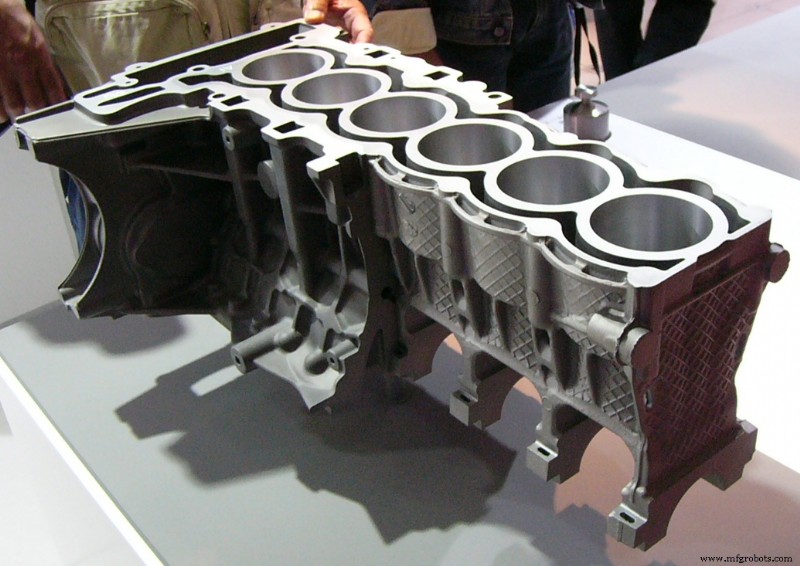
In most cases, die casting parts can be assembled without turning. Threaded parts can also be cast directly. Small parts such as general camera parts, typewriter parts, electronic computing devices and decorations; complex parts of vehicles such as automobiles, locomotives, and airplanes are mostly manufactured by die casting.
In this post, we will introduce you the main methods to control die casting quality from the following 3 aspects:
- The required die casting metal
- The important influential factor: Temperature, and
- Some defects may occur during the manufacturing process and how to fix them
After reading this post, you are able to avoid all these defects to ensure making products with high quality effectively.
1. The required die casting metal
The metals used for die casting mainly include zinc, copper, aluminum, magnesium, lead, tin, and lead-tin alloys. More specific die casting metals include ZAMAK, aluminum-zinc alloys, and Alcoa’s standards: AA380, AA384, AA386, AA390, and AZ91D magnesium.
1.1 The characteristics of various metals
The characteristics of various metals during die casting are as follows:
- Zinc: Zinc is the easiest to die casting metal and easy to coat. When manufacturing small parts, it’s economic and has high compressive strength, high plasticity as well as long casting life.
- Aluminum: Aluminum is lightweight, high dimensional stability, high corrosion resistance, good mechanical properties, high thermal conductivity and excellent electrical conductivity.
- Magnesium: Magnesium is easy to machine and is the lightest metal among the commonly used die casting metals.
- Copper: Cooper has the characteristic of high hardness and strong corrosion resistance. Cooper’s mechanical properties among die casting metals are the best.
- Lead and tin: These two metals have high density and high dimensional accuracy for special corrosion protection parts. For safety issues, this alloy cannot be used as a food processing and storage facility. Lead-tin-bismuth alloys (sometimes also containing a little copper) can be used to make hand-finished lettering and hot stamping in letterpress printing.
1.2 Minimum cross-sectional area and minimum draft angle for various materials
The minimum cross-sectional area and minimum draft angle for each material are listed in the table below, and the thickest section should be less than 13 mm.
| Metal | Minimum cross-sectional area | Minimum draft angle |
| Aluminum alloy | 0.89 mm (0.035 in) | 1:100 (0.6°) |
| Brass and bronze | 1.27 mm (0.050 in) | 1:80 (0.7°) |
| magnesium alloy | 1.27 mm (0.050 in) | 1:100 (0.6°) |
| Zinc alloy | 0.63 mm (0.025 in) | 1:200 (0.3°) |
2. The important influential factor: Temperature
Temperature is a very critical factor in die casting process. Both the casting temperature and the mold temperature have an important effect on final products.
2.1 Casting temperature
As the casting temperature increases, the solubility of the gas in the alloy increases, which makes it difficult to precipitate during the die casting process, affecting the mechanical properties of metals.
Aluminum alloys and magnesium alloys increase oxidation with increasing temperature. Oxidized inclusions tend to deteriorate the properties of the alloy.
Also, the iron content of the metal increases as the temperature increases, which leads to the decrease of fluidity and deteriorates the performance of products.
2.2 Mold temperature
The mold temperature has a great influence on the life of the mold. Intense temperature changes can cause early cracking of the mold.
When the mold temperature is too low, the shrinkage stress of the alloy increases, and the casting is prone to cracks.
However, when the mold temperature is too high, it is advantageous to obtain a smooth surface of the casting, but it is prone to shrinkage depression.
3. Some defects may occur during the manufacturing process and how to fix them
3.1 Cracks
In the die casting production process, the mold is repeatedly subjected to heat, and the molding surface and its internal deformation cause micro cracks to occur.
Therefore, on the one hand, the mold must be sufficiently preheated at the beginning of the die casting. In addition, the mold must be maintained within a certain operating temperature range during the die casting process to avoid early crack failure.
3.2 Fragmentation
Under the action of the injection force, the mold will crack at the weakest point, especially the scribing marks or electromachining marks on the molding surface of the mold are not polished, or the fine cracks will appear first at the clear corners of the molding.
When the grain boundary has a brittle phase or a coarse grain, it is easily broken. The crack propagates rapidly during brittle fracture, which is a dangerous factor for the failure of the mold.
For this reason, on the one hand, scratches, electric machining marks, etc. on the mold surface must be polished, even if it is in the pouring system. In addition, the mold material used is required to have high strength, good plasticity, impact toughness and fracture toughness.
That’s all about the quality issues of die casting. We hope it’d be useful! Feel free to leave your comments below, if you have any questions.
Note:
1. We do not own the images used in this post. Feel free to contact us if they belong to you, and we’ll take them down as quickly as we possibly can.
2. Statistics are from: Degarmo, E. Paul; Black, J T.; Kohser, Ronald A. Materials and Processes in Manufacturing (9th ed.). Wiley. 2003: 331.
Manufacturing process
- Die Casting: Advantages, Challenges, and Key Insights for Manufacturers
- How to Prevent and Repair Punch & Die Chipping: Proven Solutions
- Die Casting: Key Benefits and Drawbacks Explained
- Die Casting Explained: Principles, Types, and Industrial Applications
- Exploring Hot and Cold Chamber Die Casting: Types, Applications, and Advantages
- Mastering Die Casting: Processes, Benefits, and Applications
- Centrifugal Casting: Types, Applications, and How It Works
- Comprehensive Cost Breakdown of the Die Casting Manufacturing Process
- Mastering Ceramic Production: Process, Challenges, and Solutions
- Expert Overview of Die Casting: Process, Materials, and Equipment