



Speaker Failure Analysis: Troubleshooting Manufacturing Issues
This document provides troubleshooting procedures for resolving speakers quality issues. We analyzed common symptoms during manufacturing of speakers, including noise, low volumn and no sound.
Symptom 1: Noise
The following provides noise types and ways in which to capture information in order to analyze and pinpoint the cause of the noise, and take preventive actions.
1.1 Problem with the pole piece
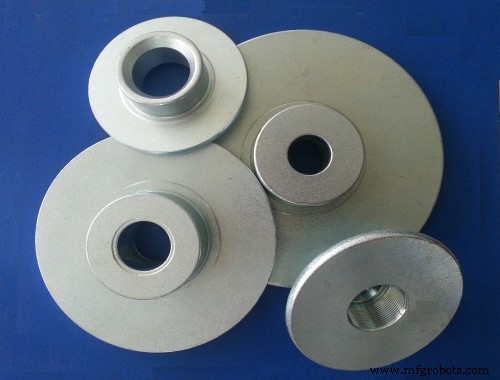
Reason : The pole piece column is rusty or displaced
Preventive actions:
- Do not use the pole piece whose plating layer is peeled off or not plated, or the rusty pole piece;
- Check the pole piece column for looseness, burrs, etc.
1.2 Problem with the magnetic gap
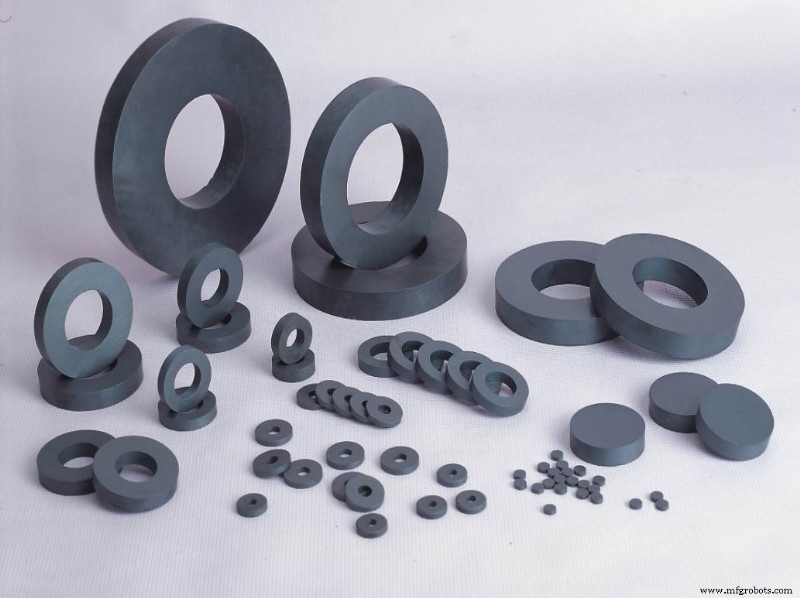
Reason: There is clutter in the magnetic gap.
Preventive actions:
- Wipe the magnetic debris and check whether the pole piece and the front plate are peeling off during production;
- Vacuum the dust in the magnetic circuit before putting the voice coil;
- Take good dust prevention measures during the production process;
- Prevent the glue to penetrate into the central hole of the front plate;
- Clean the glue on the sound and magnetic gauge;
- Check the voice coil to ensure there is no glue on it.
1.3 Problem with the gap between the front plate and basket
Reason: Air leakage between the front plate and basket produces noise
Preventive actions:
- Apply enough glue between the front plate and basket;
- Use baskets and front plates which are in well-shape.
1.3 Problem with the basket
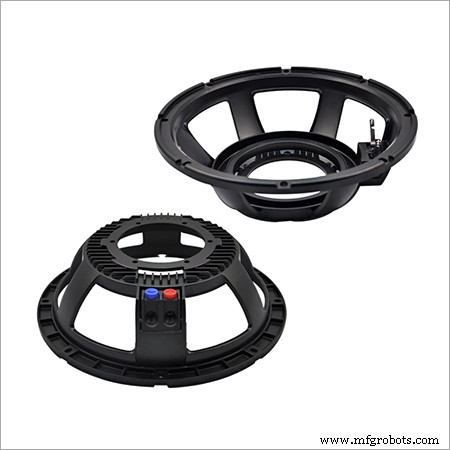
Reason: basket deformation
Preventive Actions:
- Do not use the poorly deformed baskets for production;
- Do not drop the speaker during the production process, causing the basket to be deformed and damaged.
1.4 Problem with the spider
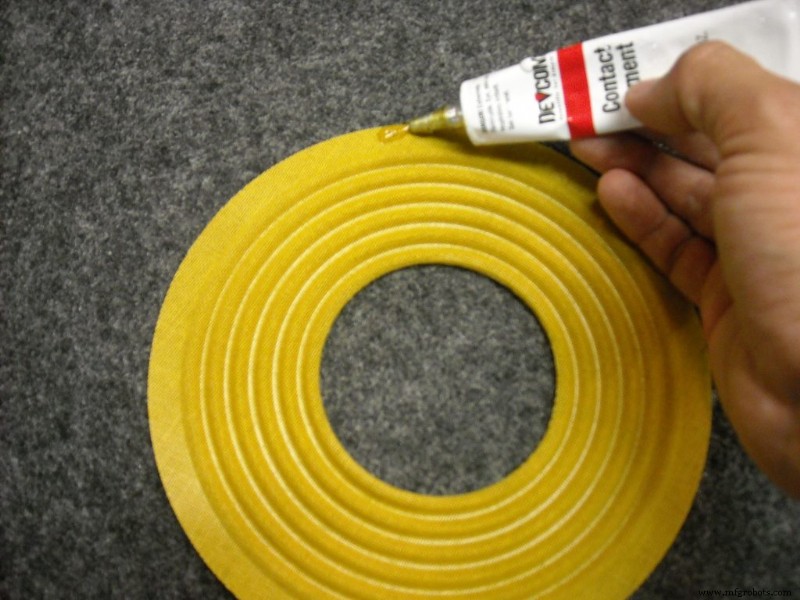
Reason: The aging spider loses its elasticity orthe spider has been deformed or broken
Preventive actions:
- Keep a uniform overflow at the outer-edge of the spider when apply glue between the spider and the basket, and let the glue penetrate into the spider;
- Do not use the spider with poor or even no elasticity;
- Keep the spider from wet substances to keep its elasticity.
1.5 Problem with the voice coil
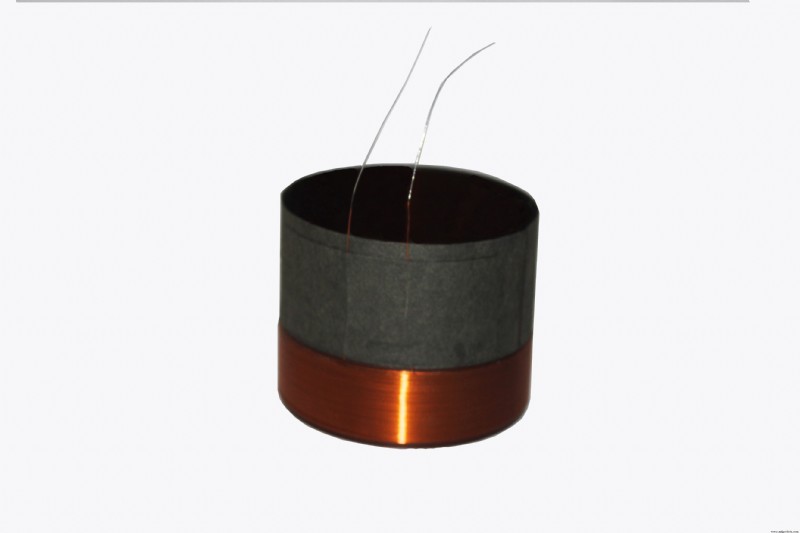
Reason 1: The voice coil was deformed because ofthe over-high temperature
Preventive actions 1:
- Check whether the voice coil frame is deformed before production;
- Check whether the sticker on the voice coil in its good conditions, so as to prevent the sticker from being thermally expanded to cause friction with the front plate;
- Use high temperature resistant voice coil frame
Reason 2: The voice coil is scattered
Preventive actions 2:
- Check whether the voice coil is scattered before production;
- Keep the speaker working at rated power;
- Use high-quality self-adhesive voice coil wire that sticks tightly at rated high temperature.
Reason 3: The terminal of the voice coil is rolled up and hits the pole piece.
Preventive actions 3:
- Check whether the terminal of the voice coilis rolled up;
- Make sure the center of the voice coilis aligned with the center of the front plate;
- Replace the compliant material which is aged or loses its elasticity;
- Avoid the voice coil loosing because the outer diameter of the gauge is too small.
1.6 Problem with the cone
Reason 1: The cone was displaced because of deformation.
Preventive actions 1:
- Do not press the cone during the production process, causing the cone to deform;
- Check the cone material before production;
- Keep the paper cone from moist surrounding.
Reason 2: The cone was broken because of long-time usage or dampness
Preventive actions 2:
- Do not expose the cone to a humid environment;
- Do not use the speaker for a long time or over-power to avoid cone broken.
1.7 Problem with the surround
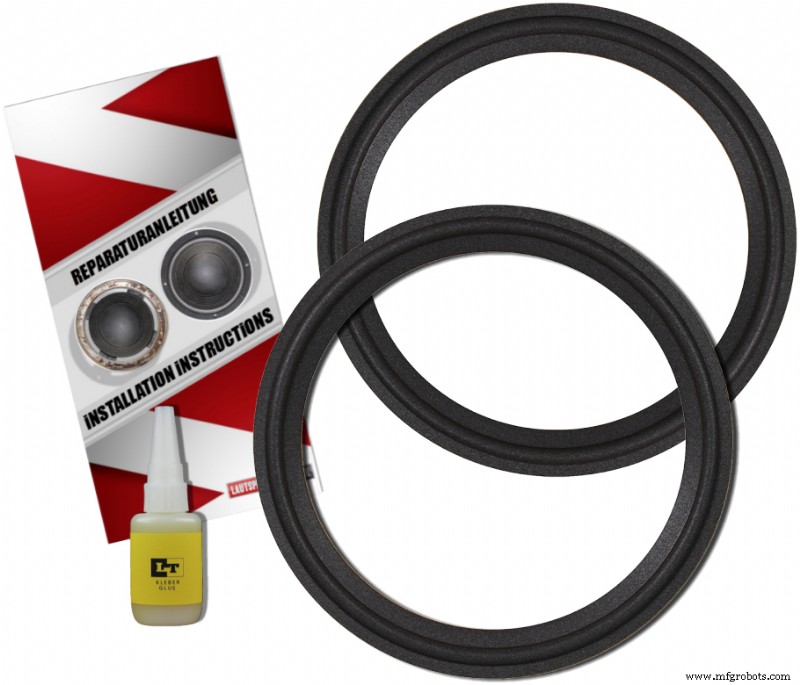
Reason: The aging surround loses its elasticity or drops down because of dislodged glue.
Preventive actions:
- Do not use materials that are corrosive to the surround during the production process;
- Apply enough glue to prevent gaps when bonding the surround and the basket;
- Check whether the glued surface of the surround and the basket is flat;
- Change the surround which is aging, moldy, whitish or inelastic;
- Put the surround in time after applying glue.
1.8 Problem with the central gel
Reason: The central glue was dislodged becauseof the over-high operating temperature, over-large power and improper production process.
Preventive actions:
- Use the suitable glue according to the rated power of the speaker;
- Keep the speaker working at rated power and specific bandwidth;
- Mix the two-component center glue in the specified proportion;
- Check if the center glue is broken or enough.
Symptom 2: Low volume or low sensitivity
2.1 Problem with the voice coil
Preventive actions:
- Avoid using the voice coil which is short circuit;
- Keep the voice coil working at rated power, preventing burning out;
- Check if the voice coil DC impedance is too large;
- Make sure the voice coil is placed in its proper position.
2.2 Problem with the magnet
Preventive actions:
- Use a magnet with better magnetic properties;
- Magnetize the magnet according to the standard requirement.
2.3 Problem with the cone
Preventive actions:
- Check the diaphragm to avoid affecting the frequency upper and lower limit, frequency characteristics, sensitivity, etc.;
- Pay attention to the softness of the compliant components, so that the speaker’s bandwidth is consistent.
Symptom 3: Intermittent sound or no sound
3.1 Problem with the voice coil
Reason 1: The voice coil is poor in quality, including the cases that the terminals of the voice coil or silk lead breaks, and the joint between them is not welded well.
Preventive actions 1:
- Use high-quality voice coil wire;
- Press the terminals of the voice coil into a “S” shape carefully;
- Fix the terminals of the voice coil with glue to stick to the voice coil and lead it to the basket;
- Make sure the joint between the terminals of the voice coil and the silk lead near the cone is welded well.
Reason 2: The voice coil burns out because of the excessive working power
Preventive actions 2:
- Keep the speaker working at rated power;
- Prevent the glue dislodged resulting from high temperature.
Through implementing meticulous attention to detail over these quality issues, we hope this article was helpful and thorough. If you would like to know more about speakers, check out the related articles.
Manufacturing process
- Component Failure Analysis: Troubleshooting Techniques for Series and Parallel Circuits
- Advanced Component Failure Analysis: Qualitative Techniques for Troubleshooting Complex Circuits
- Root Cause Failure Analysis: A Proven Approach for Manufacturing Excellence
- Understanding Process vs. Discrete Manufacturing: Key Differences & Benefits
- Comprehensive Failure Analysis: Preventing Equipment Loss and Reducing Costs
- Step-by-Step Guide to Producing High-Quality Iron Carbide (Fe3C)
- Understanding Failure Analysis: Key Insights for Manufacturing Excellence
- Understanding Glass Types and Their Manufacturing Processes
- How TFT LCDs Are Made: A Detailed Manufacturing Process
- Modern Ceramic Production: From Raw Materials to Finished Goods