



The Critical Role of Subjective Maintenance Inspections
Condition monitoring (CM) is not a life‑extending activity. Life‑extending actions—lubrication, alignment, balancing, and operating procedures—extend equipment life, while CM simply signals impending failures before a breakdown occurs. It is essential that this distinction be clear throughout your plant’s communication to ensure corrective work orders generated from CM are properly prioritized.
CM delivers early failure warnings through a range of tools: vibration analyzers, infrared thermometers, pressure gauges, and multimeters. Yet the most effective CM still relies on human senses—look, listen, feel, and smell—an invaluable skill that is often undervalued in today’s technology‑heavy environment.
Can a computer reliably detect a loose bolt before mechanical looseness, spot dirt buildup on a motor before overheating, identify a plugged breather in a gearbox, locate a pneumatic leak, or pinpoint a misaligned photocell? While advanced analytics can approximate these tasks, a well‑trained inspector can identify many of them in under ten seconds.
Regardless of whether your plant uses handheld computers, paper logs, trend data, or KPI dashboards, success hinges on personnel who perform thorough, quality inspections. Below are concrete examples illustrating the power of subjective inspections.
Example 1: AC Motor Temperature
Inspectors must differentiate between a hot coupling side—often indicating a bearing issue—and a hot motor core, which typically signals a damaged winding or overload. Understanding this distinction is critical for timely intervention.
Example 2: Couplings
Couplings that could cause costly breakdowns should have inspection lids, allowing easy access to the coupling element, bolts, and keyways. The inspection cost should not exceed $100 per year. Ideally, use a stroboscope while the equipment runs (see Figure 1).
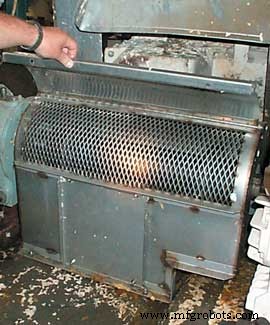
Figure 1. A coupling can be inspected on‑run with a stroboscope. OSHA 1942 guard‑safety compliance is observed.
Example 3: Heat Exchanger Sacrificial Anode
The zinc anode protects the cast‑iron shell through galvanic corrosion. A simple drill hole in the anode’s center allows early detection of leaks, enabling replacement before critical failure (see Figure 3).
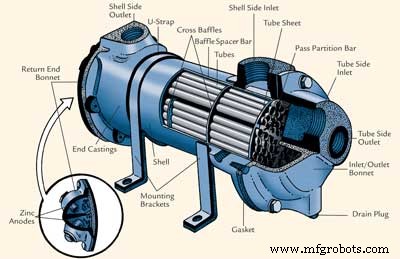
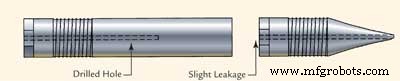
Figure 3. Drill a small hole in the zinc anode; a leak will appear early, prompting timely replacement.
Example 4: Pump Packing
Incorrect mindset often turns packing replacement into an emergency. Replace packing when only one‑eighth of an inch of take‑up remains, even if leakage is minimal (see Figure 2).
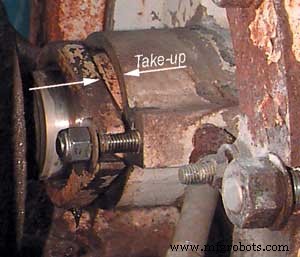
Figure 2. Replace pump packing when one‑eighth of an inch of take‑up remains.
The Numbers
IDCON recently analyzed work requests from a large process plant over seven months. Results showed that nearly 70 % of problems identified through CM were detected subjectively by operators and mechanics via detailed look, listen, feel, and smell inspections. While vibration analysis, infrared technology, and oil analysis are valuable, these data underscore the underutilized power of human inspection.
Torbjörn (Tor) Idhammar is partner and vice‑president of reliability and maintenance management consulting at IDCON Inc. He trains and implements preventive maintenance, CM, scheduling, spare‑parts management, and root‑cause elimination. Author of “Condition Monitoring Standards” (vols. 1–3). Contact Tor at 800‑849‑2041 or info@idcon.com.
Management Consultants in Reliability and Maintenance – IDCON
www.idcon.com
Equipment Maintenance and Repair
- Industrial Maintenance Staffing Solutions for Peak Efficiency
- Expert Contract Maintenance Services: Boost Efficiency & Reduce Downtime
- Maximize Plant Uptime with ATS’s Expert Third‑Party Maintenance Solutions
- Ford Dagenham Plant Deploys Drones for Rapid, Safe Maintenance Inspections
- Setting Inspection Frequencies for Preventive Maintenance: A Practical Guide
- Why Preventive Maintenance Doesn’t Always Stop Equipment Failures (And How to Fix It)
- Preventive Maintenance: A Comprehensive Guide to Reliability, Cost Savings, and Equipment Longevity
- Maximizing Reliability: Visual, Audible, and Tactile Inspections for Predictive Maintenance Teams
- Optimizing Offshore Pipeline Inspections for Safety and Efficiency
- How Regular Equipment Inspections Cut Maintenance Costs & Prevent Downtime