



Predictive Maintenance Reveals Rotor Failure in Sealless Pump – A Detailed Case Study
Sealless, self‑contained pumps are ubiquitous in the chemical sector. While compact, each unit carries a substantial investment—our three‑horsepower pump is priced at roughly $7,200 for its rotor‑stator assembly. With dozens of these pumps in operation, diligent monitoring is a cornerstone of our predictive maintenance (PdM) program.
When a service call reported a pump tripping on thermal‑load protection, our initial checks confirmed that valve positions, pressure, and flow met historical norms. To verify flow integrity beyond these basic parameters, we employed two advanced diagnostics: infrared temperature profiling across the pump housing and vibration analysis of operating speed.
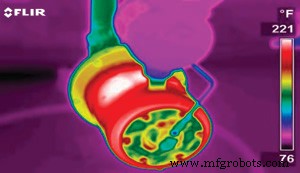
Photo 1. Infrared thermography images and vibration data helped Dow Corning pinpoint pump problems.
The pump’s design incorporates process fluid to lubricate the sleeve bearings, ensuring rotor hydraulic stability. The infrared image shows clear coolant flow to the rear bearing housing—evidenced by the cooler tones—but also reveals a pronounced hot spot on the stator‑rotor assembly.
We then captured vibration spectra during operation.
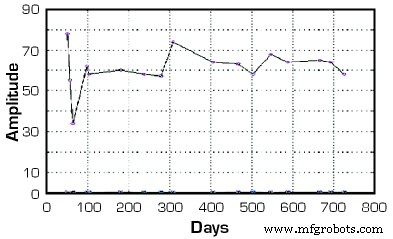
Graph 1. Initial data indicated fairly normal process conditions.
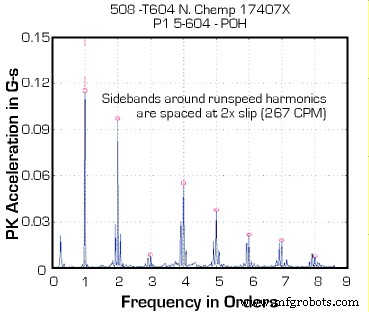
Graph 2. The vibration plot displays signs of a rotor problem.
Graph 2 displays a characteristic rotor‑fault signature: multiple harmonics of the operating frequency bracketed by twice the slip frequency. Such a pattern can stem from shorted rings, cracked rotor bars, or shorted laminations. Despite normal flow, the data prompted us to schedule a pump replacement. The motor’s optimum speed is 3,450 RPM.
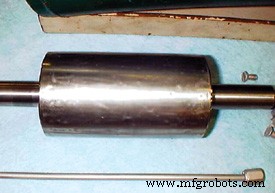
The rotor has a thick stainless steel covering 2 to 3 mils thick.
The rotor and stator windings are encased in a thin 2‑ to 3‑mil stainless‑steel sheath, which slightly reduces efficiency compared to standard two‑pole motors. The unit operated at 3,466 RPM—within the optimal efficiency window—but the vibration signature required a detailed teardown. Removing the steel sheath was a delicate task, yet essential to expose the rotor bars and laminations.
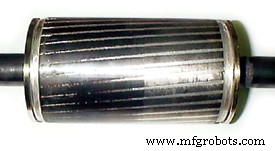
Removing the covering exposes the rotor bars and laminations.
The de‑sheathed rotor revealed the root of the spectral anomaly. On the right side, rotor bars and laminations were neatly separated; on the left, a breach and heat‑induced discoloration were evident, confirming thermal stress.
After installing a fresh rotor into the existing stator, the pump returned to normal operation. Had the fault persisted, the stator would likely have failed, risking an atmospheric release of process fluid. Rotor replacement costs about $3,000—roughly 42 % of the unit’s value—far less than a complete stator overhaul.
In summary, rotor‑to‑stator contact is an uncommon failure for this pump type. We routinely monitor subsynchronous energy—an indicator of oil whirl/whip—to evaluate bearing wear. Rotor‑to‑stator clearance is only 5–7 mil; any contact signals impending failure, necessitating scrapping unless a bearing rebuild kit ($400) is installed. This case underscores two further benefits of vibration analysis: predictive failure detection and diagnostic confirmation.
- Vibration analysis not only forecasts impending mechanical failures but also dispels false positives during troubleshooting.
- Targeted vibration monitoring can uncover process variations that underlie equipment or product quality issues, revealing characteristic changes in pump flow.
Equipment Maintenance and Repair
- Preventive vs. Predictive Maintenance: Choosing the Best Strategy for Your Factory
- Your Comprehensive Predictive Maintenance Checklist: Boost Efficiency, Cut Downtime & Drive ROI
- How Predictive Maintenance Drives Significant Cost Savings for Manufacturers
- Preventive vs. Predictive Maintenance: Mastering Equipment Reliability
- Predictive Maintenance: The Complete Guide to Reducing Downtime and Maximizing ROI
- Optimizing Maintenance: Cost‑Effective Predictive Strategies for Manufacturing Leaders
- Revolutionizing Asset Reliability: Machine Learning for Predictive Maintenance
- Predictive Maintenance Explained: How to Minimize Downtime and Maximize Asset Performance
- Reactive, Preventive, and Predictive Maintenance: Choosing the Right Strategy
- Key Tools for Effective Predictive Maintenance in Modern Industries