



Japan vs. the U.S.: Contrasting Views on Beef Safety and Plant Reliability
“We have to give up our beef bowls?” Many Japanese citizens lamented when their government imposed a ban on U.S. beef products last year. The public outcry stemmed from the fact that American beef was considered the most suitable and flavorful for the popular light‑meal dish known as “beef bowls.”
The controversy began after a few U.S. cattle were found to carry mad‑cattle disease, sparking significant trade friction. It also revealed a cultural difference in risk tolerance. U.S. consumers are generally comfortable with beef from cattle younger than 20 months, viewing the risk as negligible, whereas Japanese regulators demand exhaustive safety verification before approval. In short, Americans accept a low probability of disease, while Japanese authorities insist on absolute certainty to protect public confidence.
Similar divergences appear in how senior managers approach plant reliability. During a recent workshop on maintenance‑management systems, a manufacturing expert highlighted a key difference: “Japanese plant managers typically operate under the premise that any equipment failure or process interruption is unacceptable. If a top executive acknowledges a risk, they face harsh criticism for endangering workers.”
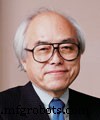
Kimura
In practice, this mindset forces managers to deny the presence of risk to maintain peace of mind. Unfortunately, this approach creates a paradox: without an acknowledged risk, there is no budget allocated to mitigate it, leaving maintenance teams in an untenable position.
The expert noted that American plant managers accept machine failure as inevitable and treat it as a calculable risk. By acknowledging the risk, they can estimate its probability, assess potential losses, and allocate appropriate resources for mitigation.
While the American perspective offers a pragmatic framework for maintenance planning, it is not an argument for abandoning Japanese prudence. Instead, this discussion underscores the importance of mutual understanding and acceptance of differing risk philosophies between our countries.
Yoshitsugu Kimura is the former president of Japan’s Kagawa University and a member of the Science Council of Japan. In 2004, the Institution of Mechanical Engineers honored him with the Tribology Gold Medal, the world’s highest award for friction and wear science and technology.
Equipment Maintenance and Repair
- Showcasing IT Relevance at Gartner IOSS: AppNeta’s Vision for Cloud Visibility
- Reassessing Business Risk in a Post-Lockdown World
- Prioritizing Employee Work‑Life Balance: Why It Matters for Your Business
- Mitigating COVID‑19 Risks: Strategies for CPG Shippers
- Engage Partners Effectively About Supply‑Chain Security Risks
- Industry Titans Reveal Their Shift Toward Automation
- Clear Communication: Alleviating Employee Fears of Automation
- Japan’s Path to Industrial IoT: Bridging Knowledge and Adoption
- Understanding Aluminum: Grades, Applications, and Key Properties
- PCB Surface Finishes: How They Protect Copper and Boost Performance