



BP Pipeline Shutdown Reveals the Cost of Deferred Maintenance
On August 6, British Petroleum ordered the shutdown of the Alaska Pipeline, which delivers roughly 8% of the United States’ crude oil supply. The timing could not have been worse, as oil prices were above $75 per barrel. The interruption is expensive for producers, consumers and for BP’s reputation. Investigators say the shutdown was avoidable, caused by a classic failure of deferred maintenance.
Corrosion was identified as the root cause. Over time, sludge that forms in the pipeline’s interior releases acids that erode the pipe wall. If the wall thins beyond safe limits, the integrity of the line is compromised. Inspectors found that more than two‑thirds of the pipeline’s wall thickness had been lost, triggering the shutdown.
Routine sludge removal—known as “pigging”—is a proactive maintenance task designed to mitigate corrosion. The Alaska Pipeline was last pigged in 1992, a full 14 years ago. U.S. Pipeline and Hazardous Materials Safety Administration spokesman James Wiggins stated, “Poor maintenance was obviously a factor.”
Beyond the scrubbing schedule, questions have arisen about BP’s use of non‑destructive testing methods such as ultrasonic and radiographic inspections to monitor pipeline integrity. These practices will be scrutinized as the investigation proceeds.
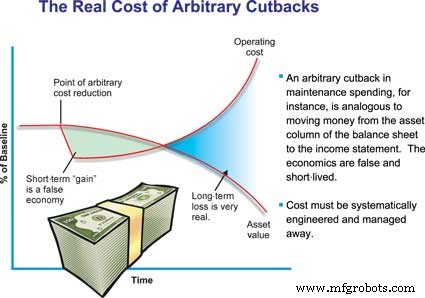
What can we learn from BP’s maintenance missteps? Managers often postpone upkeep because a dollar saved today boosts quarterly profit. However, this short‑term gain erodes the true value of assets over time, ultimately driving up operating costs. The real question is whether it’s cheaper to routinely monitor and pig the pipeline or to shut it down for weeks or months to replace corroded sections.
Reducing maintenance costs requires engineering away the need for it—by improving design, altering operating conditions, or managing the environment. Strengthening equipment to better resist stressors, designing for maintainability, rationalizing preventive maintenance schedules, and employing advanced inspections can all lower long‑term expenses.
In practice, cutting maintenance to boost profitability is a gamble. Reliability is a dependable partner; luck is not.
Comments? Email reliable plant technical editor Drew Troyer at dtroyer@noria.com.
Equipment Maintenance and Repair
- Reliability: The Comprehensive Guide to Asset Management
- From Maintenance to Reliability: Building a Culture of Predictive Excellence
- Building a Reliability Culture: Ownership, Collaboration, and KPI Success
- Reliability: It’s Not Just About Maintenance
- Top Performance in Maintenance & Reliability: Proven Strategies for Long‑Term Success
- Operational Practices That Drive Reliability
- 12 Pillars of Effective Reliability Management
- Why Attention to Detail Drives Maintenance & Reliability Success
- Enhancing Plant Reliability Through Collaborative Operations and Maintenance
- 5 Key Elements That Drive Equipment Reliability Through Maintenance Planning