



Operational Practices That Drive Reliability
In many plants, maintenance teams blame operations for equipment failures, while operators attribute reliability issues to idle maintenance staff. This tug‑of‑war hides a deeper truth: robust operating procedures are the foundation of dependable equipment.
Maintenance staff often sit idle because planning, scheduling, and spare‑parts logistics are poorly defined. In this article, we focus on the operating side—how everyday practices influence reliability.
Operating procedures are a cornerstone of preventive maintenance. Proper execution stops failures; sloppy practices create them.
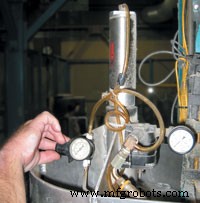
A plant worker changes the pressure setting on a cylinder.
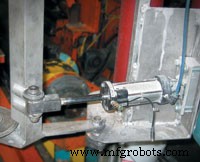
The cylinder dead‑heads and shakes loose or gets damaged due to the wrong pressure setting.
Ask management: Do we have clearly documented and communicated expectations in our standard operating procedures (SOPs)? Do those SOPs address equipment reliability? Does maintenance provide input on how equipment should be run to avoid problems? Are operators trained on these SOPs? Does operations management understand reliability from an operational perspective?
In many plants, SOPs exist but overlook reliability concerns. Here are a few illustrative cases:
Pneumatic cylinder: In a plant I served, operators routinely doubled the pressure on a pneumatic cylinder to speed up production. The excess pressure caused the cylinder to dead‑head, shudder, and ultimately bend the rod. Maintenance discovered the issue only during a weekly preventive maintenance visit because operators had never been instructed to keep the pressure within limits, and the SOPs omitted this critical detail.
Motor start‑up: Pushing an AC motor’s start button generates an inrush current four to seven times the rated load. Repeated starts in quick succession can scorch the windings. Operators often ignore this risk because it is not highlighted in their training or the SOPs.
Steam systems: Opening a valve too rapidly can trigger water hammer—steam condenses to water, racing through the pipe and damaging elbows, flanges, and the entire network. This simple procedural error is common across many industries.
Open, ongoing dialogue among operations, maintenance, and engineering—starting at design and continuing post‑installation is essential.
I have seen significant gains when operators and maintenance teams walk the same inspection routes and complete preventive tasks together at least once a week. Jointly reporting findings to supervisors creates accountability and accelerates corrective action.
Torbjörn (Tor) Idhammar is partner and vice president of reliability and maintenance management consulting at IDCON Inc. He brings decades of expertise in preventive maintenance, condition monitoring, and root‑cause analysis. He authored the "Condition Monitoring Standards" series and holds a B.S. in Industrial Engineering from North Carolina State University and an M.S. in Mechanical Engineering from Lund University. Contact Tor at 800‑849‑2041 or info@idcon.com.
Management Consultants in Reliability and Maintenance – IDCON
www.idcon.com
Equipment Maintenance and Repair
- Reliability: The Comprehensive Guide to Asset Management
- From Maintenance to Reliability: Building a Culture of Predictive Excellence
- Building a Reliability Culture: Ownership, Collaboration, and KPI Success
- Cutting Waste to Boost Equipment Reliability
- Streamline Maintenance to Boost Plant Efficiency
- Optimizing Maintenance: Cost‑Effective Predictive Strategies for Manufacturing Leaders
- How Business Processes Enhance Reliability – Insights from Drew Troyer, CEO of Noria Corporation
- Elevating Maintenance: Aligning Strategy, Building Trust, and Driving Business Value
- FAA Settles with Boeing to Strengthen Maintenance and Certification Processes
- Harnessing Robotics to Optimize Business Processes