



From Reactive to Reliable: Transforming Maintenance into World‑Class Reliability
Many organizations still rely on reactive maintenance—reacting to breakdowns and budget surprises as routine events. Transitioning to a dependable, cost‑effective environment is a formidable challenge that requires more than software installation; it demands a comprehensive cultural, process, and change management overhaul.
Successful reliability programs are built on three pillars:
- Culture management
- Key process enhancements
- Targeted change‑management practices
Only a handful of industries—military, aviation, nuclear power—have sustained world‑class reliability. Studies suggest that roughly 1 % of industrial maintenance organizations reach that level, underscoring the difficulty of the task.
“Rx” in this article represents a Reliability Excellence environment, where asset care is consistently world‑class.
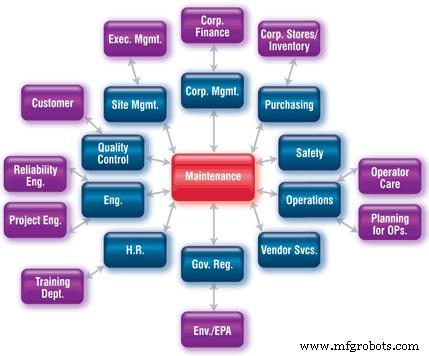
Figure 1. Department interdependencies.
Why the Effort Matters
Switching to an Rx environment is often overlooked because it is not seen as a “critical” project. Yet, the benefits—operating assets at peak performance for the lowest cost, improved profits, safer workplaces, and higher customer satisfaction—far outweigh the temporary disruptions. The effort typically spans 12–18 months, during which leadership changes or market pressures can increase complexity.
The Status Quo
Reactive maintenance erodes trust between operations and maintenance, forces other departments into inefficiencies, and sows cynicism across the supply chain. Turning the corner requires a deliberate, holistic approach that aligns culture, processes, and people.
Culture Management
Culture must evolve at every level—from executives to frontline technicians—to support reliability excellence. Leaders must ask probing questions, allocate resources for reliability engineering, and embed measurable KPIs that reflect proactive behavior rather than reactive fixes.
Site managers need to track metrics such as:
- Time to notification after a repair request
- Root‑cause identification rates
Shift managers and technicians must adjust their communication style—focusing on root causes rather than just completion dates—and embrace new work‑order workflows that support predictive maintenance.
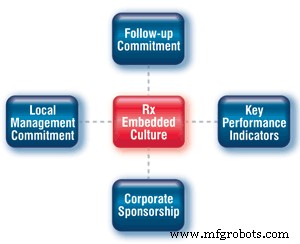
Figure 3. The Sustainability Model.
Process Enhancements
Implementing the 29 elements of a highly effective organization (shown in Figure 2) is essential. These elements span principles, culture, processes, optimization, and sustainability. While a robust CMMS is important, it must be paired with well‑defined processes that dictate who does what, when, and why.
Change the daily habits of all stakeholders through education, clear business motives, and consistent measurement. The transition to Rx requires each element to be in place and properly aligned.
Change Management
A structured change‑management plan safeguards the transition. It must measure the rate of adoption, involve internal champions, and gradually shift responsibility to the organization’s own teams. External SMEs can provide guidance initially but should hand over ownership to internal staff to build trust and reduce costs.
Key components of the Sustainability Model include:
- Regular KPI reviews
- Visible corporate sponsorship
- Committed local management
- Follow‑up oversight to reinforce new processes
Follow‑up commitment—continuous support for at least 12 weeks—is crucial to prevent regression to old habits.
Conclusion
Achieving world‑class reliability demands simultaneous investment in culture, processes, and change management. While only about 1 % of industrial organizations have reached this milestone, it remains a powerful differentiator that can unlock significant performance gains.
Joe Mikes is a consultant for Life Cycle Engineering. For more information, call 843‑744‑7110 or visit www.LCE.com.
Equipment Maintenance and Repair
- Why an Annual Maintenance Contract Boosts Plant Reliability and Saves Costs
- Is Reactive Maintenance Right for Your Facility? Balancing Cost, Safety, and Reliability
- Streamline Maintenance to Boost Plant Efficiency
- Launching Reliable Plant: Your Trusted Guide to Maintenance Excellence
- Ensuring Asset Maintainability for Lubrication Excellence
- Is Your Plant Operating Like a Navy Carrier? Insights for Optimizing Teamwork
- May 2019 Maintenance Insights: Fiix News & Global Trends
- Elevate Your Manufacturing Business: From Reactive to Proactive Customer Service
- Plant Maintenance Demystified: Best Practices for Modern Industries
- Prevent Undercarriage Sagging: Proven Maintenance Strategies for Heavy Machinery