



Is Your Plant Operating Like a Navy Carrier? Insights for Optimizing Teamwork
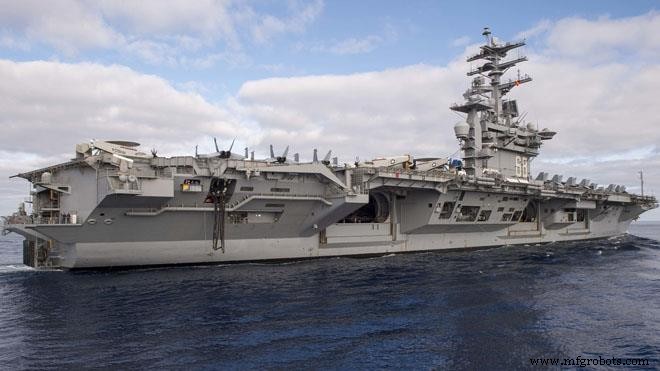
Imagine yourself in the engine room of the USS Lincoln, the world’s largest aircraft carrier. As an oiler, your job is to keep the steam turbines humming. You monitor the ship’s control panel, trusting that the bridge and all 2,000 sailors are synchronized for a safe voyage. The ship’s flawless performance is a testament to seamless teamwork.
From NASCAR’s precision teamwork to a carrier’s colossal scale, coordinated activities and responsibilities are executed at a world‑class level. This article invites you to examine how those principles can be applied to your plant.
During my tenure as manager of the U.S. Postal Service’s Technical Support Center, I approved maintenance directives for 450 plants and 16,000 field technicians. When I visited plant workrooms, I spoke directly with maintenance technicians about their work environment—information, tools, scheduling, equipment condition, and leadership visibility.
Their feedback matched my expectations based on metrics and plant knowledge. What surprised me was their answer to a simple question: “If I could wave a magic wand and change one thing in your plant, what would it be?”
Often the response was a call for managers to communicate, for continuous operations across shifts, and for inter‑functional collaboration. Managers seemed to compete within their ranks, but the reason remained unclear.
Over the years, I asked dozens of employees this question. Common themes emerged: a lack of coordination among managers, opaque shift transitions, discarded process improvements, and a disconnect between operations and maintenance. Employees wanted a unified game plan—just like the USS Lincoln.
A useful mental model is a 90‑degree rotated org chart—an invisible competition where managers vie for unclear rewards. Is the root cause power, turf, pride, or misaligned mission? The employees’ examples clarified the problem.
Examples of the issues they identified:
- Operations priorities do not match those of maintenance or customer service.
- There is no shift transition process, either between maintenance shifts or within operations.
- Process improvements on one shift are discarded by the next shift.
- Managers purposely avoid other managers.
- On‑the‑job training and onboarding take too much time away from productive activities.
- The most important employees—machine operators and maintenance technicians—are not part of the management team.
- Human resources does not support the supervisors.
- The plant is dirty and signage is outdated.
- We are unaware of the mission and goals.
- There are conflicting goals.
They don’t want to run the ship; they simply want a clear mission and a visible roadmap for the voyage.
Equipment Maintenance and Repair
- Why an Annual Maintenance Contract Boosts Plant Reliability and Saves Costs
- How to Reduce Maintenance Costs Without Sacrificing Reliability
- Streamline Maintenance to Boost Plant Efficiency
- Ensuring Asset Maintainability for Lubrication Excellence
- From Reactive to Reliable: Transforming Maintenance into World‑Class Reliability
- 6 Proven Techniques to Error‑Proof Your Plant Operations
- Plant Maintenance Demystified: Best Practices for Modern Industries
- Optimizing Facility Maintenance: Strategies to Minimize Downtime and Boost Productivity
- Plant Maintenance: Keeping Factories Efficient and Safe
- Mastering Plant Maintenance: Proven Practices for Reliable Energy Production