



Maximize CMMS Value: Technology, Processes, and People Aligned
A well‑configured computerized maintenance management system (CMMS) is a cornerstone of any high‑performance maintenance and reliability program. Yet, simply deploying the technology does not guarantee efficiency gains or ROI. Think of the CMMS as one leg of a three‑legged stool: the other two legs—robust work processes and an engaged workforce—must also be in place to support sustained value.
As maintenance and reliability professionals, we must educate leadership and plant staff about the broader organizational benefits of a CMMS, beyond the maintenance department. When plant employees master this critical tool, plant performance improves dramatically, and maintenance programs become more efficient. By leveraging CMMS data—asset failure analysis, resource utilization, and lost‑opportunity costs—organizations can implement failure‑elimination strategies that protect safety and boost availability.
Equally important are well‑designed work processes that harness the CMMS’s features to document maintenance activities. Emphasizing accountability ensures that data entry is accurate and consistent. While inventory and spare‑parts management is a valuable integrated component, this article focuses on unlocking value through optimized equipment and work‑order components.
Remember: the CMMS is an enabler, not a silver bullet. Successful implementation requires a triad of technology, processes, and people.
You Can’t Manage What You Don’t Measure
Using a CMMS merely as an electronic work‑order system overlooks its potential to capture and analyze powerful data that can inform business decisions across operations and maintenance. By extracting user‑defined metrics, maintenance teams and plant leaders can manage assets and resources—both personnel and capital—to achieve operational excellence.
Metrics can reveal whether current maintenance strategies add value, quantify the financial impact of reliability on equipment failures, track labor and cost data by plant area, analyze asset‑failure history, and compare reactive versus proactive labor hours.
The key to meaningful insights is clear objectives, relevant data, and appropriate field names and attributes within the CMMS. Common attributes include work type (corrective, preventive, predictive), work priority (1, 2, 3 or A, B, C), asset group (pump, fan, valve), asset type (centrifugal, vane, axial), failure codes (bearing, impeller, coupling), and other attributes related to environmental controls or process safety.
When configured with these attributes, the CMMS becomes a powerful tool for documenting and analyzing equipment history, enabling better understanding of failure modes and workflow characteristics that shape maintenance focus and strategy.
If your organization is still in a reactive maintenance mode, mining CMMS data for a Pareto analysis can quickly highlight where most labor hours are spent or where the greatest maintenance costs arise. From there, deeper investigation into specific assets can uncover root causes, guiding data‑driven decisions that improve operating procedures, maintenance strategies, engineering designs, and purchasing decisions—all aimed at eliminating failure mechanisms and safeguarding personnel and profitability.
Such efficient analysis is possible only when the CMMS is configured to support objectives, work processes and data‑entry requirements are defined, and the workforce is engaged through training and communication.
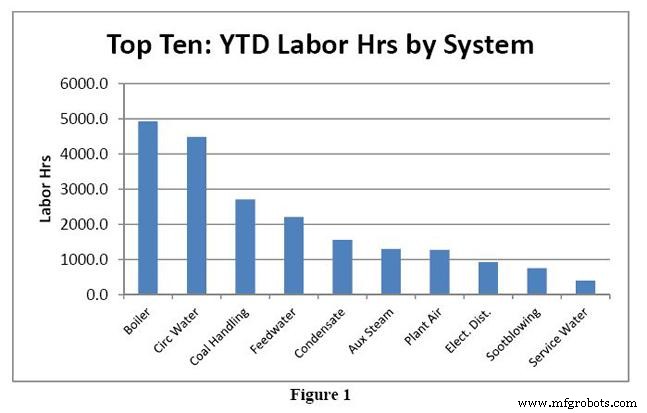
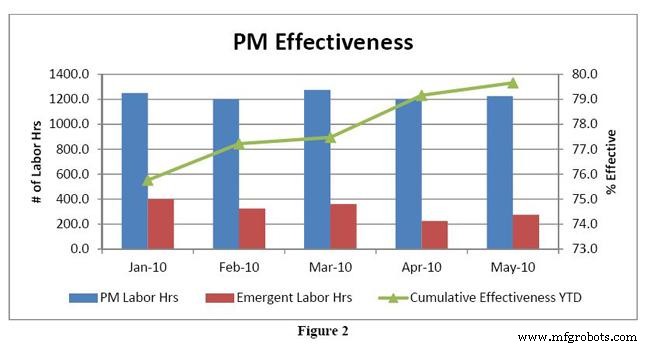
Properly configured attributes also facilitate performance measurement across the maintenance workflow. For instance, to evaluate the overall effectiveness of a preventive maintenance (PM) program, you need to define acceptable goals and the data required to measure them accurately.
In this scenario, you would rely on work type (PM and CM), work priority categories (to distinguish emergent orders that disrupt scheduled maintenance from those that can be planned a week in advance), and labor hours logged on completed work orders. Selecting a query date range—monthly, yearly, year‑to‑date—provides the context for analysis.
PM effectiveness can be expressed as:

For example, a monthly query revealed 1,225 labor hours on PM orders and 275 hours on emergent corrective orders. Applying the formula yields the PM effectiveness for that month.

Aggregating these monthly figures into a year‑to‑date metric communicates overall PM performance, illustrating the impact of proactive strategies on reactive resource use. As a lagging indicator, this metric supports continuous improvement initiatives that address ineffective practices leading to failures and lost opportunities.
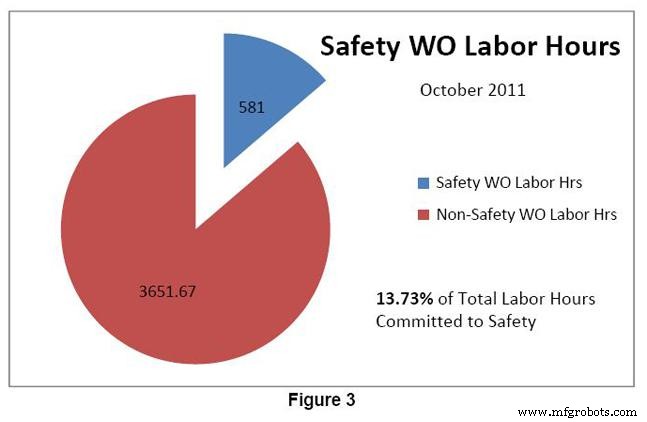
Another example demonstrates CMMS value for a safety committee: by tagging work orders with an environmental health and safety attribute, the CMMS can capture estimated and actual labor hours for safety‑related tasks. This enables reporting on the backlog and the proportion of total labor devoted to safety work, fostering transparency and accountability (Figure 3).
Assess Your CMMS Utilization
Some users perceive a CMMS as an administrative burden that consumes time and adds little value, especially when the same information exists in memory. Ironically, these skeptics often spend the most resources—multiple staff members, hours of effort—reconstructing past actions, part usage, and observations from memory. This can lead to incomplete corrective actions, costly rework, and increased opportunity costs, reinforcing the reactive maintenance “fire” and threatening operational viability.
Conversely, a CMMS becomes an invaluable tool when its capabilities are understood and applied to streamline daily tasks. Proper work documentation and closeout procedures must be defined in the maintenance workflow and emphasized to all plant personnel responsible for operating and maintaining equipment.
Whether you aim to investigate an equipment anomaly, measure PM effectiveness, or refine maintenance strategies that directly affect availability and costs, all critical decisions hinge on accurate, detailed, and consistent information. Effective CMMS utilization provides the access needed to make those decisions.
Take a closer look at your CMMS configuration and usage—you may discover untapped capabilities that can transform your maintenance program.
Equipment Maintenance and Repair
- Eliminate Unplanned Maintenance: How a CMMS Provides the Solution
- Unlocking Operational Excellence: The Strategic Advantage of Optimized Maintenance Scheduling
- The Power of a Clear, Concise Vision: Driving Leadership Success
- How Maintenance KPIs Drive Asset Reliability and Business Value
- Harnessing Pareto Analysis to Optimize Maintenance Efficiency
- 20 Proven Benefits of a CMMS: Boost Efficiency, Cut Costs, and Enhance Safety
- How to Justify the Cost of a CMMS: Calculating ROI for Maintenance Managers
- Paper vs CMMS: How Modern Maintenance Software Drives Efficiency
- 4 Key Reasons Your CMMS Rollout May Fail (and How to Avoid Them)
- Unlocking CMMS Success: How Machine Data Drives Maintenance Efficiency