



How to Reduce Maintenance Costs Without Sacrificing Reliability
During the ongoing COVID‑19 crisis, many companies face severe financial pressure, and maintenance budgets are often the first to be cut. If you oversee maintenance, you may be asked to reduce costs by a specific percentage within a tight deadline.
Facing this challenge can feel overwhelming, but the solution is not a quick fix. Instead, it requires a data‑driven conversation with decision‑makers and a strategic, people‑focused approach that preserves plant reliability.
Start by requesting a meeting with the executive who set the cost‑reduction target. Even if you are denied a full discussion, a brief conversation can clarify the rationale and provide an opportunity to ask critical questions.
Often, cost‑cutting orders are based on superficial comparisons—e.g., matching a similar plant’s spend—without accounting for key variables such as plant age, existing maintenance debt, union agreements, or the specific scope of your maintenance budget. Such one‑size‑fits‑all analyses distort reality and can lead to decisions that harm long‑term performance.
Ask whether a 10–15 % reduction will actually improve the company’s bottom line, or merely delay inevitable repairs. Ignoring back‑logged work can trigger a cascade of failures, higher downtime, and ultimately higher costs.
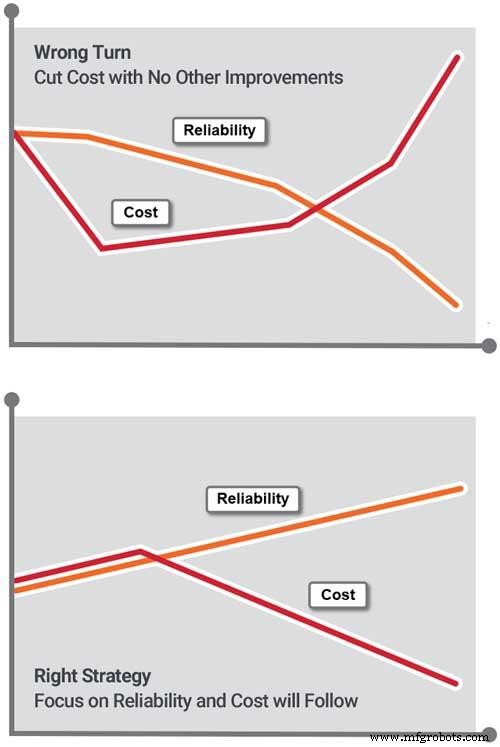
If you find the decision immutable, ensure you have a clear, agreed‑upon strategy for how the budget will be trimmed. The most common approach—immediately cutting the budget and hoping for improved efficiency—is a short‑sighted trap. Reduced funding often delays maintenance, increases downtime, and drives costs higher in the long run.
True improvement takes time, because it is 90 % about changing human behavior. A punitive, top‑down style rarely yields lasting gains. Instead, focus on building a culture of continuous improvement through strong leadership and collaborative process redesign.
IDCON’s research, collected over years from plants worldwide, shows that systematic enhancements—such as refined operating procedures, optimized lubrication schedules, and tighter inspection‑planning cycles—deliver sustainable cost savings and reliability gains.
My concise advice:
- Engage decision‑makers to confirm whether cost cuts are truly necessary and whether reliability can be maintained.
- When cuts are unavoidable, prioritize process improvements led by empowered teams; this approach reduces costs while enhancing reliability, far more effectively than blanket budget reductions.
For more insights, visit IDCON or join our discussions on LinkedIn and subscribe to our YouTube channel.
Equipment Maintenance and Repair
- How Predictive Maintenance Drives Significant Cost Savings for Manufacturers
- Is Reactive Maintenance Right for Your Facility? Balancing Cost, Safety, and Reliability
- Mastering Preventive Maintenance: Strategies to Optimize Your PM Program
- Is Your Plant Operating Like a Navy Carrier? Insights for Optimizing Teamwork
- Transforming Maintenance Culture: Strategies for Reliability & Accountability
- 10 Essential Maintenance Metrics That Drive Better Decision‑Making
- The Hidden Cost of Skipping Maintenance: Why Cutting Back Is Like Using a High‑Interest Credit Card
- Mastering Maintenance Management: Boost Efficiency & Control Costs
- Ensure Peak Performance: Essential Engine Maintenance for Heavy Machinery
- Prolong Your Undercarriage Life: Expert Maintenance Strategies