



Zero Failures and Zero Injuries: How Disciplined Practices Drive Plant Safety and Reliability
Zero Failures and Zero Injuries: How Disciplined Practices Drive Plant Safety and Reliability
In his book Making Common Sense Common Practice, Ron Moore of the RM Group argues that plant safety and reliability are inseparable. While traditional safety measures—such as personal protective equipment (PPE), robust permitting, and lockout/tagout—are essential, Moore stresses that the best‑performing facilities maintain rigorous discipline across *all* operational practices. This holistic approach yields a synergistic improvement in every performance metric.
The Link Between Safety and Reliability
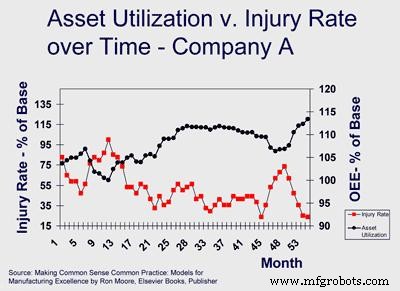
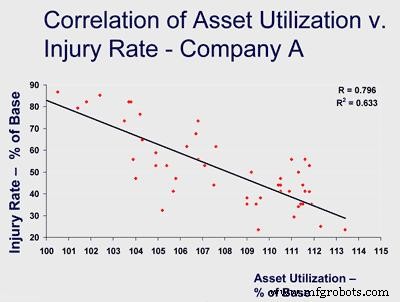
Figures 1 and 2, drawn from a large data set, illustrate a strong inverse relationship between reliability (asset utilization) and injury rates. The data confirm the adage that a more reliable plant is inherently safer.
Cargill’s 30‑Year Safety Journey
My experience with Cargill over the past three decades mirrors Moore’s insights. We once operated in industries deemed inherently unsafe, where injuries were seen as unavoidable. Through a decisive shift in culture, leadership, and practice, we transformed that perception into a belief that “zero injuries are possible in any business anywhere in the world.”
We measure progress using a proprietary safety index—a composite of the reported injury frequency rate (RIFR), disabling frequency rate (DFR), and severity rate (SR). A lower score indicates better performance.
Since the late 1970s, Cargill’s safety index has fallen dramatically—from an initial value of 100 to under 2 today. This remarkable decline demonstrates that a zero‑injury target is not only attainable but can become embedded in corporate culture.
Zero Failures: A Parallel Goal
When I ask plant leaders whether zero failures in reliability are achievable, the answer is frequently “no.” This skepticism parallels the disbelief that once existed about zero injuries. Yet, plants that have embraced comprehensive asset health management—identifying every potential failure mode and correcting defects before they trigger downtime—have approached zero failures.
These sites experience extended periods—days, weeks, even months—where no unexpected equipment failures occur. Their success rests on a disciplined, data‑driven approach to maintenance and continuous improvement.
Conclusion
Both safety and reliability thrive under a culture of discipline, proactive leadership, and relentless pursuit of zero incidents. As one saying goes: “If you think you can’t, you’re probably right. If you think you can, you’re probably right.” By integrating these principles, any plant can move toward the dual goals of zero injuries and zero failures.
Equipment Maintenance and Repair
- Precision Shaft Alignment: Achievable Even on Small Machines
- Can Manufacturers Achieve Zero Downtime? Insights & Strategies
- Driving Reliability Through Operations Leadership
- Boost Safety in Maintenance: Proven Strategies for Cost Savings and Service Excellence
- Proven Safety Guidelines for Heavy Equipment Operations
- Construction Safety Guide: Protect Workers During Severe Weather
- Construction Site Safety: Expert Guide for Contractors & Workers
- Designing a Tailored Excavation Safety Plan for Your Construction Site
- Comprehensive Large Equipment Training & Safety Protocols
- Mini Excavator Safety: Expert Guidelines for Secure Operation