



Precision Shaft Alignment: Achievable Even on Small Machines
I am a shaft alignment trainer with extensive experience in performing alignment checks and corrections on process equipment. Below are my key observations:
- Most attention to precision alignment focuses on large, process‑critical machines.
- Maintenance departments are often downsized and prioritize unscheduled repairs.
- Unscheduled work is largely on small equipment such as ANSI pumps and mixers.
- Very few personnel in plants can achieve precision alignment.
- Even fewer truly understand the principles of shaft alignment.
- Tradesmen can master alignment in one or two days.
- Direct‑coupled machines can be aligned quickly without sacrificing accuracy.
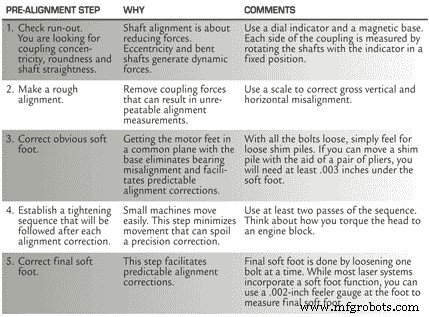
Chart 1. Five simple steps to eliminate most unnecessary corrective moves.
Small rotating machines often suffer severe misalignment: coupling debris, spare parts clutter, leaking seals, and visible misalignment. While large machines are critical, they rarely exhibit extreme misalignment. Aligning numerous small machines can yield substantial payback. For example, a Midwest corn processor with ~800 pumps used to repair 2–3 pumps daily. After focusing on small pump alignment, repairs dropped to 1–2 per month, saving over 4,000 maintenance hours annually—equivalent to adding two staff members.
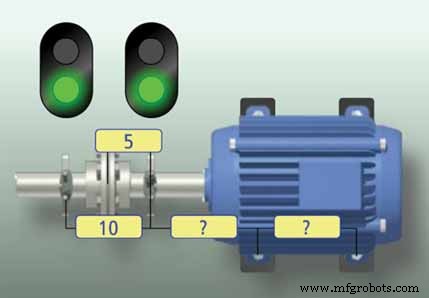
Figure 1. Dimensions entered.
Why align? Precision shaft alignment removes destructive forces that cause premature bearing failure and seal wear. When two rotational axes are collinear at operating temperature, forces at the coupling plane are minimized, extending bearing and seal life.
First, pre‑alignment. Achieving precision alignment in one or two moves is possible if you perform pre‑alignment steps before using precision tools. The box on page 36 outlines five simple steps that eliminate most unnecessary corrective moves.
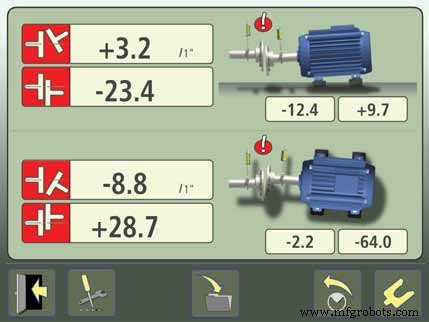
Figure 2. The measurement –12.4 indicates adding .012 inches to the front feet; +9.7 means removing .010 inches from the rear feet.
Measure misalignment. Laser sensors are attached to the shafts near the couplings. Enter the sensor‑to‑coupling distances, machine‑foot distances, and RPM into the laser system (Figure 1). Rotate the shafts 60–180° to capture vertical and horizontal positions at the sensors. The system calculates misalignment at the coupling and provides color guidance on tolerance compliance. It also reports vertical and horizontal positions at the machine feet for adjustment.
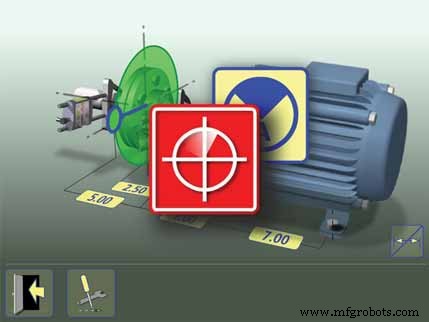

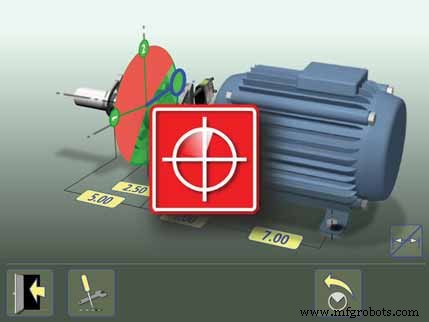
Figure 3. Measure the misalignment.
Conventional wisdom suggests solving vertical misalignment first, then horizontal. However, adjusting horizontal often forces vertical tolerances out of range again. This “cross‑effect” wastes time and frustration.
A new approach uses a compound move: adjust vertical shims, then immediately correct horizontally using live data. Color guidance confirms when tolerances are met. After both adjustments, re‑measure. Repeating this compound move typically achieves precision alignment on the first try.
Key to success:
- Think small for big results: Target small machines that consume human resources.
- Establish a core group: Identify three respected maintenance personnel as alignment champions.
- Widespread competence: Every mechanical maintenance staff member should be able to perform alignment.
- Set realistic tolerances: Define achievable precision limits to motivate, not frustrate, the team.
- Train for competence: Use a qualified trainer to teach alignment theory and laser technique; keep practice groups small (≤3) and charge $500–$600 per trainee for a two‑day course.
- Equip properly: Besides a laser or dial indicator, have shims, movers (hydraulic, pry bars, dead‑blow hammers), and a magnetic‑base dial indicator.
- Provide practice time: Real‑world experience builds confidence. New trainees may take up to 45 minutes per coupling; experienced technicians often finish faster.
- Document data: Correlate alignment results with performance and vibration data for root‑cause analysis.
- Account for thermal growth: Some machines are intentionally misaligned at ambient temperature so that axes align when operating. After mastering alignment, consider establishing off‑line‑to‑running (OL2R) data.
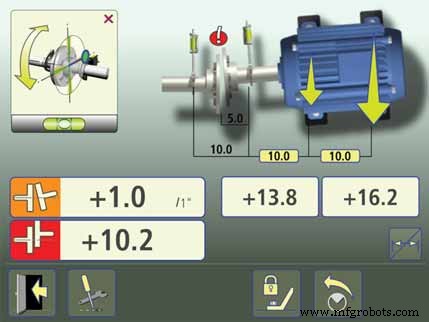
Figure 4.
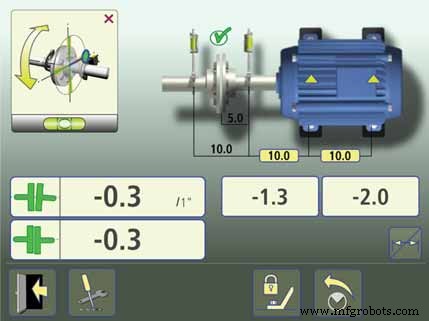
Figure 5.
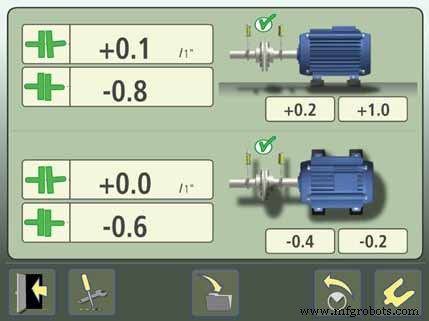
Figure 6. Final alignment data.
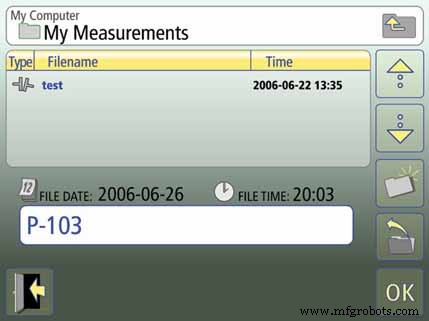
Figure 7. The document is saved.
David Zdrojewski is the founder and CEO of VibrAlign Inc., an educational resource and distributor of vibration analysis equipment. To learn more, call 804‑379‑2250 or visit www.vibralign.com.
Equipment Maintenance and Repair
- Build a Precise, Low‑Cost Compound Potentiometer Circuit
- Laser Alignment for Vertical Shaft Plumbness: Faster, More Accurate Measurements
- Can Manufacturers Achieve Zero Downtime? Insights & Strategies
- SKF Launches Affordable TKSA 31 Laser Shaft Alignment Tool
- The Ultimate Precision Casting Guide: Techniques & Applications
- Ensuring Reliability: The Critical Role of Alignment in Turbine Maintenance
- Understanding Gear Shafts: Role, Function, and Importance in Gear Systems
- Understanding Shaft Bearings: Types, Functions, and Industrial Applications
- Understanding Precision Machining: Definition, Benefits, and Applications
- Expert Guide to Shaft Alignment Options for High-Power Conveyor Drives