



Wireless Condition Monitoring: Boost Production & Cut Downtime
Mechanical failures in motors, drives, and other electromechanical equipment are the most common cause of production stoppages. Modern vibration‑based condition monitoring systems detect problems before they fail, reducing costly shutdowns and maximizing output.
Why Wireless?
Condition monitoring units are typically networked back to a central computer for data analysis and alarm annunciation. In many facilities, the machines are in remote or moving locations where hard‑wired connectivity is impractical or cost‑prohibitive. Wireless communication offers lower installation costs, faster deployment, and, in some cases, improved reliability.
Network Cost Challenges
When network infrastructure is unavailable, the extra expense of fiber‑optic cabling, conduit engineering, trenching, and leased phone lines can push the return‑on‑investment beyond acceptable limits. For example, the average cost of cable installation in a chemical plant is $40 per foot ($120 per meter), while a nuclear power plant can reach $2,000 per foot ($6,000 per meter). Leasing phone lines for sites several miles away adds activation fees and monthly charges that must support high‑speed, continuous vibration data streams.
Wireless cellular services are sometimes used for remote sites, but they are limited by coverage and bandwidth, and subscription costs can be high.
Wireless Technology Options
The most common approach to wireless Ethernet is RF transmission in the 2.4‑ and 5.8‑GHz license‑free bands. Two spread‑spectrum techniques are available: direct sequence and frequency hopping.
Direct sequence uses a wide channel to transmit complex modulation schemes, offering the fastest data rates (up to 54 Mbps with IEEE 802.11g). However, the wide bandwidth is more susceptible to interference when many systems operate in close proximity. In most countries, only three of the 13 available 2.4‑GHz channels do not overlap, leading to potential congestion.
Frequency hopping divides the spectrum into many small channels and rapidly hops between them. Though slower (typically <1 Mbps) and with higher latency, it delivers superior noise immunity and reliability. Frequency hopping systems are proprietary, allowing manufacturers to implement unique authentication and encryption, and to keep the industrial network isolated from corporate IT.
Integrating Wireless with Condition Monitoring
Most condition monitoring systems use Ethernet for connectivity. When deploying wireless, two key factors must be considered: data rate (bandwidth) and latency. For multiple remote machines, a dedicated RF network or separate RF systems may be required to maintain performance. Industrial RF equipment should feature high output power, wide temperature range, built‑in diagnostics, hazardous certifications, and support from engineers experienced in industrial networking.
Practical Applications
Wireless condition monitoring benefits virtually every industry that relies on electromechanical equipment. Typical use cases include:
- Wastewater treatment pumps
- Oil/gas drilling rig drives
- Automotive assembly line drives
- Overhead cranes in hot‑metal mills
- Power plant cooling fans
Case Study: Power Plant Cooling Fans
A coal‑fired power plant needed to monitor cooling fans at the base of its cooling towers. The harsh environment and lack of Ethernet infrastructure made fiber installation prohibitive—estimated at over $100,000 and a six‑month schedule. By deploying a wireless Ethernet solution, the plant installed the system in just three weeks and has operated reliably for more than five years.
Conclusion
Advances in vibration analysis now provide reliable, real‑time condition monitoring. When hard‑wired networking is costly or impractical, wireless technologies can deliver the same benefits with lower capital outlay and faster deployment. Selecting the appropriate wireless method and equipment is critical to ensuring long‑term reliability and performance.
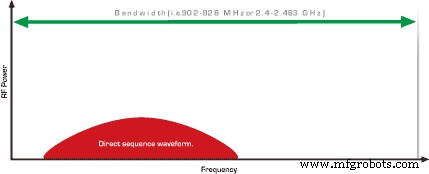
Figure 1. Direct sequence waveform.
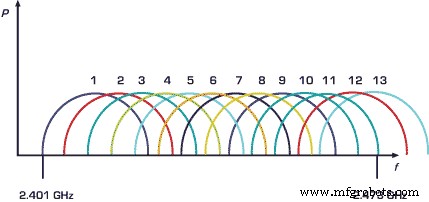
Figure 2. 802.11b direct sequence channels.
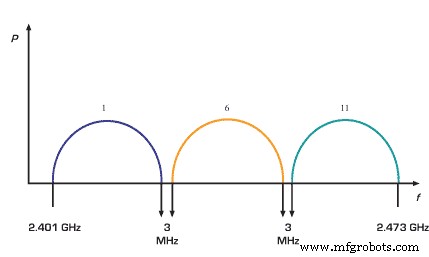
Figure 3. Non‑overlapping 802.11b channels.
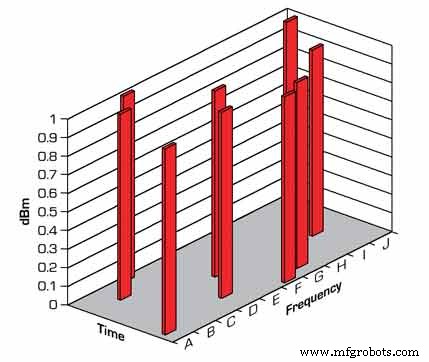
Figure 4. Frequency hopping channels.
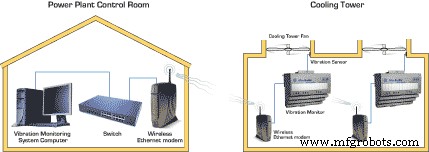
Figure 5. Wireless cooling tower application.
Equipment Maintenance and Repair
- Master Cloud Management with a Robust Resource Tagging Policy
- Securing Critical Infrastructure Through Advanced Application Performance Monitoring
- Elevating Maintenance: Aligning Strategy, Building Trust, and Driving Business Value
- Wireless Technology Transforms Condition Monitoring for Industrial Reliability
- Novartis Boosts Plant Flexibility and Operator Efficiency with Emerson’s Wireless DeltaV System
- Harnessing Social Network Analysis to Elevate Product Quality in Complex Engineering
- Enhancing Refinery Operations with IoT Monitoring Solutions
- Smart IoT Propane Tank Level Monitoring – Reliable Wireless Solution
- Revolutionize Dairy Management with IoT-Enabled Milk Level Monitoring
- Boost Factory Efficiency & Security with Advanced Surveillance Cameras