



New vs. Rebuild: A Systematic Guide to Maintenance Decision-Making
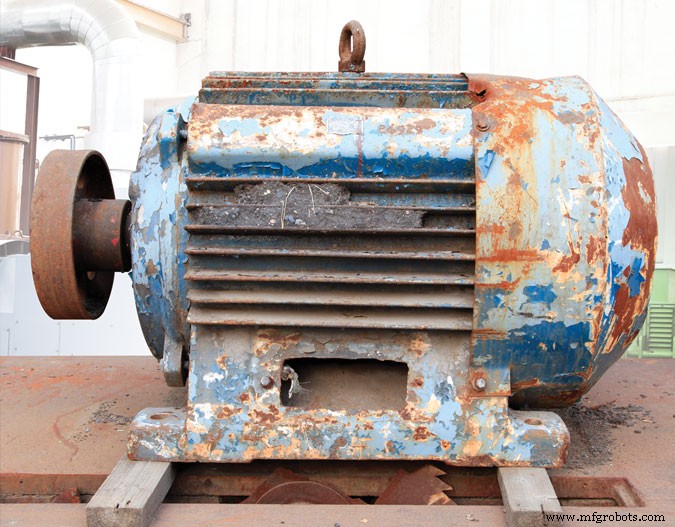 In the manufacturing sector, many professionals mistakenly equate reliability with a simple risk‑based approach. This misinterpretation can obscure critical productivity gains, inflate maintenance budgets, and ultimately erode profit margins across plants worldwide.
When a machine fails on the shop floor, some reliability teams focus solely on the process risk, overlooking the underlying root causes. Yet data show that 50 % of maintenance and repair orders involve part replacement, and up to 20 % of a plant’s operating costs are tied to maintenance. Additionally, 73 % of maintenance MRO inventories sit idle, creating unnecessary capital lock‑in.
While process‑level analysis is indispensable, the true catalyst for uptime improvements lies in drilling deeper: examining data trends to uncover why system‑level components fail. This paper critiques the narrow risk‑based methodology and proposes a comprehensive, component‑centric strategy that identifies, mitigates, and continually refines failure drivers.
Limitations of a Purely Process‑Based Approach
Reliability engineers commonly employ value‑stream mapping to dissect each phase that turns raw materials into finished goods. They systematically evaluate every component—electrical, hydraulic, mechanical—predicting the impact of failures on production.
For instance, a hydraulic line may be flagged as a risk point. A risk‑based plan might involve stocking spare lines or adding redundancies to keep the line running or to return it to service quickly. While such measures can be prudent, they often fail to address the true source of the problem and can drive costly, unnecessary spend.
When the focus remains at the process level, expensive replacement of complex systems or large inventories of seldom‑used MRO parts can result, neither of which optimally protects the plant’s bottom line.
Risk‑based analysis typically stops short of pinpointing component‑level root causes—aging parts, obsolescence, design flaws, or misidentified components—that drive failure.
Adopting a component‑level perspective clarifies why failures happen and cuts down on needless inventory and CAPEX.
Every failed part carries a story. Capturing that narrative is essential to building a reliable maintenance culture. Figure 1 illustrates the interplay of reliability, maintenance, and spare parts.
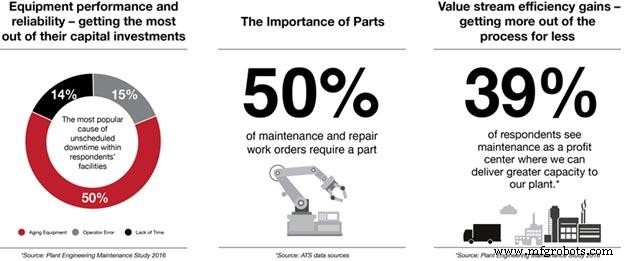
Figure 1. The importance of reliability, maintenance and spare parts
Consider an aging servo‑motor drive—an obsolete component that triggers frequent line stops. A risk‑based review might conclude the drive is past its useful life and recommend a capital replacement. In contrast, a component‑level review reveals the root cause: random board failures due to age. The engineer can then rebuild the circuit board, replacing worn components with newer, premium parts. This rebuild strategy cut failures by 54 % and extended the component’s service life, as shown in Figure 2.
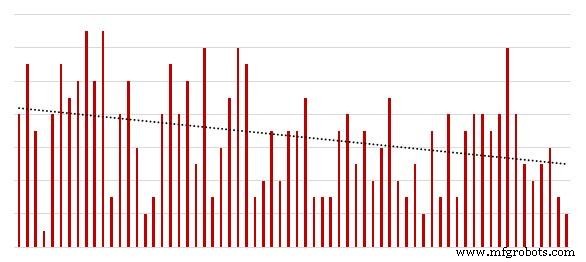
Figure 2. Failure rate reduction correlated to evolving minimum standards
Design defects also surface. A recurring control board failure on a motor drive was traced to overheating caused by the board’s proximity to a heat sink. A process‑only fix would have been to stock replacement drives. A component‑level fix involved redesigning the board placement and proactively recalling existing units, slashing failures by 96 % (see Figure 3).
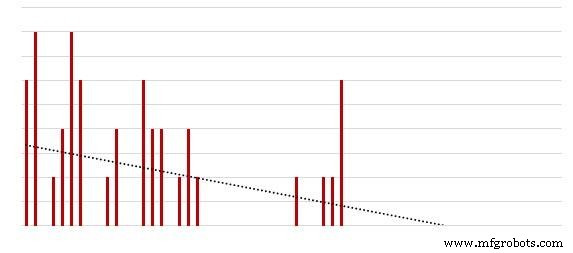
Figure 3. Scrap rate reduction
Another case involved misidentified pressure transducers. The risk‑based approach kept a generic inventory of multiple models under one part number, leading to installation errors. A component review introduced dedicated SKUs per pressure specification, reducing failures by 37 % (see Figure 4).
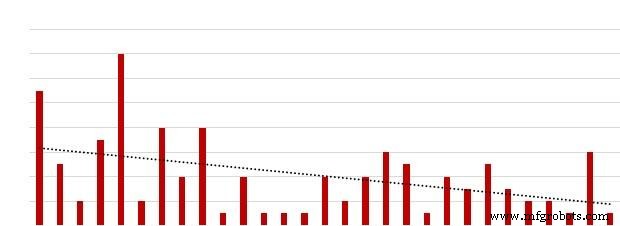
Figure 4. Transducer failure decrease
These examples demonstrate that root‑cause insight at the component level drives real reliability gains: higher uptime, lower operating costs, and improved efficiency. Emerging technologies—such as additive manufacturing—further enhance component durability, enabling rapid prototyping and material selection (e.g., titanium) that meets demanding operational environments.
A Component‑Based Reliability Paradigm
Shifting from process‑centric to component‑centric analysis requires a new mindset. Reliability teams should draw on OEM best practices, third‑party expertise, and internal data to refine storage protocols, implement 5‑S and part identification, and certify components for troubleshooting.
Developing robust maintenance standards, involving technical specialists in RCA, and documenting single‑point lessons preserve tribal knowledge and support continuous improvement.
Achieving True Reliability Performance
While risk‑based analysis remains a valuable tool, modern reliability demands recognition that components often drive failure. Embracing advanced analytics, IoT‑enabled parts, and predictive maintenance unlocks a more profitable, resilient operation.
A leading tire manufacturer, for example, partnered with a third‑party reliability expert to overhaul its repairable parts program. The result: a 53 % drop in part failures, a 15 % inventory reduction, and significant cost savings, enabling the plant to meet rising demand with higher uptime.
An automotive supplier faced long lead times for ball screws used across multiple machines. By addressing component‑level reliability, they resolved supply issues and improved manufacturing effectiveness.
Why a Smarter, Component‑Focused Approach Matters
Manufacturers worldwide still invest heavily in process‑level fixes, missing substantial productivity and cost‑saving opportunities. A comprehensive component analysis reveals failure drivers—design flaws, aging parts, misinstallation—and provides targeted, cost‑effective solutions.
Leveraging IoT sensors, data analytics, and predictive maintenance enables reliability professionals to move from reactive to proactive, ensuring reliable parts, reliable processes, and reliable savings.
Equipment Maintenance and Repair
- Reliability: The Comprehensive Guide to Asset Management
- From Maintenance to Reliability: Building a Culture of Predictive Excellence
- Building a Reliability Culture: Ownership, Collaboration, and KPI Success
- Outsourcing Maintenance: Driving Reliability and Operational Excellence
- Standard Aero Earns 2006 SAE DoD Great Ideas Award for Engine Workscope Optimization
- Three Proven Steps to Build a Sustainable Reliability Program
- Boeing Launches Advanced Digital Records Tool to Streamline Airline Maintenance
- Proactive Maintenance: Essential Strategies for Reliability and Cost Savings
- Proactive Maintenance Safety: A Comprehensive Guide for Industrial Professionals
- Six Proven Strategies for Smarter Maintenance Decisions