



Reliability‑Centered Maintenance Reimagined: A Holistic, Business‑Focused Approach
Reliability‑Centered Maintenance (RCM) is a systematic method for crafting an optimized maintenance policy for physical assets. Originating in aviation, where it has proven highly effective, RCM has increasingly been adopted in manufacturing and process industries.
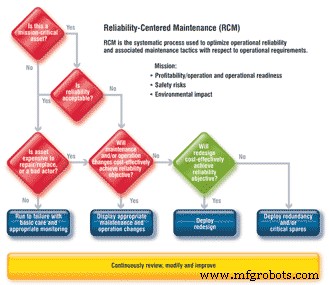
While some organizations have successfully implemented RCM, many find the process tedious and ultimately abandon it. I argue that a fresh, holistic perspective is essential.
Beyond OEE: Toward Overall Business Effectiveness
If you’ve followed my previous Exponent columns or attended my workshops, you know my preference for a comprehensive view of plant reliability. For example, I have highlighted the limitations of Overall Equipment Effectiveness (OEE) and proposed the broader metric of Overall Business Effectiveness (OBE). OBE captures unavailability, quality and yield losses, as well as production and marketing challenges—providing a true reflection of business performance and pinpointing waste elimination opportunities.
The Core Shortcomings of Traditional RCM
In industrial plants, RCM often suffers from two critical issues:
- It relies heavily on conjecture rather than empirical data.
- It treats reliability as a one‑dimensional problem, confined to maintenance.
In aviation, RCM is underpinned by extensive testing that quantifies failure rates and modes—“In God we trust; all others bring data.” Industrial reliability engineers, lacking such data, must depend on educated guesswork when completing Failure Modes and Effects Analyses (FMEAs). The resulting policies can be biased by the analyst’s perspective, recent incidents, or internal politics.
Moreover, RCM’s focus on maintenance alone ignores the reality that industrial equipment is rarely designed with the same reliability and maintainability rigor found in aircraft. Many plants also operate without strict procedure‑based standards, further limiting the applicability of aviation‑style RCM.
Why Maintenance‑Only RCM Misses the Mark
RCM is fundamentally rooted in a Failure Modes and Effects & Criticality Analysis (FMECA). If you’re building a risk profile for your plant, why restrict mitigation strategies to maintenance alone? In many cases, interventions in supply chain reliability, operations, sales, marketing, and design can deliver greater improvements than maintenance tweaks.
Illustrative Scenarios Where RCM Falls Short
- Supply Chain Disruptions – Raw‑material shortages reduce availability. A maintenance policy cannot remedy this upstream issue.
- Excessive Customization – High customer customization inflates change‑over time and frequency. Maintenance alone cannot offset the associated risk.
- Misoperation – Incorrect machine operation induces failures. Changing maintenance schedules offers little protection.
These examples illustrate that RCM’s logic is sound, but its narrow focus is naïve. Risks arise from a broad spectrum of factors beyond equipment.
Adopting a Holistic RCM Approach
When undertaking the rigorous FMEA/FMECA process, it’s essential to adopt a balanced, organization‑wide perspective. Risk mitigation should span maintenance, supply chain, operations, and beyond. Only then can you achieve sustainable, measurable gains in plant reliability and overall business effectiveness.
Equipment Maintenance and Repair
- How a Proactive Shutdown Strategy Slashed Potlatch’s Maintenance Costs by 83%
- Multi‑Tool Approach Saves $50,000 for AAM by Detecting and Fixing Hydraulic System Issues Early
- UC Irvine Extension Offers 3‑Day RCM Course to Boost Facility Reliability
- Integrating TPM & RCM: A Winning Strategy for Continuous Improvement
- Myllykoski Paper Mill Boosts OEE by 7% and Cuts Maintenance Costs 10% with ABB Full Service
- Quintessential Asset Management: Building a Path to Reliability-Centered Maintenance
- Proactive Maintenance: Essential Strategies for Reliability and Cost Savings
- Proactive Maintenance Safety: A Comprehensive Guide for Industrial Professionals
- Reliability‑Centered Maintenance (RCM): A Maintenance Manager’s Blueprint for Cost‑Effective Asset Performance
- Dole Sunshine: Pioneering Digital Indirect Procurement for Sustainability and Profitability