



Multi‑Tool Approach Saves $50,000 for AAM by Detecting and Fixing Hydraulic System Issues Early
The preventive maintenance team at American Axle and Manufacturing (AAM) uncovered a critical hydraulic fault during a routine filter change on Station 17b. Their swift diagnosis and repair prevented a costly shutdown, saving the company an estimated $50,000.
The work order called for a hydraulic filter replacement on BT 33608, Station 17b, one of Plant 6’s front‑axle assembly line hydraulic systems. While performing the task, the repairman noticed the pump was not running at full capacity and sensed irregular vibration, prompting a corrective work order for a vibration analysis test.
Vibration Analysis
Analysis revealed accelerated harmonics of the turning speed and elevated axial and radial readings, indicating a loose condition with misalignment. Maintenance and production were alerted, but production constraints allowed only a 30‑minute window for the fix. To maximize efficiency, technicians used a strobe light during production to identify the exact model of the Steelflex coupling. They observed a red residue on the outer surface—proof of grease failure (Figure 1). Because the coupling style was unique, a replacement was ordered and arrived the same shift. In‑house modification was required to match the manufacturer’s non‑standard size. During this time, maintenance sourced a grease that would not separate under centrifugal forces (Texaco coupling grease) and scheduled the 30‑minute repair window.
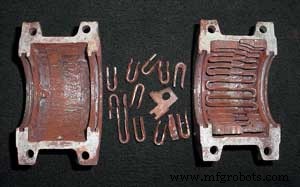
Figure 1. Coupling shows failed Steelflex spring and
red residue left from grease separation.
AAM’s production team released the unit for 30 minutes. Technicians removed the old coupling, installed a new spring and casing, and refilled the coupling with the appropriate grease. They returned the unit to production within the allotted time. Subsequent readings showed reduced axial and radial values, but harmonic levels remained elevated, confirming persistent misalignment. Maintenance ordered a new coupling and scheduled a laser alignment during planned downtime. Final vibration readings returned to spec (Figure 2).
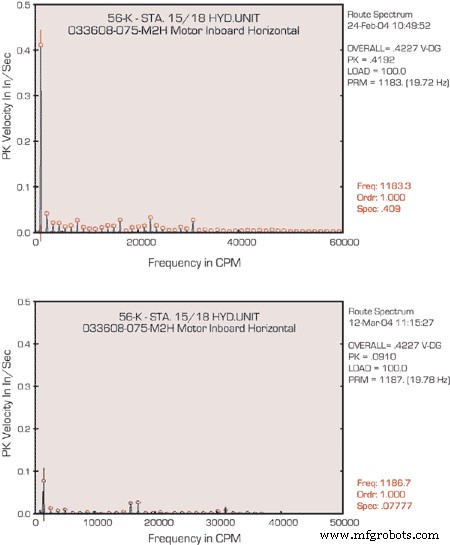
Figure 2. Top graph (before) shows multiple harmonics of turning speed with the 1x predominant. Bottom graph (final readings) shows peak velocities within GM/Delphi specifications.
Thermography
After servicing the coupling, technicians noted that the adjacent hydraulic reservoir was significantly hotter than the others. Thermography pinpointed the heat source to the pump, revealing severe internal leakage and case drain leakage (Figure 3).
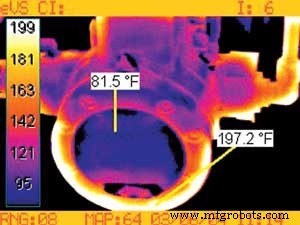
Figure 3. Thermography image shows internal leakage
and case drain leakage.
Oil Analysis
To identify the root cause and prevent further damage, maintenance scheduled additional vibration and oil analysis tests. The pump manufacturer had upgraded the pump style, rendering the new and original designs incompatible. To avoid field adjustments and daytime delays, technicians ordered a special 24‑hour pump replacement. Vibration analysis confirmed no abnormal readings or metal‑on‑metal wear. Oil analysis revealed chemistry degradation beyond acceptable limits and elevated particulate levels. The unit was scheduled for repair during routine downtime, where the pump and filter were replaced, and the system was drained, flushed, and refilled.
Post‑repair vibration, thermography, and oil analysis all returned to normal, well within AAM’s stringent standards.
By ensuring correct hydraulic operation, the team averted a catastrophic failure on Station 17b. A failure would have halted the component conveyor feeding the torque‑testing station, leading to a minimum of four hours of downtime costing approximately $96,000. If parts were not readily available, the cost could have exceeded $576,000.
Rick Kus, Dave Giacobozzi, Julius O’Steen, Jim Panoff, Ron Radford, and Max Segar are PM team members at American Axle and Manufacturing in Detroit.
Equipment Maintenance and Repair
- How Predictive Maintenance Drives Significant Cost Savings for Manufacturers
- How a Proactive Shutdown Strategy Slashed Potlatch’s Maintenance Costs by 83%
- Reliability‑Centered Maintenance Reimagined: A Holistic, Business‑Focused Approach
- Micro Wind Turbine Manufacturer Cuts Costs by €337,600 with NSK Bearings
- Myllykoski Paper Mill Boosts OEE by 7% and Cuts Maintenance Costs 10% with ABB Full Service
- Proactive Maintenance: Essential Strategies for Reliability and Cost Savings
- Proactive Maintenance Safety: A Comprehensive Guide for Industrial Professionals
- Predictive Analytics in Bottling: Modernizing the Age-Old Fermentation Process
- Revolutionizing Automotive Production: Unlocking Savings & Efficiency
- 5 Expert Tips for Maintaining Industrial Couplings