



Alcoa Warrick Power Plant: From Reliability Crisis to $440M Capital Success
Introduction
The 732‑megawatt coal‑burning plant at Alcoa’s Warrick Operations in Newburgh, Ind., once appeared on the company’s 72‑page annual report as a liability. Three separate mentions of deficient reliability in 2001 cost Alcoa $45 million pre‑tax and highlighted a serious operational failure that left the neighboring smelter without power for nearly four months.
The 2001 Failure
On December 4, 2001, a plant outage crippled the smelter’s capacity. The incident underscored the critical interdependence between the power plant and the aluminum production facility; when the plant stopped, the smelter could not procure power from the external market, where prices were two to three times higher.
Turning Point: Reliability Excellence
Recognizing that reliability was a business imperative, Alcoa brought in Life Cycle Engineering (LCE) and the Ron Moore Group to implement the Reliability Excellence (Rx) process. The first formal assessment in January 2005 scored the site at .528—an “emerging” level. By early 2006, the score rose to .652, the largest first‑to‑second jump in LCE history, and a third assessment in January 2007 reached .714, just 36 points shy of “excellence.”
The Rx framework introduced structured planning, criticality analysis, predictive maintenance, and a culture of root‑cause problem solving. Together, these elements shifted the plant from a reactive, firefighting mindset to a proactive, data‑driven operation.
Key Initiatives
- Planning & Scheduling: Two‑week advance scheduling by a trio of planners replaced the old “blank sheet” approach. Daily and weekly performance metrics now track adherence to realistic expectations.
- Maximized Downtime: Planned outages are reduced from three weeks to 12–14 days, enabling more comprehensive work during limited shutdown periods.
- Asset History & Documentation: All work orders and condition reports are logged in Oracle, creating a searchable, digital record for each of the 7,000 assets.
- Standardized Work: Job procedures are written, reviewed, and approved by mechanics, electricians, and operators, ensuring consistent safety and quality.
- Root‑Cause Analysis: Workers receive training in lean tools such as the five‑why method and fishbone diagrams to eliminate recurring failures.
- Predictive Maintenance: Infrared thermography, vibration analysis, ultrasound, and other technologies now identify issues before they become costly outages. A recent infrared survey prevented a transformer failure that would have cost $55,000.
Results & Benefits
Reliability improvements translated into tangible gains:
- Capital Investment: Alcoa awarded $440 million in sustaining capital projects in 2005, a reward for the plant’s proven reliability track record.
- Operational Savings: Emergency repair costs fell from $2 million to an estimated $650,000 in 2007. Power‑related interruptions to the smelter dropped from 90 to seven in the same period.
- Market Flexibility: Uptime allows the plant to sell excess megawatts on the Midwest Independent System Operators (MISO) market, creating additional revenue streams.
- Employee Outcomes: Workers enjoy reduced overtime, fewer emergency calls, and higher morale. Preventive maintenance compliance reached 97 % with a goal of 100 %.
Staffing & Future Outlook
The maintenance team averages 45 years of age with 15 years at Alcoa. Six retirements over the past two years and an expected four to five more mean new hires are essential. Leadership emphasizes recruiting “fussy” talent who pursue excellence and value continuous improvement.
Alcoa’s commitment to reliability is ongoing. The fourth Rx assessment, slated for June 2008, aims to push the plant into the “excellence” category (score .750–1.000). The master plan, completed 30 months ahead of schedule, demonstrates disciplined execution.
Conclusion
Alcoa’s Warrick Power Plant exemplifies how disciplined reliability initiatives can transform a legacy facility into a profitable, future‑ready asset. By embedding reliability into every layer of operation—from maintenance to union collaboration—the plant not only secured significant capital investment but also positioned itself as a competitive power provider in the Midwest market.
Images
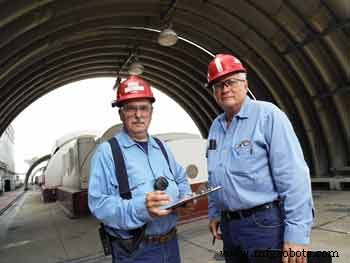
Improved reliability helped Alcoa’s power plant in Newburgh, Ind., secure $440 million in capital project funding.
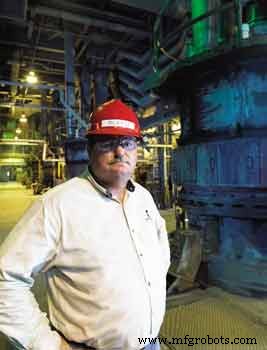
Maintenance manager Rick Fox believes his department’s success is due, in no small part, to the support of upper management.
Mechanical maintenance team leader Steve Strahl (left) and predictive maintenance technician Gary Seaton go over a task checklist before examining a row of generators at Alcoa’s power plant in Newburgh, Ind.
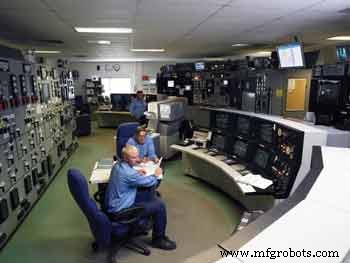
Operator Bob Braun, a 42‑year Alcoa employee, monitors a control room with recent hire Adam Thorne.
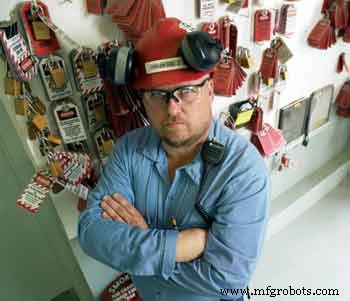
Safety is serious business for Brian Hall, the head shop steward for IBEW Local 702.
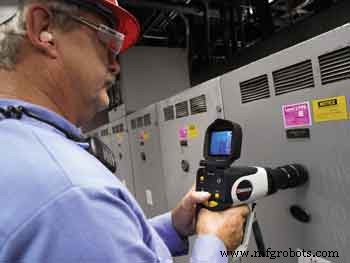
Maintenance technician Tom Anderson uses a Mikron camera equipped with a SpyGlass fish‑eye lens to take infrared readings on an electrical cabinet at Alcoa’s power plant in Newburgh, Ind.
Equipment Maintenance and Repair
- Alcoa’s 50‑Year‑Old Smelter Drives Reliability Excellence to Cut Costs and Boost OEE
- Eli Lilly BHI Plant: A Reliability Success Story
- Energizer Battery Plant: Integrating Lean and Reliability to Drive Efficiency and Performance
- Why Functional Diversification Drives Plant Reliability Success
- Why Plant Reliability Is the Foundation for Lean Manufacturing Success
- Rebuilding Reliability at Century Aluminum’s Ravenswood Smelter
- Kauai’s Wainiha Hydropower Plant Boosts Efficiency & Reliability with GE Digital Controls
- GE Deploys Advanced Mark VIe Control System at Saudi Electricity Company's 2,000‑MW PP10 Power Plant
- GE’s Wireless Vibration Sensors Boost Reliability at NV Energy’s Ft. Churchill Plant
- Eaton Wins $568.7 M U.S. Air Force Power Reliability Contract