



Eli Lilly BHI Plant: A Reliability Success Story
Maintenance and reliability teams can transform production, delivering more finished goods—whether soft drinks, motorcycles, or life‑saving medicines.
At Eli Lilly’s biosynthetic human insulin (BHI) plant in Indianapolis, that transformation carries extra weight. Since its 1992 opening, the site has produced a significant share of the world’s medicinal insulin, supporting nearly 21 million Americans and 200 million people worldwide who rely on insulin to manage diabetes.
 The BHI plant’s reliability engineering group includes senior reliability engineer Vadim Redchanskiy, technician Mary Ann Dust, team leader Ken Swank, and senior engineer Mark Lafever.
In the pharmaceutical industry, ensuring a plant’s equipment stays in a qualified state is not just good practice—it’s a regulatory requirement. The FDA and EPA closely monitor maintenance, linking it directly to product and plant reliability. An unreliable plant can face shutdowns and penalties, so Eli Lilly has prioritized reliability to safeguard both people’s health and the company’s compliance record.
 Eli Lilly has produced medicinal insulin for over 80 years.
“Whatever your industry, adding value to stakeholders or the economy matters,” says Ken Swank, plant maintenance and reliability team leader. “At a pharmaceutical company, the impact feels personal—every batch of insulin may be the medicine that keeps a child’s life on track.”
He recalls a conversation with a father of a child with Type 1 diabetes: “I said I make Humulin at Eli Lilly, and the boy’s eyes lit up.”
“Our department ensures the plant consistently produces medicine at the highest quality,” Swank adds.

The Indianapolis campus hosts manufacturing sites and corporate offices.
Increased Demand and the Need for Change
The BHI facility is vast and complex, containing more than 17,000 pieces of equipment, 13,000 input/output points, and 600 operating units. Roughly one‑third of these units are high‑risk or safety‑critical, reflecting the multiple centrifugation, reaction, purification, and solvent‑exchange steps required to produce the insulin molecule.
By the early 2000s, the plant was operating at over twice its original design capacity. Technicians were stretched thin, reactive work took priority, and critical systems received insufficient attention.
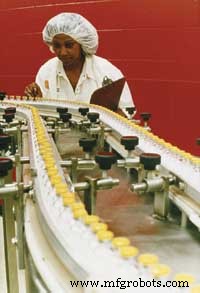 Eli Lilly supplies 25 % of the world’s insulin.
Swank notes that while uptime had always been a goal, the growing business pressure forced a question: “Should we keep expanding or focus on smarter reliability strategies?” This reflection echoed across Eli Lilly’s facilities in the late 1990s.
At the Clinton, Ind., laboratory, engineering manager Ron Reimer pioneered proactive maintenance and recruited the company’s first reliability engineer. This initiative evolved into the Proactive Asset Management framework, which later informed the BHI plant’s reliability roadmap.
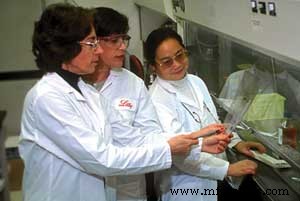
Involving all key stakeholders—production, HSE, QC, finance, engineering, and management—ensures reliability success.
Since 1999, BHI has integrated Reliability‑Centered Maintenance (RCM) and Root Cause Failure Analysis (RCFA) into its maintenance culture. The move was reinforced when the FDA and EPA underscored that plant reliability is integral to product reliability and compliance. “Unreliable plants risk penalties and shutdowns,” Swank explains.
Communication Drives Reliability
Swank emphasizes that communication is central to the plant’s prioritization program. “I meet regularly with production leaders to explain upcoming work, secure their commitment, and demonstrate value,” he says. “It’s a collaborative effort involving engineering, automation, and technical services.”
He notes that the focus on reliability has shifted the plant’s vision: equipment must remain qualified, available when needed, and operate at predetermined performance levels.
To achieve this, the reliability team introduced a prioritization initiative in early 2004, aiming to deliver uptime to the most critical operating units.
Defining Reliability Roles
Reliability engineers at BHI focus on:
- Reducing failures through RCFA, FMEA, RCM, and deviation investigations.
- Developing metrics to optimize reliability efforts.
- Owning maintenance plans for new and existing equipment.
- Delivering flow‑wide reliability projects.
- Embedding maintenance and reliability into business practices to boost availability.
- Mentoring technicians.
- Integrating with control room teams.
- Adopting new technologies to enhance performance.
Technicians support initiatives by:
- Assisting with data entry and CMMS updates.
- Collaborating on RCFA, FMEA, RCM, and deviations.
- Participating in special projects.
Prioritizing Reliability
Swank recounts the challenge: “My boss tasked us to figure out how to make BHI more reliable—understand business needs, set a remediation path, secure buy‑in, execute, and sustain.”
The team began in February 2004, expecting a month‑long effort but finding the scope larger than anticipated.
The goal was to develop a data‑driven analysis that:
- Ranks systems by business impact.
- Includes all stakeholders.
- Can be completed in under 40 hours.
Senior engineers Mark Lafever, Vadim Redchanskiy, and Rod Matasovsky (retired), along with technicians David Doyle, Mary Ann Dust, and Matt O’Dell, led the effort. Their deep data expertise ensured the analysis would be both actionable and credible.
Key data sources over the past 12 months included:
- Emergency work hours (downtime) from the CMMS.
- Risk classification per Lilly’s GIPSM (safety‑critical, high risk, mechanical integrity, none).
- Process deviations caused by equipment failures, weighted by impact level.
- Reactive work costs.
- Process engineer input on system age, potential downtime, and regulatory impact.
- Maintenance plan status (RCM, PQE, preventive maintenance, or none).
Using this data, the team performed a “crucial equipment” evaluation across 420 operating units, narrowing the list to 135 units that could jeopardize production or trigger regulatory incidents.
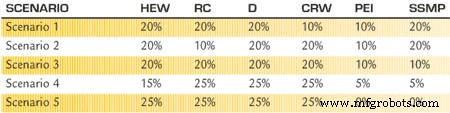
Table 1. Summary of weights for the five scenarios.
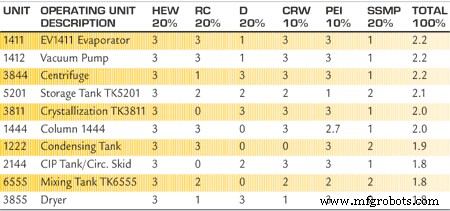
Table 2. Example from the first scenario sensitivity analysis.
The scoring system assigned each criterion a zero‑to‑three score, then applied weighted scenarios to ensure no single metric dominated the ranking. Scenarios ranged from evenly distributed weights to the exclusion of less critical categories.
After analyzing sensitivity results and considering factors such as recent replacements, capital plans, and cross‑system applicability, the team finalized a remediation plan ranging from in‑depth RCM studies to no action for certain units.
Swank recalls the rigorous review: “We had to address questions from QC, engineering, and operations to ensure the plan met all expectations.”
Documentation and Approval
On September 21, 2004, Swank presented the prioritization model to the plant’s leadership. The model received unanimous approval, and the remediation activities were incorporated into the 2005–2006 business plans.
Subsequent evaluations use the same template, streamlining the process and reinforcing the plant’s commitment to reliability.
Impact and Recognition
While precise financial gains are hard to quantify due to the time lag between analysis and results, the plant has seen clear benefits:
- Reduced unnecessary preventive maintenance and reactive work, saving money.
- Shifting some systems to “run to failure” when appropriate, simplifying maintenance philosophy.
- Improved productivity, meeting inventory targets and supporting a higher‑productivity business model.
- Enhanced technical knowledge across teams, leading to better collaboration and fewer emergency incidents.
- Increased uptime, evidenced by fewer unplanned outages.
- Recognition with the 2005 Making Medicine Award, awarded to the plant that best embodies Eli Lilly’s manufacturing excellence.
Other Lilly facilities are adopting similar prioritization strategies, elevating the visibility of maintenance and reliability across the company.
As Swank says, “Maintenance and reliability professionals truly make a difference.”
Equipment Maintenance and Repair
- Case Study: Honda Lincoln Plant – Engineering Excellence & Reliability
- Alcoa Warrick Power Plant: From Reliability Crisis to $440M Capital Success
- Why Functional Diversification Drives Plant Reliability Success
- Rebuilding Reliability at Century Aluminum’s Ravenswood Smelter
- High-Performance Maintenance at CCM Tecate: A Proven TPM Success Story
- Reliability Engineering Fundamentals for Plant Engineers
- GE Deploys Advanced Mark VIe Control System at Saudi Electricity Company's 2,000‑MW PP10 Power Plant
- Predictive Maintenance Case Study: Real-World Vibration, Infrared, Oil, and Motor Current Analysis
- Repair vs. Replace: A 10‑Year‑Old Grinder Case Study
- Case Study: Swagelok Drives Innovation in Lightfoot Defence’s Military Refrigeration Systems