



Case Study: How Synchronous Averaging Uncovered a Pinion Failure in a Low‑Speed Gearbox
In a large paper‑industry plant, a low‑speed gearbox with a 23‑tooth pinion driving a 132‑tooth bull gear was producing iron particles in its lubricating oil. The maintenance supervisor needed to pinpoint the source of contamination before the machine suffered a catastrophic failure.
Gearbox Overview
The gearbox featured a 23‑tooth pinion on the input shaft, a 132‑tooth bull gear, and a second identical bull gear. These were mounted on two 24‑inch steel rollers. The output bull gears rotated at 52 rpm, while the pinion spun at 302 rpm (see Figure 1).
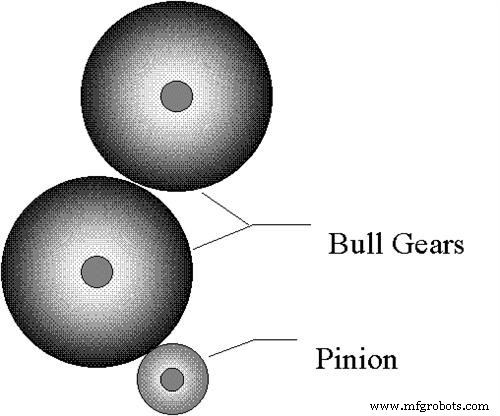
Figure 1. Gearbox speed ratios
Initial Investigation
Oil analysis revealed iron particles, but vibration spectra taken near the bearings showed no bearing tones. The suspicion fell on the gears themselves, prompting a deeper analysis to isolate any defective component.
Synchronous Averaging: The Diagnostic Tool
Synchronous averaging, though longstanding, is rarely leveraged in industrial diagnostics. By synchronizing the vibration capture to the gear’s rotation using a tachometer‑derived trigger, we isolate the vibration signature of a single gear while suppressing signals from other machine elements.
Key settings included a record length slightly longer than one gear revolution and a large number of averages (90 in this case) to ensure clarity (see Figure 3).
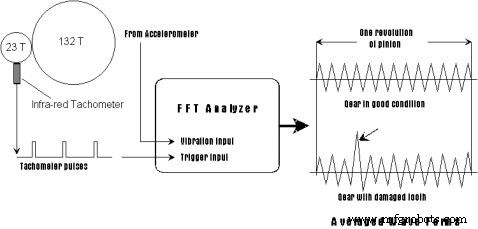
Figure 3. Averaging setup
Results
While both bull gears displayed clean, defect‑free waveforms, the pinion’s averaged signal revealed a pronounced, noisy region where meshing with the bull gear was irregular (see Figure 4).
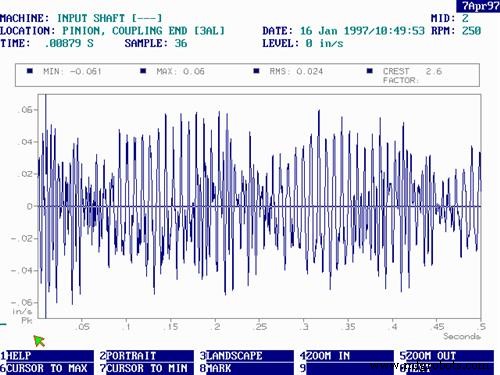
Figure 4. Pinion defect revealed by averaging
Physical Inspection
Despite the maintenance chief’s skepticism—given the gearbox’s 20‑year history of operation—an access plate was removed. Inspection showed a severely worn keyway on the pinion shaft, allowing the gear to shift roughly half a tooth. Visible clearance and spalling on the pinion bore confirmed the mechanical root of the contamination (see Figures 5–7).
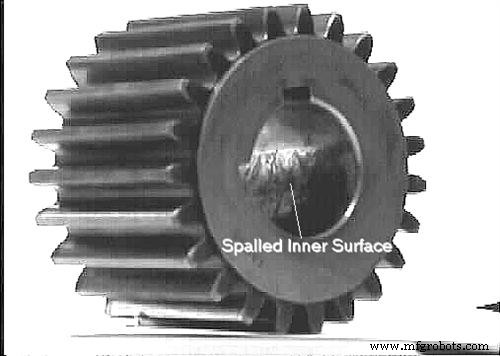
Figure 5. Spalling on pinion bore
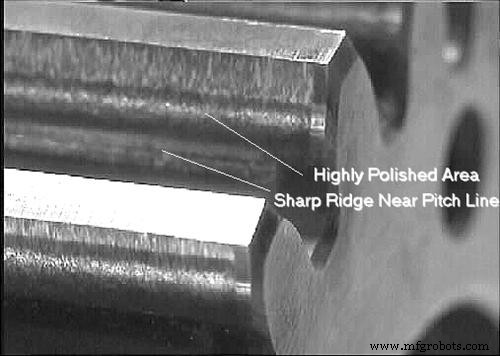
Figure 6. Abrading wear on gear teeth

Figure 7. Close‑up of damaged tooth edge
Resolution
The gearbox manufacturer confirmed that the interference fit between the pinion and shaft was too loose, a condition that can develop during installation. The pinion and shaft were replaced immediately to prevent a catastrophic failure. The successful intervention reinforced the value of vibration monitoring at the plant.
Key Takeaways
- Synchronous averaging is a powerful, yet underutilized, technique for isolating gear‑specific vibration signatures.
- Even long‑running equipment can harbor latent defects that become apparent through targeted analysis.
- Rapid diagnosis and corrective action can save significant downtime and repair costs.
About Azima DLI
Azima DLI is a leader in predictive machine condition monitoring and analysis, delivering reliable, scalable, and cost‑effective maintenance programs. For more information, visit www.azimadli.com.
Equipment Maintenance and Repair
- Eli Lilly BHI Plant: A Reliability Success Story
- Case Study: Honda Lincoln Plant – Engineering Excellence & Reliability
- Rebuilding Reliability at Century Aluminum’s Ravenswood Smelter
- High-Performance Maintenance at CCM Tecate: A Proven TPM Success Story
- Predictive Maintenance Case Study: Real-World Vibration, Infrared, Oil, and Motor Current Analysis
- Western U.S. Coal Plant Cuts Gearbox Wear, Extends Life, and Saves Costs with ISO 460 Synthetic Gear Oil and Advanced Filtration
- Repair vs. Replace: A 10‑Year‑Old Grinder Case Study
- Diagnosing a Persistent Gearbox Noise: Lessons from a Refurbished Unit
- Rapid Response: How We Resolved a Machine Downtime Crisis for a Leading Beauty Manufacturer
- Case Study: Swiss Productions Cuts Idle Spindle Time & Boosts Production with OB7