



Optimizing Operator‑Led Lubrication: Practical Guidance for High‑Speed Machines
Recent industry seminars reveal a clear shift toward empowering plant operators with machine lubrication responsibilities. In many plants, lubrication has traditionally been left exclusively to mechanics and specialists, yet this practice is increasingly challenged by changing workforce dynamics and the need for greater operational flexibility. Even when technicians are highly skilled, delegating lubrication duties to operators without a robust framework can lead to costly downtime, especially on high‑speed equipment where small errors can trigger catastrophic failure.
High‑speed, high‑load machines—such as blowers, fans, turbines, and similar gearboxes—are particularly sensitive to lubrication conditions. A small drop in oil level or grease consistency can instantly translate into excessive wear, heat buildup, and eventual mechanical failure. Operators must therefore understand the science behind lubrication to maintain machine reliability.
“Best practice” for machine lubrication encompasses five essential elements:
- Proper handling and care of the lubricant throughout its life cycle.
- Correct product selection by viscosity, additive structure, and performance characteristics.
- Consistent resupply in terms of volume, frequency, cleanliness, and application method.
- Comprehensive analysis of the lubricated system.
- Effective management of the lubricant after it is placed in the machine.
Among these, resupply timing is the most critical factor that can disrupt production unexpectedly. The impact of resupply decisions grows with machine speed and load, underscoring the need for operators to monitor and replenish lubricants promptly.
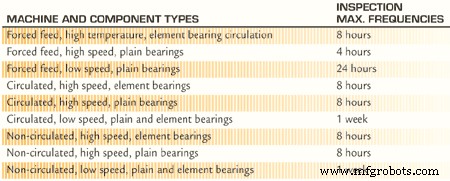
The logic behind resupply for liquid‑lubricated sumps is straightforward: most oil‑filled sumps have either internal or external level indicators. Even a borderline low level can be acceptable for a short time, but operators should check oil levels at least weekly, more frequently for high‑criticality or high‑speed equipment. The table below offers a practical guideline for maximum inspection intervals.
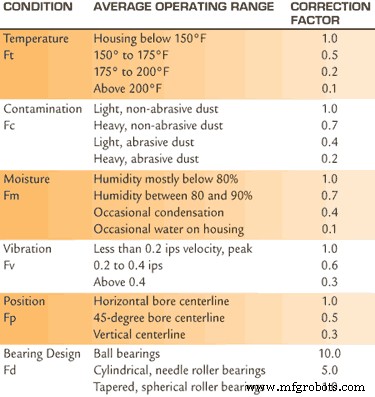
Table 1. Grease Interval Correction Factors
Grease‑lubricated components pose greater challenges because there are no obvious visual indicators of grease condition. Instead, resupply volume and frequency are typically based on bearing geometry. SKF provides a simple formula for estimating the required grease volume (in ounces):
Q = W × OD × F
where: Q = volume, W = bearing element width, OD = bearing element outer diameter, F = 0.114 (imperial) or 0.005 (metric)
Once the volume is established, the frequency of relubrication depends on machine operating parameters. FAG Corporation offers a straightforward equation for the baseline regreasing interval (in hours):
t = K × · · ((14×106)/(n×(d1/2))) – 4×d
where: t = hours between relubrication, K = product of correction factors (Ft·Fc·Fm·Fv·Fp·Fd), n = RPM, d = bore diameter (mm), F = correction factor from Table 1.
A negative result indicates that grease relubrication is unsuitable for that application. Because grease in sumps cannot be inspected visually, operators must rely on the calculated intervals and monitor for signs of oxidation, contamination, or deposits that could compromise performance.
Grease durability also influences the calculated interval. Bearing greases are rated by service life, and understanding these ratings helps operators adjust intervals to match actual operating conditions.
In summary, high speeds and loads amplify the risk of failure from poor resupply practices. By establishing clear timelines and reinforcing proper procedures—especially as operators take on more responsibility—plants can significantly reduce unplanned downtime and extend equipment life.
References
“Grease Service Life: Theoretical Considerations and Practical Applications.” Weigand, M.; Vadic, T.; et al.; Lubcon, GMBH.
Equipment Maintenance and Repair
- Expert Guide to Modern Change Machines: Design, Components, and Future Trends
- The Evolution and Manufacturing of Sewing Machines: From 19th‑Century Innovation to Modern Automation
- Pantyhose: The Ultimate Guide to Elegant Women’s Hosiery
- Choosing the Ideal CNC Machine: A Practical Guide
- AI-Powered Smell Detection: Aryballe’s Technology Revolutionizing Business & Supply Chains
- 5 Common Pitfalls That Drive Up Maintenance Costs
- Must-Have Multifunctional Tools for Every Machine Shop
- Top 4 Industries Revolutionized by Machine Learning
- Essential Grinding Machine Operations Explained
- Pick‑and‑Pack Robots: Boosting Efficiency in Food, Pharma & Automotive Industries