



Maximizing Production Growth: Maintenance Team Strategies
Scaling production capacity is a clear signal of business growth, but it also introduces operational risks that can derail even the most robust maintenance programs. If your team hasn’t anticipated a surge in demand—especially under pandemic constraints—unplanned breakdowns, safety lapses, and staff fatigue can quickly erode gains.
Whether you’re stretching resources thin, working with reduced staff per shift, or adapting equipment on the fly, the pressure mounts. The key is to pair heightened production with disciplined maintenance practices that protect both people and assets.
Below are evidence‑based strategies that maintenance leaders use to sustain throughput while maintaining safety and reliability.
Explore our Resource Center for Leadership, Metrics, and More
Read more
Prioritizing Health and Safety in a High‑Demand Environment
When production speeds up, the safety net that protects your workforce becomes tighter. “Working beyond normal capabilities forces staff into unfamiliar tasks, raising accident risk,” explains Jason Afara, Fiix Solutions Engineer. “Unplanned maintenance compounds that risk by creating unexpected breakdowns and rushed repairs.”
Focusing on the well‑being of your team keeps the entire operation safe and resilient—efficiency, availability, and output follow.
The pandemic amplifies these hazards, forcing new protocols that change how facilities operate. Implementing simple adjustments can help your team tackle the increased workload without compromising safety.
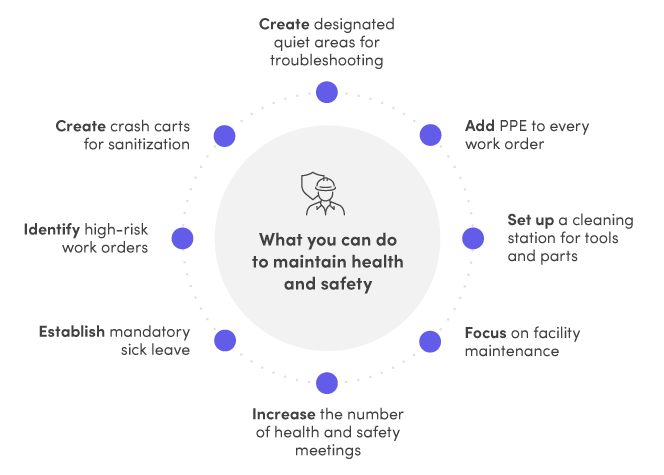
- Create crash carts for sanitization: CMMS coordinator Brandon De Melo introduced mobile sanitization carts that ensured workstations were disinfected quickly and consistently during COVID‑19.
- Establish designated quiet zones for troubleshooting: Operations manager Juan Ruiz carved out quiet areas that let operators and technicians discuss issues without violating social‑distancing rules.
- Include PPE in every work order: Visibility and repetition around PPE requirements reduce the learning curve when new safety guidelines emerge.
- Set up a cleaning station for tools and parts: Maintenance manager Tom Dufton dedicated a station to cleanse and inspect supplies, speeding up the process and preventing contamination.
- Prioritize facility maintenance: When uptime demands limit inspection windows, teams focus on stocking soap, hand sanitizer, and clearing hazards—critical steps that maintain safety.
- Increase health‑and‑safety meetings: Frequent discussions reinforce procedures and help staff respond quickly to high‑risk situations, according to Afara.
- Mandate sick leave: COO James Afara of a cannabis producer reports that enforced sick leave reduced staff shortages and protected the plant from larger outbreaks.
- Identify high‑risk work orders: Stuart Fergusson recommends flagging unfamiliar or hazardous tasks so that mitigation plans can be drafted in advance.
Effective People Management Under Pressure
Burnout and miscommunication are the biggest threats to a team operating at peak intensity. The following tactics help keep staff healthy and aligned.
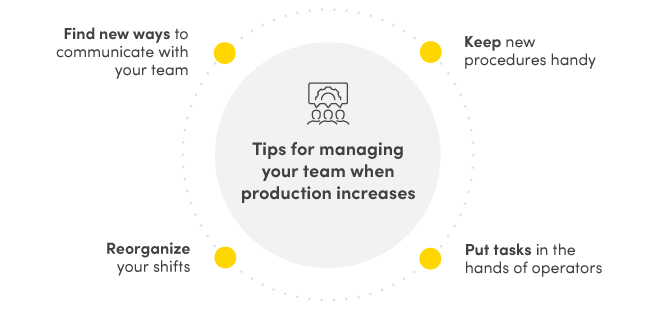
- Leverage remote communication tools: Video calls and instant‑messaging groups ensure everyone stays in sync even when physical meetings aren’t possible.
- Keep new procedures accessible: Distribute pocket‑size guides or mobile PDFs so technicians can reference them on the spot.
- Reorganize shift patterns: Spreading the maintenance crew across shifts provides continuous coverage and gives staff predictable schedules, reducing off‑hour calls and fatigue.
- Empower operators with TPM responsibilities: Delegating routine tasks to operators frees the maintenance team for higher‑value work and fosters a culture of ownership.
Accelerating Work Without Compromising Well‑Being
Speed is essential, but it must never eclipse the welfare of your workforce. Achieving this balance is possible with structured, data‑driven maintenance.
Eight Steps to a Lean Preventive Maintenance Program
Start here
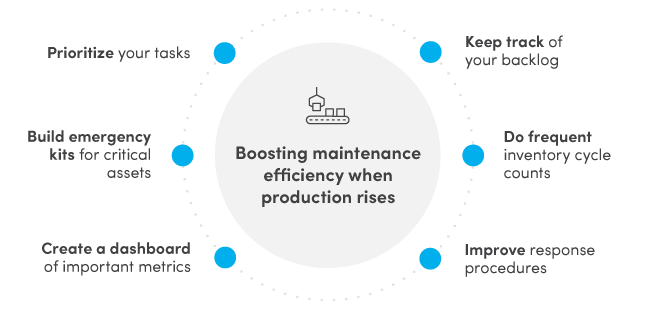
- Prioritize tasks by criticality and timing: Align maintenance with production schedules and asset importance, selecting jobs that can run while machines are live or swapping lengthy PMs for quicker checks that don’t elevate failure risk.
- Track and update the backlog: Maintain a living list of deferred work to quantify risk and plan future interventions, as Afara recommends.
- Build emergency kits for critical assets: Keep spare parts on hand so technicians can resolve downtime without hunting for components.
- Conduct frequent inventory cycle counts: With vendors facing delays, regular stock checks prevent critical shortages.
- Develop a real‑time metrics dashboard: Visualize key indicators daily so you can spot trends before they become problems.
- Streamline response procedures: Keep failure codes and repair checklists for critical equipment ready, speeding troubleshooting.
Managing Modified Production Equipment
Adapting machinery to new processes introduces fresh challenges. Maintenance teams can stay ahead with these focused actions.
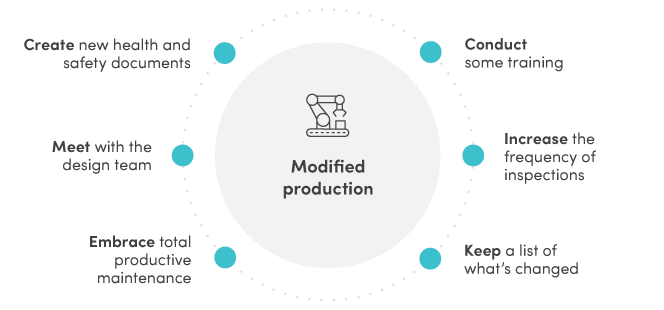
- Draft new health‑and‑safety documentation: Treat modified equipment as new—reassess risks, required PPE, emergency plans, and compliance.
- Deliver targeted training: Quick refresher sessions equip technicians to maintain modified assets safely.
- Collaborate with the design team: Gaining insight into new components clarifies maintenance needs and part inventories.
- Increase inspection frequency: Verify that new materials or processes haven’t introduced hidden failure modes.
- Embrace Total Productive Maintenance (TPM): Operators’ firsthand knowledge of modified machines enables early detection of anomalies.
- Maintain a change log: Record part swaps or staffing changes so you can revert to standard routines once normal production resumes.
Focus on What Matters Most
Even amid intense demand, you can control the variables that matter. Prioritizing your team’s safety and well‑being creates a resilient operation that thrives in high‑pressure environments. When staff feel protected and valued, productivity, reliability, and output naturally follow.
Equipment Maintenance and Repair
- 5 Proven Ways Maintenance Teams Can Boost Production Efficiency
- Bridging the Gap: How Maintenance and Production Can Collaborate for Factory Success
- Maximizing Maintenance Productivity During Manufacturing Slowdowns
- Preventing OSHA Violations: A Maintenance Team’s Guide to Compliance and Safety
- Streamline Facility Operations: How Better Maintenance Reporting Saves Time for Every Team
- How to Justify the Cost of a CMMS: Calculating ROI for Maintenance Managers
- Harnessing IoT to Protect the Planet: Proven Success Stories
- Prolong Your Equipment's Lifespan: Expert Maintenance Tips
- Save $2.2 Trillion Annually: How Polyurethane Coatings Prevent Corrosion
- How Business Reports Enhance Equipment Maintenance & Reliability