



5 Proven Ways Maintenance Teams Can Boost Production Efficiency
In meat‑processing plants, the first thing that keeps products safe is the metal‑detection system. Ensuring those sensors are functioning correctly is a daily routine—yet it’s a powerful illustration of how small maintenance tweaks can translate into major productivity gains.
Traditionally, operators run test balls through the detector for about 45 minutes—25 minutes of hands‑on work and 20 minutes of paperwork. By swapping that manual check for an automated test‑ball launcher that requires just a button press, the same task can be finished in five minutes, freeing more than 160 hours of equipment uptime each year.
That example is just the tip of the iceberg. Below are five actionable strategies that maintenance teams can implement immediately to lift production efficiency, lower costs, and deliver a consistently better customer experience.
- Understanding the link between maintenance and production efficiency
- Five practical tactics to boost production capacity
- Measuring maintenance’s impact on output
What Is Production Efficiency?
Production efficiency measures how closely a plant’s actual output aligns with its expected or standard output. A higher percentage indicates that the facility is using fewer resources, generating higher margins, and delivering products more reliably.
- Reduced resource consumption – the same volume of goods with less energy, labor, and raw materials.
- Higher financial margins – efficient operations lower unit costs throughout the supply chain.
- Improved customer experience – reliable delivery times and product quality enhance satisfaction.
See how maintenance connects to a world‑class customer experience
Calculating Production Efficiency
The basic formula is:
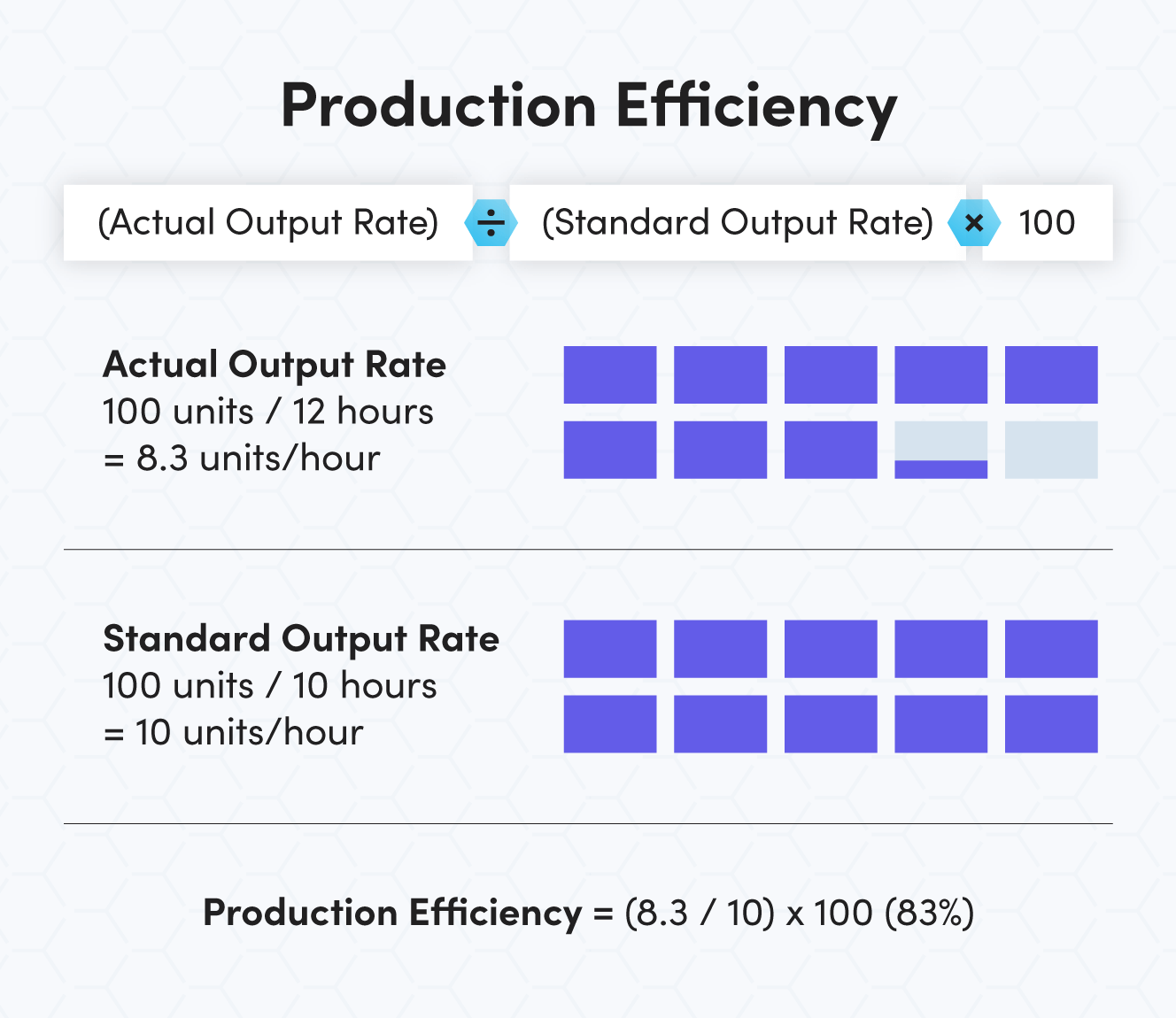
Production Efficiency = (Actual Output Rate ÷ Standard Output Rate) × 100
For example, a plant’s standard rate for 100 units is 10 hours (10 units per hour). If it actually takes 12 hours to produce 100 quality units, the efficiency is:
Actual Output Rate = 100 ÷ 12 = 8.3 units per hour
Standard Output Rate = 10 units per hour
Production Efficiency = (8.3 ÷ 10) × 100 = 83%
In this case, the plant is operating below its full capacity.
Get a complete guide to maintenance metrics and how to use them at your facility
How Maintenance Drives Production Efficiency
Strategic maintenance keeps equipment in peak condition—reducing downtime, eliminating root‑cause failures, and ensuring smooth shift handovers. Key benefits include:
- Limiting equipment downtime – proactive checks catch issues before they trigger costly breakdowns.
- Implementing a corrective action system (FRACAS) – targeted root‑cause analysis eliminates recurring problems.
- Optimizing shift changeovers – clear handover information keeps technicians focused and productive.
- Maintaining clear SOPs – standardized procedures train operators to perform routine checks, reducing machine wear.
Five Immediate Actions for Your Maintenance Team
While long‑term projects take time, quick wins can demonstrate value fast. Here are five things your team can start doing tomorrow.
1. Fine‑Tune Preventive Maintenance Frequency
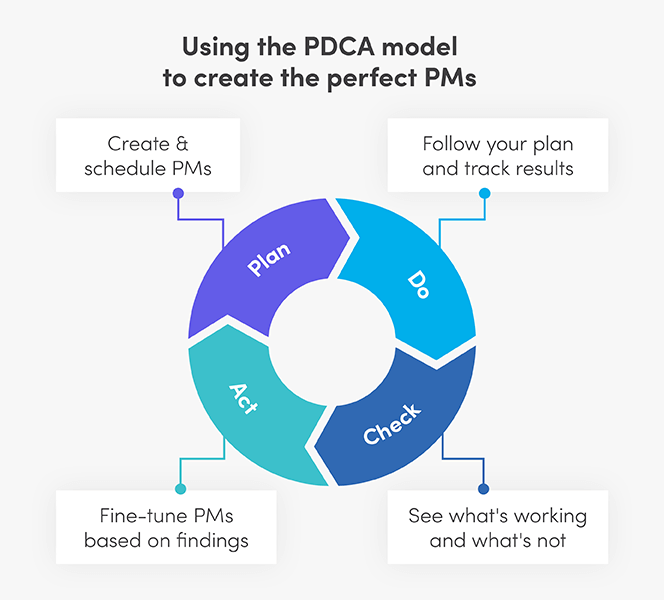
Too many PMs waste time; too few risk failures. Balance the schedule by:
- Reviewing maintenance logs to identify high‑impact tasks.
- Keeping the same frequency for PMs that consistently uncover issues.
- Increasing intervals for PMs that rarely find problems, aligning with actual failure rates.
- Shortening intervals or switching to usage‑based triggers for machines that break often.
Read a complete guide for auditing and optimizing your preventive maintenance schedule
2. Identify Run‑Time Maintenance Opportunities
Some tasks can be performed safely while equipment is still running. Map out which machines allow partial maintenance and schedule it to avoid production loss. Consider swapping spare assets into the line so routine work can occur on dedicated units.
3. Make Equipment Capabilities Transparent
Create concise operating guides and failure‑mode checklists using FMEA data. When operators spot early warning signs, they can alert maintenance before a minor issue becomes a major breakdown.
4. Leverage Work‑Order Data for Efficiency Gains
Analyze work orders for recurring bottlenecks:
- Unavailable parts – streamline purchasing and build parts kits.
- Misdiagnosed problems – improve task clarity and attach photos or manuals.
- Emergency work diverting resources – split large jobs into smaller, scheduled tasks.
- Scheduling conflicts – coordinate maintenance during low‑production windows or give operators minor duties.
- Skill mismatches – specify required certifications on work requests.
Get operations on board with your maintenance strategy
5. Remove the Biggest Obstacles
Data tells one part of the story; frontline insight reveals another. Ask technicians what stops them from completing tasks efficiently—be it manual paperwork, hard‑to‑reach information, or cumbersome tools—and act on those findings. Solutions could include dedicated on‑site filing zones or mobile digital access to asset histories.
- What tasks frequently pull you away from the machine?
- Are parts and documents easily accessible?
- What additional information would speed up your work?
- Which processes feel cumbersome or could be improved?
- What holds you back from starting a job on time?
Four Key Metrics to Track Impact
Use these metrics to quantify how maintenance is improving production efficiency:
1. Found Failure Rate on Preventive Maintenance
A high rate indicates that your PM schedule is targeting real issues, not just routine checks.
2. Unplanned Asset Downtime (last 90 days)
Comparing this period to the previous 90 days highlights the effect of your preventive strategy on overall uptime.
3. Average Time to Respond to and Repair Breakdowns
Quick recovery reduces lost production time and keeps the line moving.
4. Clean Start‑Ups
Measure the proportion of usable product before and after maintenance. An increase confirms that your work is enhancing equipment performance.
Transform Maintenance From Cost Center to Business Driver
When maintenance is viewed as a strategic function rather than a cost, the benefits become clear: faster production, lower operating costs, and happier customers—all driving a stronger bottom line. By aligning maintenance goals with production efficiency, you unlock a win‑win‑win scenario for the entire supply chain.
Equipment Maintenance and Repair
- How SCADA Boosts Production Efficiency: A Comprehensive Guide
- 5 Proven Strategies to Motivate Your Maintenance Team
- Streamline Maintenance to Boost Plant Efficiency
- Predictive Maintenance: Boost Production Efficiency & Reduce Downtime
- 5 Proven Strategies to Maximize Your Maintenance Budget
- Maximizing Production Growth: Maintenance Team Strategies
- Top CMMS Integrations to Accelerate Your Maintenance Program
- 7 Proven Ways to Cut Maintenance Downtime with Modern Technology
- Boost Your Revenue: 10 Proven Ways to Integrate AI into Your Sales Team
- Boost Pump Efficiency: Proven Strategies to Reduce Energy Costs and Improve Performance