



Mastering Lean Maintenance: Build, Measure, and Sustain a Waste‑Free Strategy
Professional racing is a masterclass in efficiency. Teams don’t just dislike waste—they hate it.
Every millisecond of a pit stop has a purpose. Every component of a car is analyzed to ensure it’s functioning at its best. Strategies are designed to get from point A to point B as fast as possible.
When you translate this mindset to the shop floor, you achieve a lean maintenance strategy. Lean maintenance relentlessly removes waste from every stage of your program, enabling you to go further, faster, and spend less.
This guide covers the essentials of building and measuring a lean maintenance strategy:
- Defining lean maintenance
- Identifying the waste that plagues maintenance
- Crafting a step‑by‑step formula
- Choosing metrics that prove success
What is Lean Maintenance?
Lean maintenance is the continuous pursuit of eliminating any activity that does not increase output, reduce costs, or boost productivity. It mirrors lean manufacturing principles but focuses on maintenance operations.
Typical waste in maintenance includes:
- Spending money on parts that become obsolete before they’re used
- Wasting time clarifying maintenance requests
- Collecting data that never gets used
Because waste is often invisible, lean maintenance demands an iterative approach—small, incremental changes that build over time. It’s a mindset that takes years to mature.
Benefits of Lean Maintenance
When you eliminate waste, you instantly cut the following pain points:
1. Cost Savings
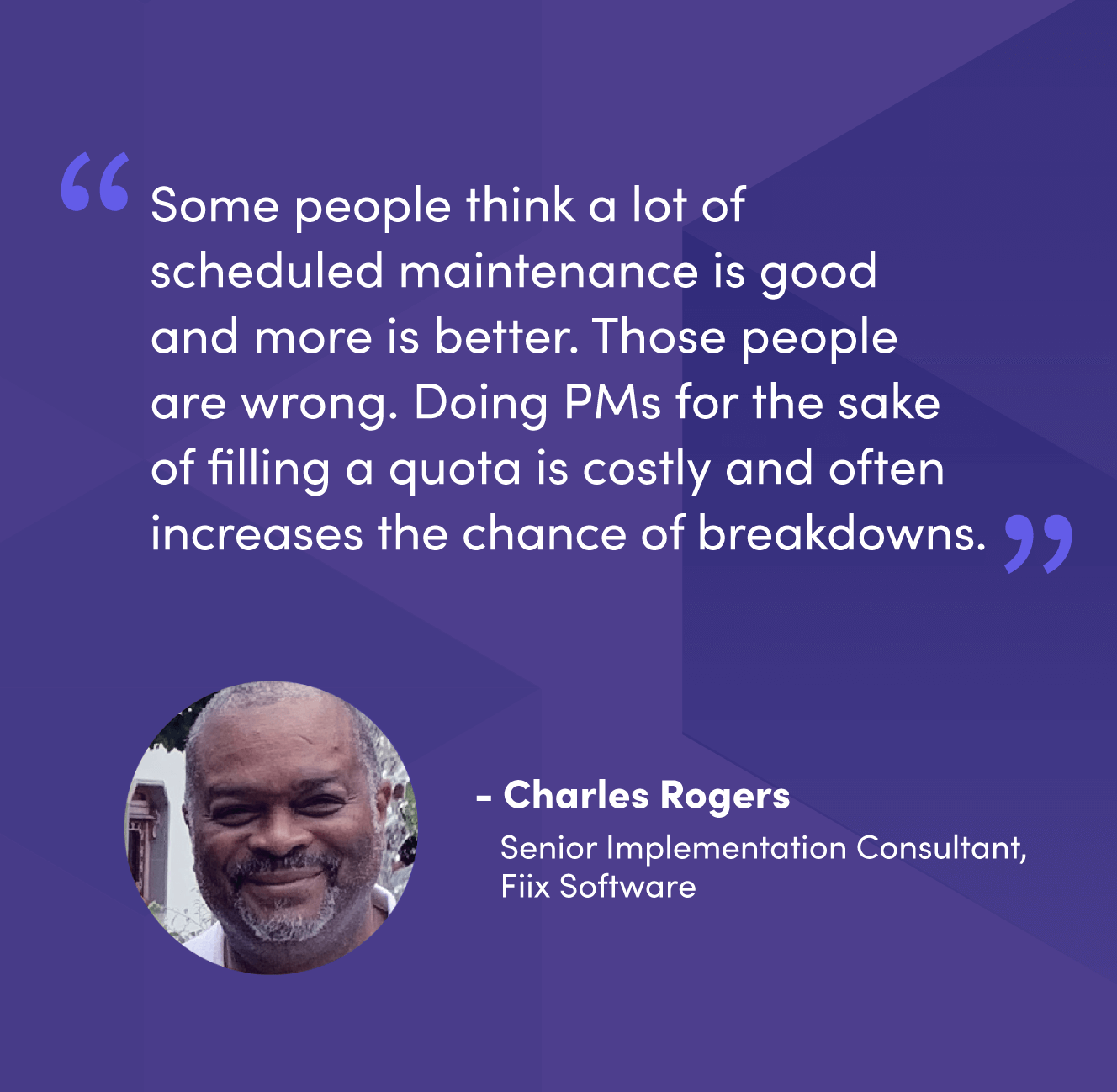
By trimming unnecessary labor and resources—and reducing downtime—you can cut direct and indirect costs. For example, shifting a weekly preventive maintenance (PM) to a monthly schedule can lower labor costs by up to 75%.
2. Efficiency Gains
Lean strategies uncover time‑consuming processes and replace them with streamlined alternatives. Voltalia’s maintenance team cut 40 hours of weekly travel by relocating a satellite office closer to a remote site.
Read more about how Voltalia achieved data‑driven maintenance
3. Maximized Potential
When technicians and equipment are freed from redundant tasks, they can focus on high‑value work. Tom Dufton’s team reclaimed time by adding operators, allowing technicians to concentrate on maintenance rather than production support.
4. Employee Engagement
Removing administrative burdens lets staff learn new tools, up‑skill, and feel more invested. A lean approach ensures that new maintenance software isn’t abandoned because technicians are overburdened.

Three Pillars of Waste in Maintenance
Waste manifests in three primary categories: environmental, financial, and human potential.
Environmental Waste
Waste that harms the planet—such as excess scrap, unnecessary fuel consumption, or overstocked parts.
- Increased scrap or rework after maintenance
- Fuel‑inefficient vehicle upkeep or redundant travel
- Outdated inventory schedules that flood the storeroom
Impact: higher emissions, poorer product quality, and safety hazards.
Mitigation tactics:
- Frequent cycle counts and just‑in‑time purchasing
- Consolidated maintenance windows to reduce travel
- Dual‑technician verification before returning equipment to service
See how your maintenance team can increase sustainability at your company
Financial Waste
Extra costs from inefficient processes and lost production.
- Excessive labor and parts from overly frequent PMs
- Defective outputs due to improper repairs
- Delayed work waiting on parts
Impact: higher expenses, missed revenue, and stunted growth.
Strategies:
- Identify and eliminate redundant PM tasks
- Schedule maintenance during normal operation to cut downtime
- Implement a Failure Reporting, Analysis, and Corrective Action System (FRACAS)
- Create parts kits for critical assets to avoid stockouts
- Hold regular alignment meetings with production
Wasted Human Potential
Administrative overload drains skilled technicians from core duties, increasing turnover and reducing morale.
- Time spent drafting, reviewing, and sorting work orders
- Repetitive repairs of the same component
- Inspections of low‑risk equipment
- Occasional production support that should be handled elsewhere
- Searching storerooms for parts
Impact: turnover, backlog, low engagement, and data inaccuracies.
Remedies:
- Hold frequent team huddles to surface challenges
- Automate routine activities like work‑order creation
- Eliminate or reduce low‑value scheduled maintenance
- Train operators to perform basic upkeep tasks
Get tips for reducing turnover on your maintenance team
Adopting a Lean Maintenance Mindset
Success hinges on a mindset shift. Ask the right questions, challenge the status quo, and embrace change.
1. From Detail‑Obsessed to Big‑Picture Focus
Avoid reactive firefighting. Align maintenance activities with production goals and eliminate work that doesn’t add value.
Example: An hour spent on a report that doesn’t influence waste reduction is itself waste. Shift effort to actionable insights.
Download this template to connect your maintenance goals to business targets
2. From “Get It Done” to Data‑Driven Action
Lean maintenance thrives on data. Allocate buffer time for comprehensive work‑order fields and emphasize accuracy over speed.
3. From Big Fixes to Iterative Improvements
Celebrate incremental wins. Set monthly goals—e.g., reduce unwarranted steps in a PM by 10%—track progress, and involve technicians in the process.
4. From “That’s the Way It Is” to “Is It Necessary?”
Regularly question every routine. Adopt a win‑or‑learn mentality that encourages experimentation without blame.
Building a Lean Maintenance Strategy
Follow this three‑step formula:
- Map current processes
- Identify and eliminate waste
- Establish repeatable procedures that reinforce the first two steps
Step 1: Map Your Processes
Document everything: equipment criticality, inspection schedules, emergency response, corrective workflows, team meetings, KPI creation, safety compliance, and parts management.
Align with business needs: seasonal production levels, peak sales, historical emergencies, and corporate objectives.
Step 2: Act on Immediate Opportunities
- Collaborate with technicians to pinpoint pain points and streamline them. A simple colour‑coding system for lubricants can eliminate misidentification and downtime.
- Use root‑cause analysis on tasks that exceed time or cost expectations. For example, a higher labor cost on a weekly work order may indicate inconsistent technician assignments.
- Audit planned maintenance to question the necessity and frequency of each task. Trigger PMs based on usage rather than arbitrary intervals.
- Develop KPIs that reveal hidden inefficiencies—turnover rates, knowledge‑sharing metrics, or back‑log lengths.
Step 3: Envision the Long‑Term
Document iterations, measure impact, and plan future adjustments. Even negative results provide learning opportunities—analyze root causes before reverting.
Metrics That Drive Lean Success
Choose metrics that are actionable and aligned with your business goals. Below are foundational categories and example indicators:
| Environmental Waste | Financial Waste | Human Potential Waste |
|---|---|---|
| Idle times | Maintenance costs (by asset, type, task) | Wrench time |
| Raw material usage | Equipment downtime (planned and unplanned) | Employee turnover |
| Carbon emissions / energy use | Rate of corrective maintenance after inspections | Time spent on production support |
| Travel times to/from sites | Response rates to breakdowns / emergencies | Time spent on administrative tasks |
| Raw material disposal (e.g., oil) | Clean start‑ups after maintenance | Number of steps in a maintenance process |
Start with a few metrics you can realistically track and that directly impact production. Small, focused projects—like reducing the top 10 most expensive tasks—yield quick wins. Broad initiatives—standardizing processes across sites—build a culture of continuous improvement.
Celebrate every milestone. Visibility keeps momentum high, secures stakeholder buy‑in, and opens the door for additional resources.

Lean Maintenance Is an Ongoing Journey
By tying maintenance to business needs, you transform it from a cost center into a strategic partner. It may ruffle feathers, but the payoff—faster, cheaper, and more reliable operations—is undeniable.
Equipment Maintenance and Repair
- A Practical Guide to Building a Robust Predictive Maintenance Program
- Eight‑Step Blueprint for a Robust Preventive Maintenance Program
- Revamping Maintenance Strategies: How PM Optimization & FMEA Reduce Post‑Repair Failures
- Lean Manufacturing & Maintenance: How TPM Drives Waste Reduction
- Choose Maintenance Wisely: Let Risk and Equipment Guide Your Strategy
- U.S. Army Advances Condition‑Based Maintenance with Innovative Sensors and Predictive Analytics
- TOTAL partners with SKF to craft integrated maintenance & inspection strategy for Indonesian gas plants
- Mastering FMEA: A Maintenance Manager’s Step‑by‑Step Guide to Building and Using Failure Mode and Effects Analysis
- Expert Guide to Ski Lift Maintenance & Key Parts
- Crane Operations & Maintenance: A Comprehensive Safety & Care Guide