



Audit Your Preventive Maintenance Schedule to Maximize Team Efficiency and Cut Costs
Ryan Robinson, shop manager at an Oregon‑based wholesale tree grower, set out to revamp his maintenance program. He wanted a schedule that cut breakdowns, reduced labor, and freed up his team’s time.
The obstacle? Hundreds of binders holding 70 years of maintenance records. Ryan described the situation: “There were just stacks and stacks of records from 70 years of maintenance. It’s virtually impossible to find trends in equipment usage and create the right schedules…we were losing time and productivity.”
Find out how Ryan conquered the binders and optimized his maintenance schedule
Ryan’s challenge is common. A maintenance program’s strength hinges on its schedule. Too frequent preventive maintenance (PM) drains budgets and creates unnecessary work; too sparse and breakdowns increase, hurting production.
Finding the right balance is hard, especially when teams are stuck in a business‑as‑usual mindset. You need the right data to make informed adjustments.
This guide gives you the tools to audit your PM schedule, assess whether you’re doing the right work at the right time, and refine it for maximum impact.
What Is an Equipment Maintenance Program?
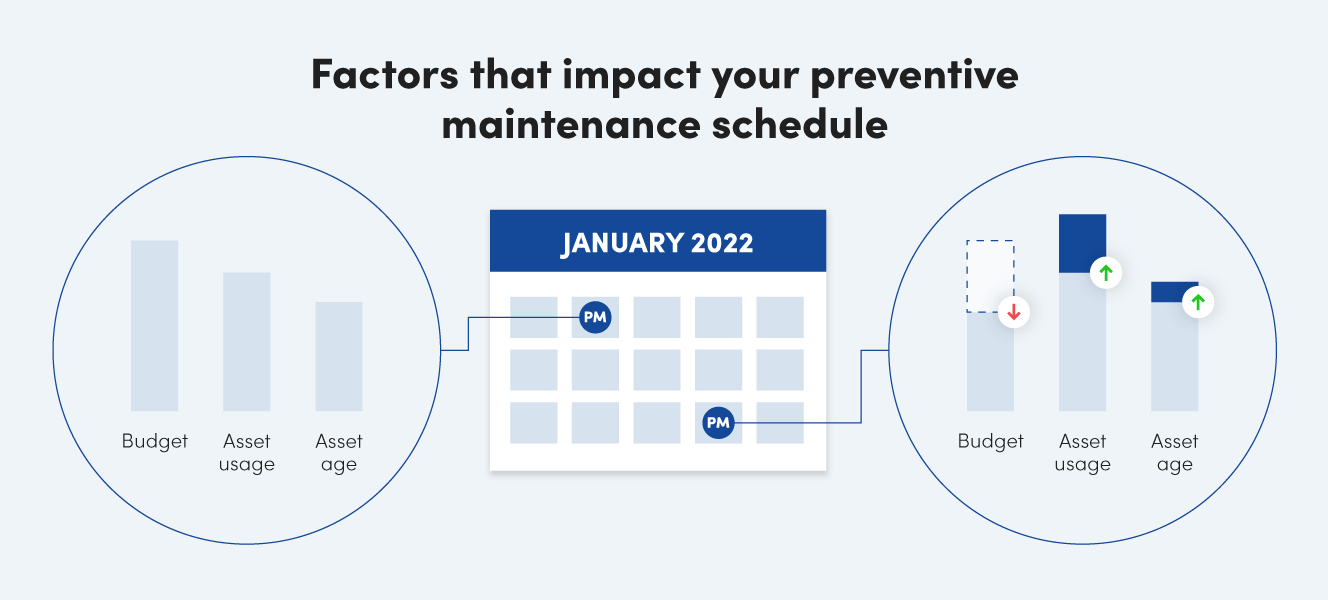
At its core, an equipment maintenance program keeps an organization’s assets safe, functional, and productive. It balances budget constraints, production targets, and limited manpower to deliver reliable performance while minimizing waste.
A world‑class program doesn’t rely on a static “set‑it‑and‑forget‑it” PM schedule. Equipment ages, operating conditions shift, budgets change, and data flows in from each maintenance action. A regular audit keeps the schedule aligned with reality and eliminates inefficiencies.
What Is a Preventive Maintenance Audit?
A PM audit evaluates whether you’re performing the right activities, at the right frequency, and in the right way. It addresses three key questions:
- Right Activities: Does the work improve availability, performance, and safety?
- Right Timing: Are you catching failures early without over‑inspecting?
- Right Method: Are work orders planned, scheduled, and completed efficiently?
Answering these questions lets you fine‑tune the schedule and build a truly effective maintenance program.
Which PM Tasks Should You Audit?
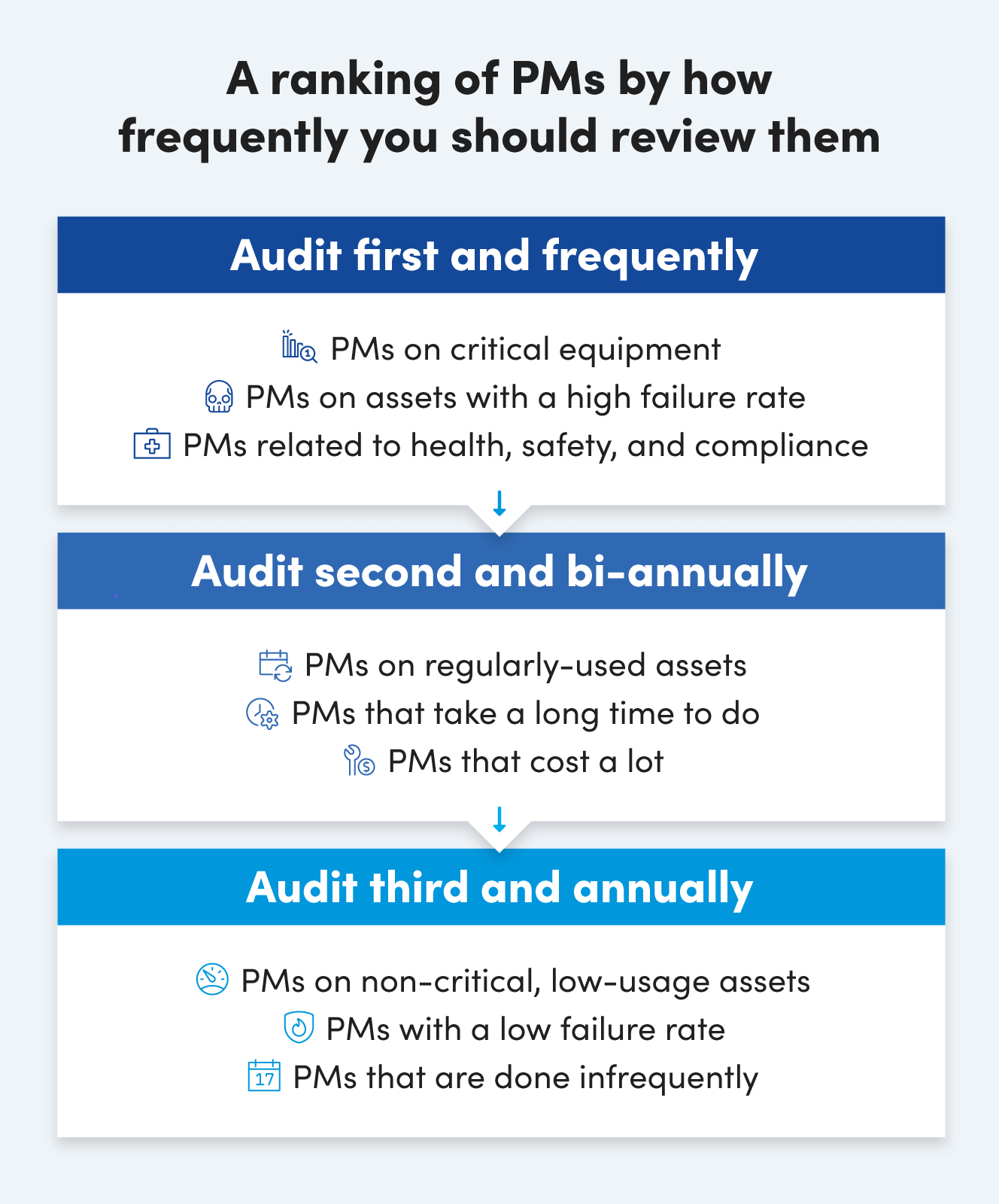
With an average program generating over 2,200 PM work orders annually, a blanket audit is impractical. Prioritization starts with the asset’s criticality to operations.
Jason Afara, Senior Solutions Engineer at Fiix, recommends beginning with PMs on critical assets—those that drive production volume or safety. X‑ray machines and metal detectors are typical examples. Auditing high‑impact assets offers quick wins.
Also consider assets that consistently break down; they have the biggest operational impact. Finally, remember that regulatory compliance may dictate annual or monthly audits for specific PMs.
How to Audit Your Preventive Maintenance Tasks
Below are key elements to examine during an audit, along with optimization tactics.
Frequency
Assess how often a task occurs and what triggers it. Adjusting frequency is a quick way to improve ROI.
- If inspections consistently lead to corrective actions, keep the interval.
- Frequent breakdowns between inspections call for tighter intervals or a shift from time‑based to usage‑based triggers.
- If no issues surface, consider extending the interval to reduce unnecessary work.
Equipment Criticality
Understanding asset criticality helps prioritize tasks during busy seasons, manage backlogs, and allocate technicians effectively.
Use a criticality score to ensure high‑priority assets receive the right amount of attention. A low‑score asset may be shifted to a less critical slot.
This template helps you score the criticality of your equipment
Specialization
Determine whether a task requires specialized skills, how many team members possess those skills, and whether external contractors are needed.
- Does the work require a specialized skill?
- How many technicians have that skill?
- Is a contractor required?
Group specialized tasks into single time blocks to minimize travel and coordination costs.
Backup Equipment
When backup assets exist, use them as test beds for new strategies—extended intervals, operator‑led maintenance, or sensor‑driven triggers—while keeping a fallback ready.
- Increase PM intervals to test lower inspection frequencies.
- Empower operators with routine tasks to free technicians.
- Deploy real‑time sensors to trigger maintenance only when needed.
Estimated vs. Actual Time
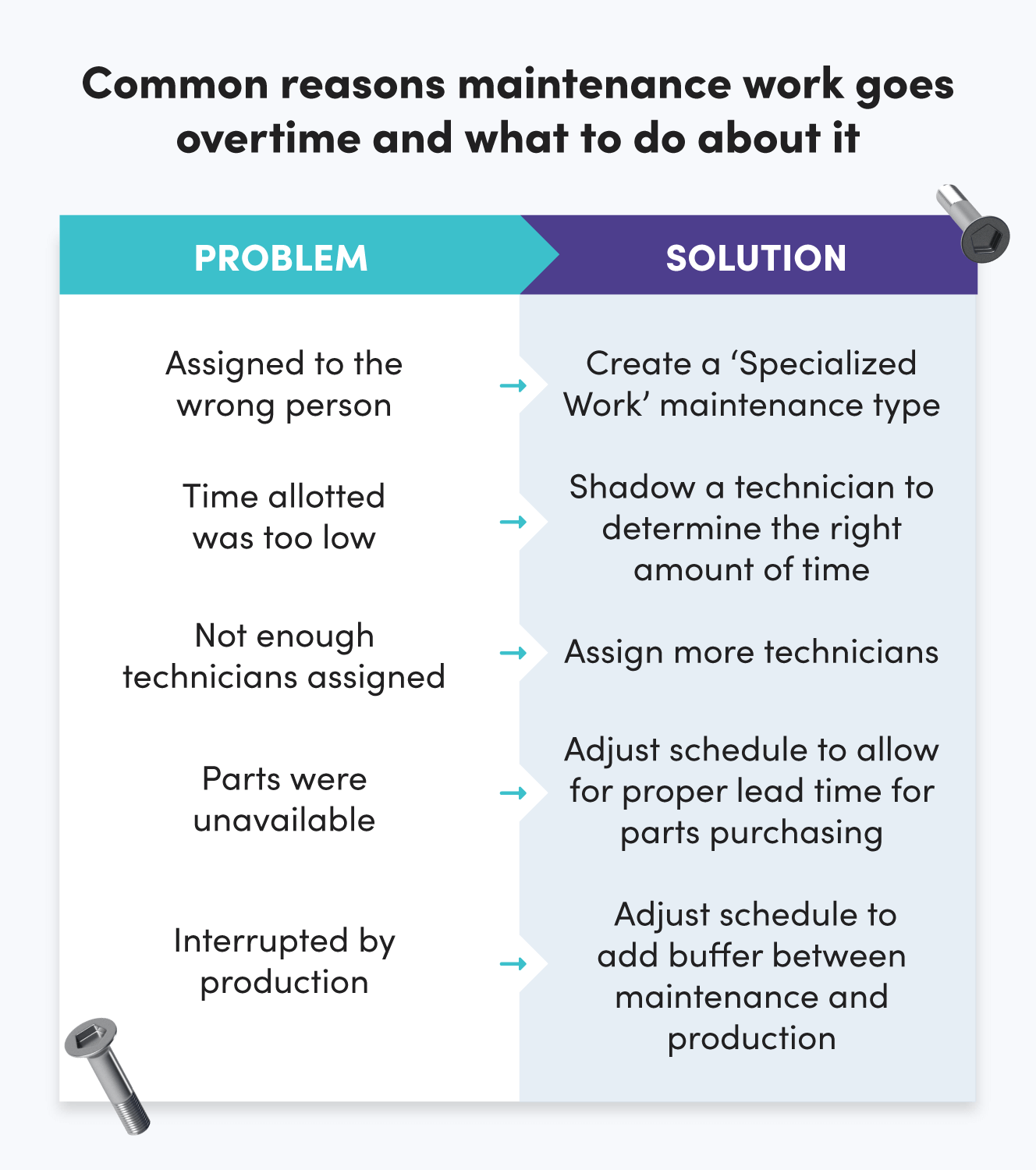
Track tasks that consistently overrun estimates. Causes include wrong assignee, insufficient time, insufficient staff, parts shortages, or production interruptions.
Adjust schedules by adding buffers, reassigning resources, or resolving supply issues. Shadowing technicians on frequent PMs provides realistic time data.
Operation Mode
Identify tasks that can be performed while equipment remains operational. Re‑schedule downtime tasks to free up shutdown windows for critical work.
Impact of Failure
Distinguish between minor annoyances and catastrophic failures. Prioritizing PMs that prevent high‑impact failures reduces downtime and safety risks.
Use a Failure Mode and Effects Analysis (FMEA) template to quantify failure impact and adjust PM priorities accordingly.
- Create failure codes for high‑impact events and prioritize corrective actions.
- Group low‑impact failures into batch updates to save labor.
- Monitor production quality post‑maintenance; if quality drops, invest more in pre‑production checks.
Preventive Maintenance Audit Template
The following scorecard helps rate each PM. Higher scores indicate higher priority for refinement.
| Scoring Criteria | Score (1-10) | |
|---|---|---|
| 1 | Follow‑up tasks generated after this task? | |
| 2 | Criticality of the equipment? | |
| 3 | Specialization required? | |
| 4 | Skill commonality on team? | |
| 5 | Availability of backup equipment? | |
| 6 | Frequency of exceeding estimated time? | |
| 7 | Can be done while equipment is operational? (1=all parts, 10=none) | |
| 8 | Impact on asset health? |
How Often Should You Audit?
Trigger an audit when pain points arise—slowdowns, budget overruns, or safety incidents. Otherwise, adopt a schedule: annual or bi‑annual audits, or a monthly split‑focus approach if bandwidth is limited.
Breaking the audit into manageable chunks prevents overwhelm and ensures consistent progress.
Ensuring Successful Change
Buy‑in starts with clear communication. Discuss the rationale and expected benefits with technicians, both collectively and individually.
After implementation, monitor production data and work orders to confirm improvements. Use ten key maintenance metrics to track the impact of changes.
Building a Streamlined Maintenance Program
Continuous improvement of your maintenance program relies on regular PM audits. Evaluate each task’s value, frequency, and impact. Tasks scoring low must justify their presence or be deprioritized.
Over time, your program will evolve into a lean, cost‑effective schedule that maximizes available skills and delivers optimal asset uptime.
Equipment Maintenance and Repair
- Make 2020 Your Most Productive Production Year: Proven OEE, TPM, and Data‑Driven Strategies
- Unlocking IoT Data: How Business Rules Management Drives Enterprise Value
- Mastering Preventive Maintenance: Building and Optimizing Fixed & Floating Schedules
- Master Work Order Planning & Scheduling: Proven Strategies of Top Maintenance Teams
- Maximizing Maintenance Productivity During Manufacturing Slowdowns
- Asset Tracking Best Practices: Unlocking the Value of Your Asset Data
- Master Planned Preventive Maintenance (PPM): A Step-by-Step Guide to Keep Equipment Running
- Mastering Preventive Maintenance: A Step-by-Step Guide to Scheduling Work Orders
- Maximize Warehouse Efficiency: Proven Strategies to Optimize Space & Boost Profits
- Heavy‑Equipment Maintenance: Which Models Require the Most vs. Least Care