



Maximize Warehouse Efficiency: Proven Strategies to Optimize Space & Boost Profits
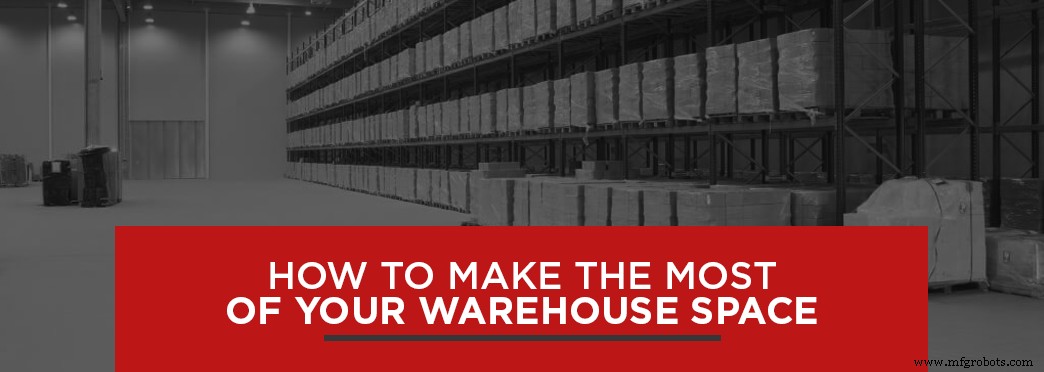
Warehouse space is a valuable commodity. If you're the owner, operator or manager of a commercial warehouse, you're well aware of what it costs to run your facility. You might manage a general purpose warehouse, a cold storage building or a specialty warehouse structure. Regardless of your business type, to reach maximum profitability, you must make the most of your warehouse space.
To maximize space in the warehouse, you need to take an objective look at your current warehouse space utilization. You need to view your warehouse from the 100-foot level, rather than down on the floor. That's because the majority of wasted warehouse space happens vertically — not at the horizontal level.
One of the best warehouse space-saving techniques is to view your warehouse as a three-dimensional area. In a two-dimensional model, you only have length and width measurements to contend with. The width times the length of your warehouse equals the gross square foot number for floor area. However, if you add height to the equation, now you've significantly increased your usable space. Storing vertically makes the most out of your warehouse layout.
The True Cost of Warehouse Space
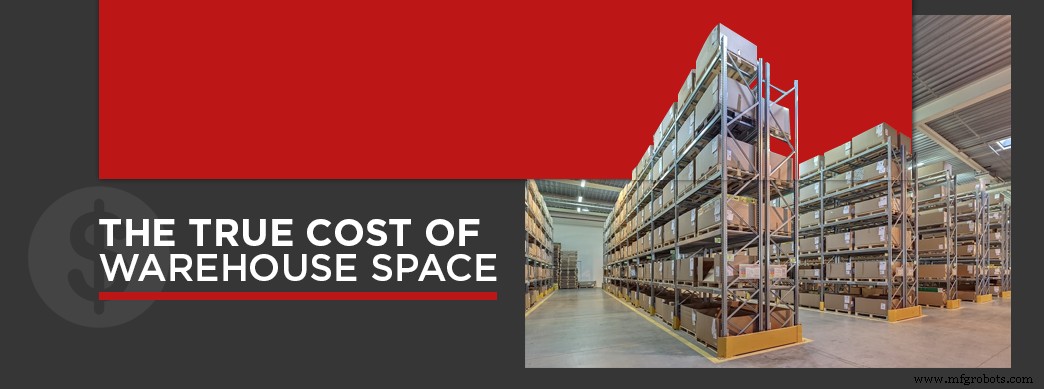
Your warehouse space has a definite cost associated with it. Your job is to maximize warehouse organization and minimize the true amount you're paying for space on a cubic foot ratio — not on a square foot basis. You get the highest return on warehouse design and warehouse layout by using every available foot from the floor to the ceiling. That's how you genuinely start saving space in the warehouse.
Reliable figures from The Statistics Portal indicate the average annual cost of United States warehouse leasing is $5.50 per square foot. That figure applies to two-dimensional floor areas. It says nothing about the cubic foot rate or how high the average warehouse is. Almost all rental or lease agreements pertain to the gross floor area. They leave the vertical space as a figure you can work to your cost-benefit or ignore to your detriment.
For example, if you're leasing a 30,000-square-foot warehouse, you'll pay $165,000 per year. Suppose your ceiling is 30 feet high. That means you have a total of 900,000 cubic feet of usable area. That works out to a yearly amount of $0.18 per square foot if you're using every cubic foot of available storage space.
This calculation is interesting, but it's not an accurate representation of the true cost of warehouse space. The reality is slightly different because there is no realistic way you can stack your entire warehouse from floor to ceiling and still function. You need aisle space for moving material handling equipment, picking space for pallet and container storage, packing space for assembling product orders and dock space for shipping and receiving.
If you're very efficient in maximizing floor space, you might have three-quarters of your allowable square footage dedicated to product storage with pallets and wire mesh containers set on industrial racking and wire decking. However, you're probably leaving money in the unused airspace above your racks and decks. According to the management and operations experts at Multichannel Merchant, most American warehouses use only 80 percent of their vertical storage area. That leaves 20 percent of your space unused. At $5.50 per square foot, you're paying $1.10 for open air. That's the actual cost of warehouse space.
Finding Your Optimal Warehouse Layout
Your optimal warehouse layout serves four primary functions. Each function ties in with the others, even though they're separate items. How you design and organize your warehouse operations will have a tremendous impact on your efficiency and your profitability. You can make the most of your warehouse space by examining how well you're executing these four functions:
1. Product Storage
This function steals most of your warehouse floor area. However, it's the one function you can capitalize on by going vertical. The best way to achieve optimal product storage from your available cubic foot allotment is through efficient stacking. Here is where your investment in industrial racking and wire decking pays off. Properly designed and placed racks let you stack pallets as high as your ceiling. Racks also enable you to stack industrial storage containers on top of each other for your best use of space. The key to maximizing your vertical storage is partnering with an experienced and knowledgeable supplier like Cherry's Industrial Equipment.
2. Inbound Operations
Your docks are the center of your inbound operations. Shipping and receiving docks are busy places and require the right amount of space to be efficient and safe. That doesn't mean your inbound operations area has to waste space. Take a careful look at your entire receiving area and watch for places to end wasted space and capitalize on vacant regions. No doubt you'll find places where plastic pallets can stack without causing congestion. Optimizing your warehouse layout could include placing collapsible containers in unused spots. Or, you might find you can better position material handling equipment such as industrial pallet trucks and jacks when they are not in use.
3. Outbound Operations
Your shipping area takes up floor space. It also claims areas you could be using for vertical storage. If you plan and design your outbound operations area to include activities related to storing products, you'll find immediate returns on your overall material handling investment. There is no reason you can't use overhead racking and shelving in your outbound area and make use of space above your workers' heads. That doesn't have to be dangerous if you invest in quality American-made equipment from Cherry's. You can also improve your employees' safety in the outbound department by investing in ergonomic equipment like industrial lift tables and work positioners.
4. Value-Added Processes
You likely have value-added processes in your warehouse, even if you don't call them that. Value-added processes are any activities that increase your product performance and returns. For example, you might have labeling procedures or package splitting tasks, which might include breaking down inbound goods for individual storage. Or, it might mean repackaging products to increase their end value for your customers. No matter what value-added processes you have in your warehouse, they're going to require space. To maximize your value-added space performance, your investment in storage aids like bulk storage containers, metal containers and custom wire containers will increase your usable area and make the most of your warehouse space.
The Optimal Warehouse Design
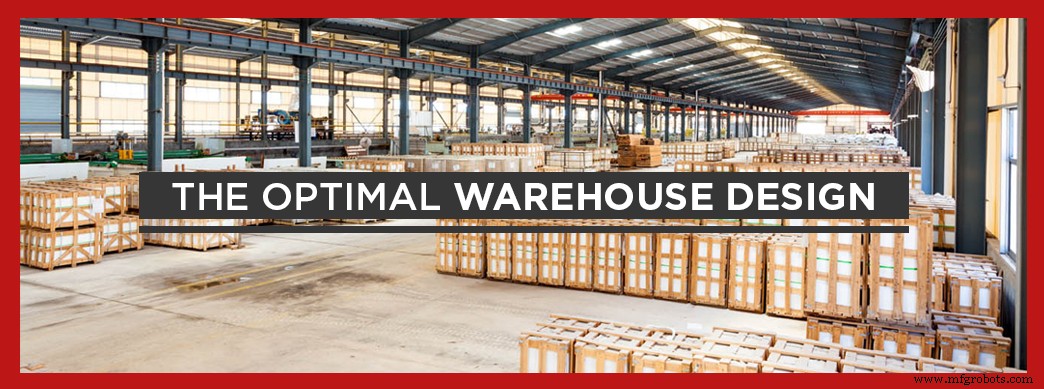
Layout and design are similar concepts, yet they're different. A long-held and proven principle in building design is "form follows function." That means your warehouse design follows the four layout functions of product storage, inbound operations, outbound operations and value-added processes. In the end, it's all about maximizing space.
You might be at a critical stage in your warehouse operations. For most managers, that's when they seem to be running out of space. There isn't enough room to store goods. They're at maximum capacity for handling inbound products. They have nowhere to expand outbound activities. And they have overlap where value-added processes have to invade space designated for the other three primary functions.
If this sounds like your current situation, you're not alone. You have the same three choices other crowded warehouse managers have. You can relocate to a larger facility. You can downscale and reduce inventory. Or you can redesign your existing warehouse form to accommodate your current business needs in a much more efficient manner.
If you're relocating to another warehouse, you have the perfect opportunity to start fresh and do it right the first time. However, relocating has its downsides, as the physical process of moving material handling equipment, storage support systems and the mass of inventory is time-consuming. It's also costly.
Scaling back is not a good business model for most. Reducing inventory to free floor space means less revenue and cash flow. Reducing revenue along with costs prevents your business from growing. Decreasing market share stops the opportunity to increase or even hold your customer base. That reduces profitability and your ability to invest in better material handling machines and efficient storage systems.
Your third option is redesigning your existing warehouse space. You need to take full advantage of its form to effectively manage your functions and maximize your space. That starts with assessing what physical boundaries you have to work with that you can't quickly change or control. Here are key areas in your warehouse to work around, not against:
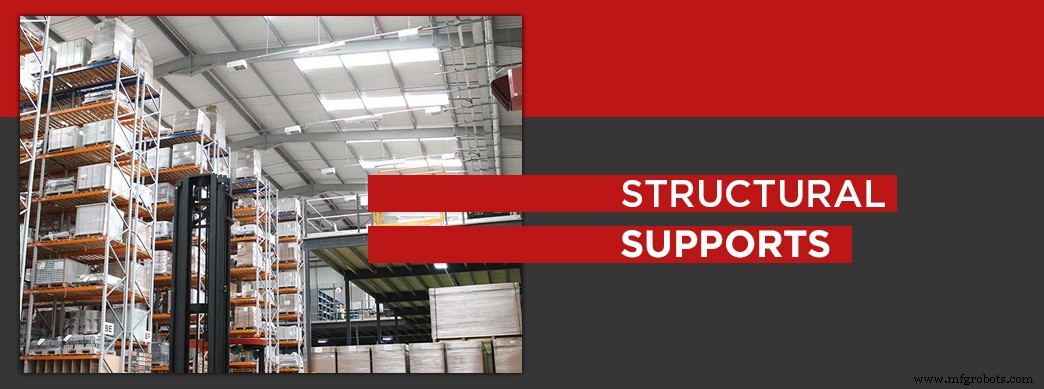
Structural Supports
Every warehouse has non-negotiable structural supports. Your main restraints are your exterior walls and your internal support posts. Without these, your building would fall. What you want to do is work these non-negotiable physical barriers into your design. Exterior support walls are ideally suited for industrial pallet and container racking systems. You can extend racks right to the ceiling and secure them to the walls to ensure solid integrity regardless of the loads you place on your racks and wire decking. As well, interior structural support columns are excellent points to delineate a change of function space.
Egress Points
Egress is a technical building term for entrances and exits. Your warehouse is subject to fire codes, making escape points mandatory. Therefore, you should welcome numerous egress points around your warehouse. Don't think of these as wasted space where you could be piling loaded pallets or bulk containers. Egress areas should seamlessly flow into aisles and corridors. You need these paths to allow workers access for picking stock from racks and moving it to outbound and value-added stations.
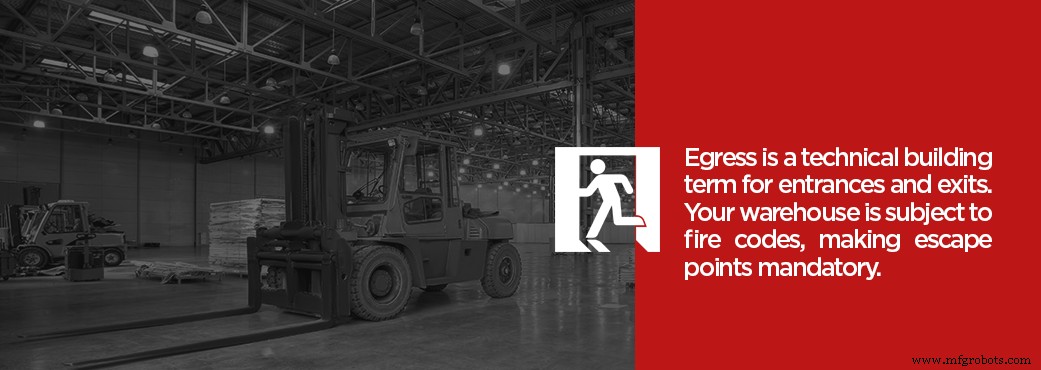
The trick to making maximum use of egress and aisle space is ensuring the widths are no more than absolutely required, as governed by Occupational Health and Safety Administration regulations for aisle and corridor sizes as well as safety markings. You'll be surprised at how much extra space you can capitalize on in your existing facility by redesigning your aisles and corridors leading to egress points.
Shipping and Receiving Docks
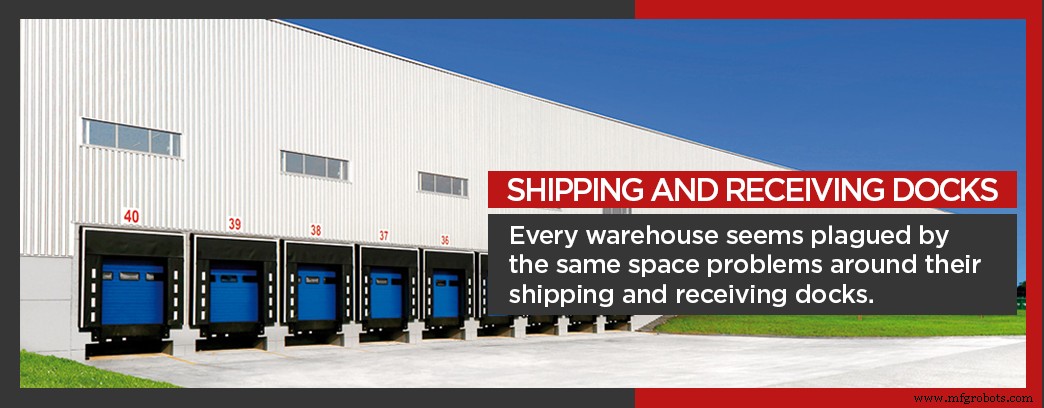
Every warehouse seems plagued by the same space problems around their shipping and receiving docks. You need enough room for trailer turning and parking. The same goes for material handling equipment like forklifts, hand trucks and dollies. There's a tradeoff between what you need as live space for when loads and unloads happen and the downtime when docks are quiet, and that space becomes dead weight. Here's where you have to think vertically. Every dock area has an enormous amount of unused vertical space hovering above it. You can easily design your shipping and receiving areas to house products as well as material handling equipment in the upper regions. One design form that seems to serve most functions is called a mezzanine.
Mezzanines
Capitalizing on vertical space is nothing new. It's just that many warehouse operators don't see the space-maximizing value in building mid-level floors inside their facilities. Mezzanines can double or even triple your floor area by reaching upward and outward. However, there are downsides to building internal mezzanine floors. They require supports that may cut into your lower floor design. Mezzanines also need access points which take even more lower room. Mezzanines are also costly. They have to be structurally sound to support every conceivable weight you'll place on them, and that requires expensive materials and labor. And mezzanines are also permanent. Once you've constructed a mezzanine, it's a fixed structure, unlike the perfect vertical storage solution — industrial pallet racking and wire decking.
Use Racking and Decking to Maximize Warehouse Space
If you want the perfect solution for solving the form vs. function problem in maximizing warehouse space, you've found it in Cherry's industrial racks and their sister components, wire decking. Racks and decking completely remove any need for expensive mezzanine floors. They're self-supporting from a structural standpoint. They're also non-permanent, so you can move and relocate racks and shelves whenever your business functions change and you want to redesign your warehouse form.
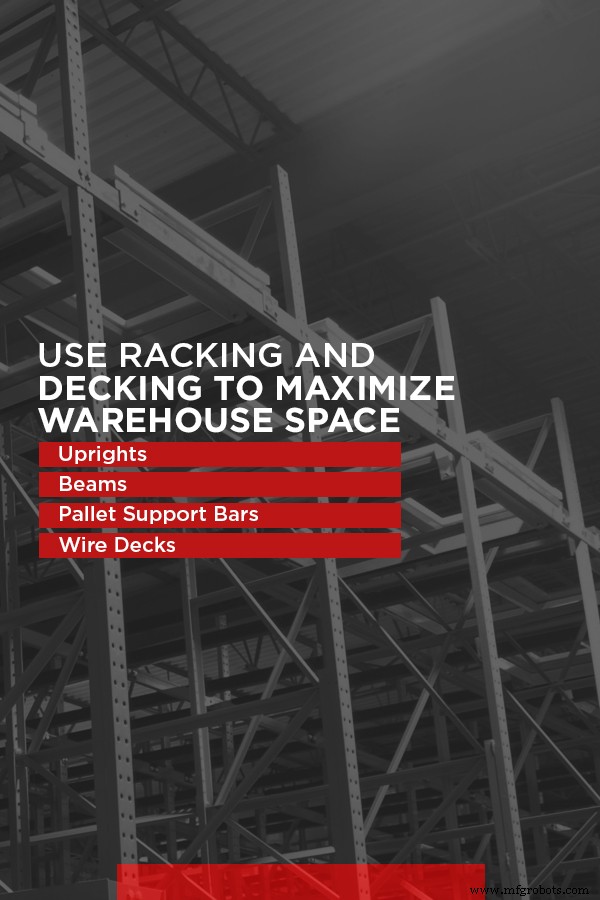
Industrial storage racks and decking offer you incredible value. Your return on investment is many times greater than constructing permanent walls and support systems. Racks and shelves are the most straightforward solutions to achieving maximum vertical storage space. They also let you take maximum advantage of horizontal floor area because Cherry's can custom-build racking and decking systems to fit any area of your warehouse. Here are the components you'll find with industrial racking and wire decking systems from Cherry's:
Uprights
These are the outer support components. They're also called frames or verticals. These super-strong steel supports anchor to your warehouse floor and transfer weight from your decks through a network of pallet support bars and beams. Uprights can also be solidly attached to exterior walls and building support columns for added stability. Cherry's uprights have different heights and depths. Stock uprights extend over 20 feet and offer six-inch depth increments from 36" to 48". This versatility allows the rack system to handle standard pallet and container measurements.
Beams
Horizontal racking members are the beams in a rack system. Beams take the vertical loads that pallets and containers place on decks. Then, beams transfer the weight horizontally to the uprights where it follows a gravitational path to the floor. From an engineering standpoint, beam strength is highly sensitive to its depth or thickness compared to its width or span. For example, Cherry's rack system beams vary from eight to 12 feet long and range from four to six and a half inches deep. Naturally, a longer span requires a greater depth. Cherry's rack systems have two beam types — step and box beams. As part of the personal service you'll get when partnering with Cherry's Industrial Equipment, we will help work these details out for you.
Pallet Support Bars
Your upright and beam components benefit from cross members that tie the front and back beams together. These strategic components take your pallet weights and support them while sending the load stresses through the beams and down through the uprights. Cherry's offers two pallet support bar configurations. One has a flange design while the other, a hat design. Both styles are designed to work with step style beams. Another cross bar design worth noting is the structural style pallet support which is made to fit box style beams. All Cherry's pallet support bars work in pairs and have a 2,500-pound average capacity rating.
Wire Decks
Pallet support bars are excellent for vertical pallet storage; however, you might need to store products other than on pallets, such as in bulk containers or wire mesh containers. In this case, Cherry's has another solution that may make more sense. These are semi-solid decks that sit on top of your beams and provide a greater span of support than the standard pallet support bars. The 2 most popular styles of wire decking include the flared or "universal" deck and the step deck.
Use Pallets for Your Warehouse Organization Strategy
No industrial racking system is complete without suitable pallets. But don't settle for old wooden pallets. Cherry's has clean and modern pallet solutions to maximize your warehouse space.
Our selection of pallets are seriously worth considering as compared to waterlogged and bulky wood pallets. For example, strong, lightweight aluminum pallets are a good investment for their corrosive resistance, fire resistance, and light weight. Then, there are specialized pallets that handle sensitive products and still allow you maximum storage space with little cost. Here is the wide pallet assortment you'll find when you browse Cherry's online catalog:
- Plastic pallets
- Custom plastic pallets
- Aluminum pallets
- Custom aluminum pallets
- Export pallets
- Pressboard pallets
- Wire mesh pallets
- AS/RS pallets
- Chemical pallets
- Distribution pallets
Use Containers for Optimal Warehouse Organization
Even though Cherry's carries practically every conceivable pallet you could ever require, sometimes your storage challenges need a different approach. That's where Cherry's container selection comes in. Whereas pallets are sturdy and offer excellent vertical support, they're somewhat ineffective at holding products in from the side.
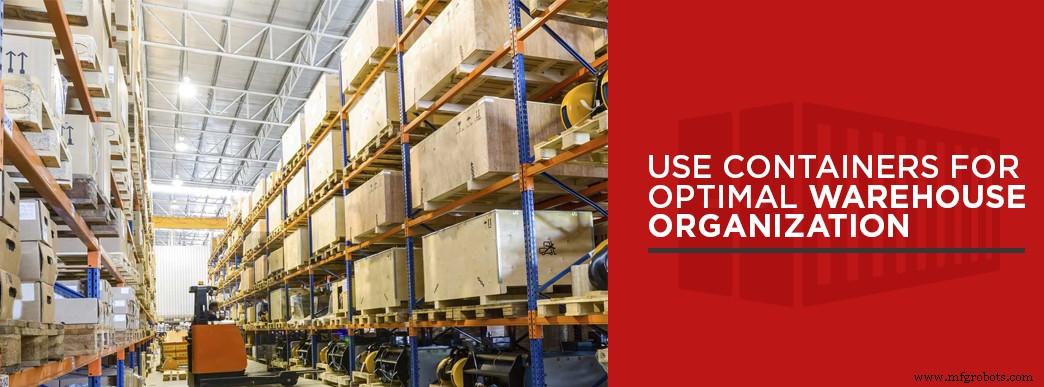
Containers are your perfect option when you're storing multiple pieces in one spot, yet you need the ability to move them in one mass. This challenge is especially common with small parts that require bins and boxes. Cherry's containers also have collapsible options for the ultimate in maximizing your warehouse space. Here are the container selections you'll find online at Cherry's Industrial Equipment:
- Wire mesh containers
- Plastic collapsible containers
- Bins and boxes
- Metal bulk containers
When You're out of Space in Your Warehouse
If you're out of warehouse space, you may be wondering whether it's time to relocate to a larger facility. That's a difficult question to answer, as it's a highly personal issue. It's a significant commitment to build a new warehouse or take an existing structure and modify it to serve your unique functions and form. Perhaps it's best to recommend you undertake a serious study of what wasted areas still sit in your existing warehouse, then take steps to maximize your space.
No doubt you'll realize you're not really out of space at all. You're just not using what you have to your maximum advantage. Then, the right approach is to contact Cherry's Industrial Equipment and discuss how we can help you solve your space dilemma.
Maximize Existing Warehouse Space With Cherry's Industrial Equipment
Cherry's Industrial Equipment is your go-to source for all your material handling needs. At Cherry's, we partner with you to maximize your existing warehouse space with creative ideas like custom racks and decks. We have a full line of pallets for just about every storage and distribution project you'll come across. We also supply you with unique material handling equipment like slip sheets and freezer spacers. Check out our line of bins and boxes as well as our full assortment of space-saving containers.
Cherry's is America's leading material handling source. We have the best products to save space in your warehouse, and we excel in customer service. Cherry's online catalog makes it easy, secure and safe to shop right from your warehouse. Our experienced, friendly and helpful material handling experts are available to answer any of your questions.
Call Cherry's Industrial Equipment today for ideas on how to maximize your warehouse space. We're at 877-350-2729. Or, you can reach us anytime online.
Manufacturing process
- Unlocking IoT Data: How Business Rules Management Drives Enterprise Value
- Audit Your Preventive Maintenance Schedule to Maximize Team Efficiency and Cut Costs
- Asset Tracking Best Practices: Unlocking the Value of Your Asset Data
- Maximizing the Performance of Your Industrial Physical Assets
- Maximizing IoT for Restaurants: Boost Efficiency, Reduce Waste, and Delight Customers
- Maximize Your Manufacturing Day Experience: Expert Tips & Strategies
- Maximize Efficiency: Expert Tips for Your Warehouse Scanning System
- Unlocking Efficiency: The Proven Benefits of Warehouse Automation
- Boost Warehouse Efficiency with Strategic Vertical Storage Solutions
- Maximizing the Value of Flexible Heaters in PCB Design