



Maximizing the Performance of Your Industrial Physical Assets
Industrial production thrives when machinery, tools, and infrastructure run at peak efficiency with minimal downtime. Achieving this requires a holistic, proactive approach to physical asset management.
In this guide, we explore practical tactics to elevate the performance and lifespan of your physical assets.
What Are Physical Assets?
Physical assets—also known as tangible assets—are items of material existence that provide clear economic value. While cash, real estate, and inventory all qualify, the assets that directly impact manufacturing productivity are:
- Production facilities and buildings
- Machinery & equipment (e.g., CNC machines, conveyor belts, forklifts)
- Tools (hand tools, power tools, specialized instruments)
These assets fall into two primary categories: long‑term assets and operating assets.
Key Considerations When Acquiring Industrial Assets
Purchasing an asset can profoundly affect both your balance sheet and day‑to‑day operations. Evaluate these critical factors before committing.
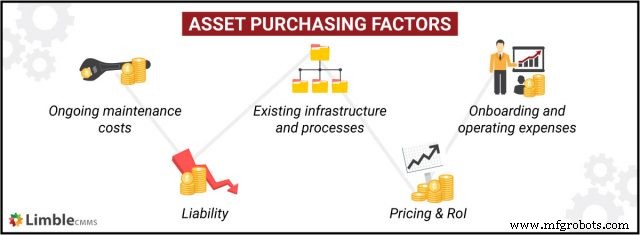
Pricing & Return on Investment
The purchase price is often the decisive element. Specialized equipment can be costly, and financing may impose debt that strains your financials. Conduct a rigorous ROI analysis: quantify productivity gains, projected revenue impact, and long‑term value retention. Consider leasing or future resale value to mitigate upfront capital strain.
Alignment with Existing Infrastructure
Assets perform best when they integrate seamlessly into your current production flow. Prioritize equipment that complements existing machinery, power supply, and spatial layout. Misaligned acquisitions lead to wasted space and inefficiencies.
Onboarding and Operating Costs
Acquisition alone does not guarantee returns. New equipment demands staff training, potential retrofits, or facility upgrades. Factor these integration costs into your total cost of ownership; otherwise, a cheaper asset may paradoxically be more expensive in the long run.
Liability and Compliance
Many assets carry regulatory, safety, and insurance obligations. Neglecting these can trigger fines, litigation, and reputational damage. Perform a compliance audit before finalizing a purchase.
Ongoing Maintenance Expenses
Assess whether your team can maintain the equipment in-house. Examine the frequency of required service, availability of OEM versus aftermarket spares, and overall maintenance cost predictability. High maintenance burdens can erode the projected ROI.
Strategies to Maximize Asset Performance
No single trick guarantees optimal performance. A disciplined, lifecycle‑focused strategy—starting with acquisition—drives lasting value. Below are proven tactics.
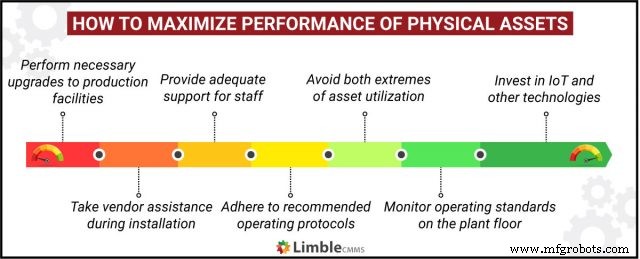
1) Upgrade Production Facilities Early
Before deploying new machinery, ensure power supplies, ventilation, safety interlocks, and spatial layouts meet the equipment’s specifications. Upgraded infrastructure reduces premature wear and downtime.
2) Leverage Vendor Support During Installation
Reputable manufacturers offer installation, calibration, and operator training services. Harness these resources to achieve a smooth onboarding process and minimize early‑stage mishaps.
3) Invest in Continuous Staff Training
Ongoing training empowers operators and maintenance personnel to respond swiftly to incidents. Provide comprehensive safety kits—high‑visibility gear, helmets, gloves, eye protection, and respiratory equipment—to safeguard personnel and protect assets.
4) Follow OEM Operating Protocols
Manufacturers publish detailed manuals outlining optimal operating conditions. Adhering to these guidelines preserves warranties and prevents costly repairs.
5) Balance Utilization Levels
Both idling and over‑utilization accelerate degradation. Employ a robust CMMS or EAM system to schedule maintenance and track utilization, ensuring assets remain within healthy operating windows.
6) Enforce Strict Operating Standards
Set and monitor quality and safety benchmarks. Routine inspections, torque checks, and cleanliness standards help detect early signs of wear and reduce unplanned downtime.
7) Embrace Industry 4.0 Technologies
IoT sensors, AI analytics, and 5G edge computing unlock predictive maintenance capabilities. While these technologies introduce new regulatory considerations, their integration can dramatically improve asset uptime and cost efficiency.
Implement Proactive Maintenance with Modern CMMS Software
Optimizing asset performance hinges on a robust maintenance strategy. Transitioning to proactive maintenance—planned inspections, condition monitoring, and predictive analytics—drastically cuts downtime and extends asset life.
Legacy software often lacks the agility to support such initiatives. A cloud‑based CMMS, such as Limble, provides real‑time visibility, automated work orders, and data‑driven insights that empower maintenance teams to act before failures occur.
Equipment Maintenance and Repair
- Unlocking IoT Data: How Business Rules Management Drives Enterprise Value
- Maximizing the Value of Your CMMS/EAM System: Strategies for Integration and Predictive Maintenance
- Optimizing Maintenance Strategy: A Proven Path to Reliability and Cost Savings
- Maximize ROI: 11 Proven Strategies to Unlock Your EAM System’s Full Potential
- Maximize Efficiency: Expert Tips for Your Warehouse Scanning System
- Maximize Efficiency and Cut Costs with Rotary Concentrator Optimization
- Optimizing Excavator and Hauler Pairings for Maximum Efficiency and Profit in Mining
- Maximize Warehouse Efficiency: Proven Strategies to Optimize Space & Boost Profits
- Maximize Your CMMS Trial: Tips for Successful Evaluation
- Maximize Efficiency and Precision with Your Benchtop Surface Grinder