



Optimizing Maintenance Strategy: A Proven Path to Reliability and Cost Savings
Many plants invest in reliability initiatives to refine their maintenance functions, yet the expected gains often fall short. The key lies in integrating existing programs—computerized maintenance management systems (CMMS), preventive maintenance (PM), and predictive maintenance (PdM)—into a cohesive, failure‑elimination strategy.
Where to Begin When Developing a Maintenance Strategy
Success is measured by the bottom line, so the first step is to map the cost drivers: preventive work, predictive work, unplanned failures, and labor and material expenses. For example, a typical plant might allocate:
- 15 % of effort to predictive tasks
- 35 % to preventive tasks
- 25 % to unplanned failures
- 15 % of PM jobs delayed each month
Overlap between preventive and predictive activities is common and wasteful. Understanding why overlap occurs—whether it’s due to redundant inspections or a misaligned failure‑analysis process—helps to streamline and optimize the entire maintenance portfolio.
Principles for Correcting Inefficiencies
- Every task must target a specific failure mode.
- Choose the least expensive, most effective method for each asset.
- Schedule tasks at the optimal point within the failure cycle.
- Ensure the cost of failure outweighs the cost of the preventive task.
- Use time‑based refurbishment rather than routine inspections.
- Redesign assets that are operated outside their design envelope.
John Moubray’s Reliability‑Centered Maintenance II illustrates how predictive techniques can detect failure‑creating conditions well before the functional failure point, giving planners a larger window to act.
As illustrated in the P‑F Curve below, PdM tasks typically identify problems at a longer warning period than PM tasks and at a lower cost—often one‑quarter of the PM expense. Moreover, PdM allows for in‑service monitoring, reducing downtime that PM inspections inevitably cause.
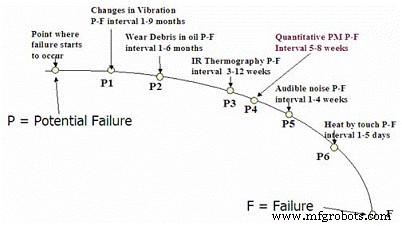
Figure 1: The P‑F Curve (John Moubray, Reliability‑Centered Maintenance II)
Optimal asset care follows this hierarchy:
- Process monitoring
- PdM technologies
- Time‑ or meter‑based directed tasks (PM)
Aligning Maintenance Tasks to Failure Types
Failures generally fall into three categories:
- Induced – caused by external forces or operating conditions.
- Intermittent – random events that cannot be predicted with a fixed MTBF.
- Wear‑out – predictable degradation tied to component life.
Process and PdM monitoring can detect induced and intermittent failures early, allowing proactive intervention. Wear‑out failures, however, are best managed with scheduled refurbishments based on known MTBF data.
Defining Preventive Maintenance (PM)
A PM is a repair or replacement action that restores an asset’s functionality or useful life to its original state. Other PM activities—failure‑finding and condition‑evaluation tasks—are reserved for situations where the risk of failure is acceptable or where quantitative thresholds can be established to guide replacement decisions.
- Failure‑finding tasks are used when the consequences of a failure are tolerable but hidden defects need to be uncovered.
- Condition‑evaluation tasks rely on quantitative metrics (e.g., vibration spectra, oil analysis) to predict MTBF and trigger timely interventions.
Implementing an Integrated Maintenance Strategy
Start with a Failure Modes and Effects Analysis (FMEA) for each equipment class, subclass, or qualifier (e.g., Pump/Centrifugal/Coupled). A comprehensive FMEA addresses the seven core RCM questions:
- What is the function?
- What are the functional failures?
- What are the failure modes?
- What are the effects?
- What are the consequences?
- How can the failure be mitigated?
- What if a suitable task cannot be found?
When answering mitigation, follow the hierarchy: process monitoring → PdM → PM. Apply the FMEA results at the asset level to weigh the cost of failure against the cost of intervention, ensuring decisions align with overall cost‑benefit goals.
Practical Example
Suppose a screw conveyor’s hanger bearings fail. A PM that removes the bearings for replacement—rather than an inspection that might miss early wear—offers the lowest total cost, because the downtime and labor required for a full teardown are negligible compared to the replacement cost. After removal, bench testing of the bearings can refine future MTBF estimates, further tightening maintenance schedules.
Expected Outcomes
- Maintenance costs drop from the outset and continue to fall.
- Staffing needs shrink, often eliminating the need for external contractors.
- ROI materializes quickly—often within the first three months.
- Large shutdowns can be scheduled for capital projects without compromising OEE.
- Equipment remains in service longer between PM interventions.
- Predictive coverage expands, sustaining plant reliability over time.
Independent tool implementation rarely improves reliability; instead, it adds layers of cost. True reliability emerges when the most economical methods are applied consistently across the plant, maximizing asset performance while minimizing total cost of ownership.
In reliability terms, the “economy of force” principle—using only the resources necessary to eliminate downtime, labor, and rework—ensures plants operate at peak output for the lowest possible cost. An integrated maintenance and reliability strategy is therefore essential for global competitiveness.
Timothy White presented this article at Noria Corporation’s conference in Nashville, Tenn. For more information on Noria conferences and educational events, visit conference.reliableplant.com.
Equipment Maintenance and Repair
- Choosing the Right Maintenance Strategy for Your Assets: A Practical Guide
- Determining the Optimal Size of Your Maintenance Team
- Designing an Effective Maintenance Strategy: A Practical Roadmap
- Ensuring Asset Maintainability for Lubrication Excellence
- Transforming Maintenance Culture: Strategies for Reliability & Accountability
- Maximizing the Performance of Your Industrial Physical Assets
- Optimizing Facility Maintenance: Strategies to Minimize Downtime and Boost Productivity
- 5 Proven Strategies to Extend Asset Value and Maximize ROI
- Deferred Maintenance: Why It Can Harm Your Organization
- How Preventive Maintenance Safeguards Patient Care in Healthcare Facilities