



Driving Organizational Change from the Middle Upward
As a consultant, I frequently receive requests—sometimes direct, sometimes indirect—to help organizations transform. While some requests focus on small, targeted changes, others demand sweeping, strategic shifts. Across all scenarios, successful change begins in the middle of the organization. Many executives lament that initiatives stall without top‑level endorsement, but they overlook the pivotal role of middle management, where most actionable change originates.
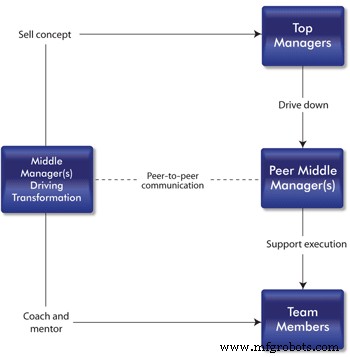
Figure 1. Overview of the Middle‑Out Change Process.
Senior leaders set the strategic direction and rely on middle managers for operational insight. Dr. Jonathon Byrnes, senior lecturer at MIT, underscores that cultivating and empowering middle managers is the most influential lever senior leaders can pull to drive firm success—an insight that aligns closely with my own field observations.
In practice, the most profitable transformations follow a "middle‑out" pattern. Middle managers sit at the intersection of operational reality and financial impact, enabling them to spot opportunities and translate them into profit‑generating actions. The typical sequence is:
- Ideation. A middle manager identifies an initiative that could enhance profitability.
- Advocacy. The manager presents the idea to senior leaders, securing sponsorship and guidance.
- Diffusion. Senior leaders cascade the initiative to other middle managers, who then lead execution among frontline staff with coaching and support from the original champion.
Senior executives are often too removed to observe day‑to‑day challenges, while frontline employees lack the visibility or authority to influence strategy. The middle tier, therefore, becomes the fulcrum of change.
However, three common pitfalls derail middle‑out initiatives:
1) Failure to Dollarize. Middle managers frequently present technically rich proposals devoid of clear financial impact. Even seasoned engineers may lack finance training, making it hard to translate benefits into dollars. Senior leaders evaluate proposals in terms of return on investment; hence, framing the initiative in monetary terms is essential.
2) The Horizontal Push. Some managers attempt to persuade peers in other functions without senior endorsement. Without executive backing, cross‑functional efforts stumble against entrenched incentive structures and psychological inertia. Peer‑to‑peer influence rarely suffices to disrupt the status quo.
3) Forced Bottom‑Up Trickle‑Up. A minority of managers bypass middle management and try to sell the concept directly to frontline staff, hoping the idea will cascade upward. This approach breeds confusion, appears covert, and can erode trust when peers feel blindsided.
Change is inherently complex, especially when it cuts across functional lines. Waiting for senior leaders to spontaneously "see it" is unrealistic; they typically initiate high‑profile moves—divestitures, acquisitions, market expansions—yet operational excellence hinges on middle managers’ execution.
For middle managers eager to drive impact, the roadmap is clear: 1) quantify the initiative in financial terms; 2) secure senior sponsorship; 3) educate peers on the strategic and functional benefits; and 4) coach frontline teams to embed the change. Remember, change originates from the middle—and it is your responsibility to ignite it.
References: Byrnes, J. (2005). "Middle Management Excellence," Working Knowledge for Business Leaders, Harvard Business School Archives.
Equipment Maintenance and Repair
- Maximizing the Potential of STL Files for Flawless 3D Printing
- 6 Expert Tips to Maximize Your Preventive Maintenance Program
- Maximizing the Value of Your CMMS/EAM System: Strategies for Integration and Predictive Maintenance
- 5 Army‑Inspired Strategies to Boost Employee Focus, Resilience, Loyalty, Leadership and Training
- Uncovering and Empowering Hidden Teachers in Your Organization
- Maximizing the Performance of Your Industrial Physical Assets
- Optimizing Facility Maintenance: Strategies to Minimize Downtime and Boost Productivity
- Drinkable PPE: Protect Workers From Inside Out
- Maximize Fuel Efficiency in Your Diesel Commercial Fleet
- Why Switching from CO₂ to Nitrogen Can Benefit Your Brewery