



Heavy‑Equipment Maintenance: Which Models Require the Most vs. Least Care
From purchasing to operating to maintaining, the money you put into your heavy equipment impacts the return on investment (ROI) you see. A key element to increasing ROI and getting the most out of your equipment is a preventative maintenance (PM) routine. PM can help minimize downtime, extend your equipment’s life and add resale value.
As crucial as PM is, it does add to your equipment’s cost of ownership. Any time you can reduce your equipment’s cost of ownership, you’ll save money for your business. So how should maintenance costs influence your heavy equipment purchases?
In many scenarios, the most important factor in purchasing heavy equipment is finding the right piece that can get the job done. Specialized equipment is worth the investment because it helps your team to maximize productivity on the job. However, sometimes you may be able to choose between several different types of equipment for a job. Considering overall maintenance costs can help you maximize your purchase with both functionality and finances.
What Affects Heavy Equipment Maintenance Costs?
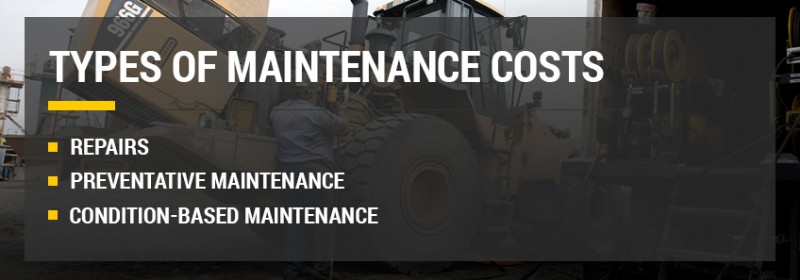
A piece of heavy equipment’s maintenance costs varies based on several factors and the maintenance requirements it has. There are three main types of heavy equipment maintenance associated with their own unique costs:
- Repairs: Repair maintenance happens when equipment experiences an unexpected malfunction or breakdown. Repairs can happen at sporadic intervals depending on the equipment’s condition, and the cost typically depends on the specific part that malfunctions. A key concern for repair maintenance is getting the equipment running as soon as possible.
- Preventative maintenance: PM revolves around a predetermined schedule to catch potential issues before they cause downtime. PM typically occurs more often than any other type of maintenance. This creates an ongoing cost that will vary based on the type of equipment you own.
- Condition-based maintenance: Condition-based maintenance occurs when workers identify an equipment issue through routine inspections or monitoring. This type of maintenance takes on a more sporadic nature, like repairs. Condition-based maintenance will likely increase based on the equipment’s age and may vary in cost based on the issue.
The type and frequency of maintenance your equipment will contribute to overall maintenance costs. Other influential factors include components such as:
- Whether the equipment has tracks or wheels
- How small or large the equipment is
- How high-impact the equipment and environment is
- Typical operating conditions for the equipment
- How old the equipment is
When considering different equipment, think about the following factors to determine whether your equipment will have more or less maintenance than you anticipate.
Track vs. Wheel Equipment
Track and wheel propulsion systems each provide valuable benefits. The increased ground contact present in tracked equipment offers crucial traction support on soft and slick ground. This can be important for safety and effectiveness when working in inclement weather. Wheeled equipment provides higher speeds and durability for rougher work surfaces. On hard, flat ground, wheeled equipment is efficient and versatile.
The price difference between wheeled and tracked equipment maintenance is fairly significant. In most cases, maintaining wheeled equipment is less costly than maintaining tracked equipment. The costs boil down to the mechanics of the two systems.
Track Equipment
Tracked equipment has a heavy undercarriage with many parts. The undercarriage contains several components, including:
- Track bolts
- Track links
- Pins
- Bushings
- Sprockets
- Rollers
- Idlers
- Shoes
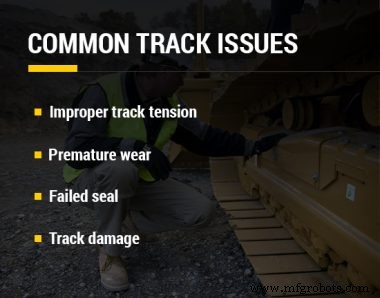 These components work together to create an intricate system of moving parts. Because of its high number of moving parts, the undercarriage can account for half or more of tracked equipment’s lifetime maintenance costs. Fortunately, there are ways to avoid some of the most common track issues:
- Improper track tension: Whether a track is too loose or too tight, improper tension can accelerate wear and make your equipment less efficient. One reason a track might loosen is due to lubrication issues. Without proper lubrication, pins and bushing components start to wear and create tension issues. To prevent this, regularly lubricate your equipment’s undercarriage, inspect the track and adjust it as necessary.
- Premature wear: Because track equipment works best in muddy conditions, it may collect large amounts of dirt in its undercarriage. If dirt and debris aren’t cleared regularly, it can dry and add weight to the equipment or form hardened clumps that cause premature wear on the components. To keep your tracks running long-term, use shovels and pressure washers to clear out the undercarriage regularly.
- Failed seal: Oil leakages in track rollers, idlers and drivers can denote a failed seal, which may lead to a major failure in those components. Regularly inspect the rollers, idlers and drivers on your equipment to catch leaks before they lead to greater damage.
- Track damage: Rough asphalt, concrete or other abrasive worksite materials can wear against tracks and cause damage. Use track equipment in softer, wetter ground conditions to prevent unwanted track damage.
Given its complex nature, track equipment has more potential to face maintenance issues. If some of these issues go unnoticed, you may face even costlier and more time-consuming maintenance when the track breaks down. Though track equipment won’t break down due to a popped tire and can function in severe weather, keeping it maintained will ultimately cost more in the long-term.
Selecting and using the following equipment may necessitate more track equipment maintenance:
- Bulldozers
- Excavators
- Multi-terrain loaders
- Track loaders
- Electric rope shovels
- Forest machines
- Hydraulic mining shovels
- Pipelayers
Wheeled Equipment
Wheeled equipment uses tires, axles and brakes to function, as opposed to a detailed undercarriage. This system houses fewer moving parts, which cuts down maintenance needs. Depending on the size of the equipment’s tires and the amount of wear they incur, heavy equipment tires may also present an added maintenance cost. Though wheeled equipment doesn’t function as well on muddy ground, its lower overall maintenance costs make it a good choice for sites where a soft surface isn’t a large concern.
Selecting and using the following equipment may result in less wheeled equipment maintenance:
- Backhoe loaders
- Skid steer loaders
- Wheel excavators
- Wheel loaders
- Motor graders
- Road reclaimers
- Compactors
- Articulated trucks
The maintenance costs involved with tracked and wheeled equipment do not make either type a better choice than the other overall. Both equipment types provide necessary services depending on your situation. However, if both types will work for your situation, and you’d like to cut long-term maintenance, wheeled equipment may be the best choice.
Small vs. Large Equipment
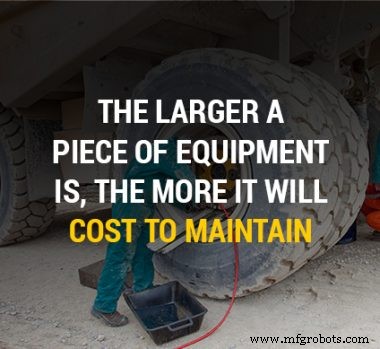 The size of your heavy equipment will also influence the associated maintenance costs. In general, the larger a piece of equipment is, the more it will cost to maintain. This is true because of two main factors:
- Time: Larger equipment may take longer to inspect because of its component structure and parts. Large equipment also takes longer to fix given its size and weight when compared to smaller equipment. These longer maintenance hours increase maintenance costs.
- Parts: Large equipment maintenance also requires larger parts, which may cost more to replace and repair.
Small equipment versus large equipment maintenance is more nuanced than simple size groupings. Actual maintenance costs also vary based on engine dimensions, structure complexity, parts and replacement costs.
Engine Dimensions and Complexity
To illustrate this point, consider the difference between the engines commonly found in a Cat® 745 Articulated Truck and a Cat 226D3 Skid Steer Loader.
The Cat 745 features a Cat C18 engine, with the following dimensions:
- Length: 56.6 inches (4.72 feet)
- Width: 44.6 inches (3.72 feet)
- Height: 53.4 inches (4.45 feet)
- Dry weight: 3,785 pounds (1.89 tons)
The Cat 226D3 features a Cat C2.2 engine, with the following dimensions:
- Length: 26 inches (2.17 feet)
- Width: 19.3 inches (1.61 feet)
- Height: 27.5 inches (2.29 feet)
- Dry weight: 427.7 pounds (0.21 ton)
Clearly, these two engines vary quite a bit in size and weight. The dimension differences alone would affect the way technicians inspect, transport and fix these engines. Articulated trucks and skid steer loaders perform different functions and are different sizes, which warrants very different engines. Though this may seem like comparing apples to oranges, the fact remains that size — regardless of function or build — plays a key role in maintenance costs.
Dimensions aren’t the only influential factor when it comes to maintenance — the configuration and number of parts also comes into play.
The C18 engine houses large internal parts, including:
- Valve covers
- Camshaft
- 12 intake/exhaust valves
- Valvetrain
- Six pistons
- Flywheel
- Connecting rod
- Crankshaft pulley
Internal engine compositions vary from model to model. Though models with similar dimensions — such as the C18 and the C15 engine — have similar interior components, there are slight differences in front housing, valve covers and piston and rod structures.
For example, the C18 piston and rod structure includes:
- Three piston rings
- Piston body
- Snap rings
- Piston pin
- Pin and bushing
- Connecting rod
- Bolts
- Top bearings
- Bottom bearings
- Connecting rod caps
- Nuts
- Oil jet tube
The C15 piston and rod structure differs by including the following components:
- Three piston rings
- Piston body
- Piston pin
- Retainer pin
- Bearings
- Oil jet tub
- Bolt
- Rod
- Connecting rod bearing
- Dowel
If a piece of equipment with a C18 engine needed maintenance or repairs for its piston and rod system, technicians would have a greater number of parts to disassemble, check, repair and reassemble. This principle is true for equipment of all different sizes and functions. The harder it is to access or work with equipment parts, the longer it will take. Longer maintenance periods will add up to greater maintenance costs over the life of your equipment.
Part Replacement Costs
Engines aren’t the only parts that differ when it comes to maintenance costs. Some of the most commonly replaced heavy equipment parts include:
- Air filters
- Batteries
- Belts
- Engine starters
- Fuel filters
- Fuel injectors
- Hoses
- Hydraulic filters
- Hydraulic fluid
- Oil filters
- Spark plugs
- Transmission fluid
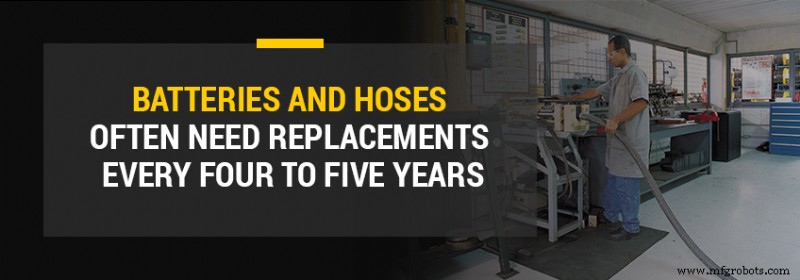
Many of these parts should be replaced when they wear out, but some require replacement at standard intervals. Items like batteries and hoses often need replacements every four to five years. The size of your heavy equipment and its parts will impact how much these replacements cost.
For example, consider the different prices for these front gears based on their sizes:
- 130-4701 Gear Assembly: 2.6 inches high, 7.8 inches long and about $400
- 128-2659 Gear Assembly: 3.1 inches high, 11.1 inches long and about $1,000
Each piece of heavy equipment relies on a unique arrangement of differently sized parts to function well. Depending on your equipment and its part prices, you may notice higher maintenance costs when components break down.
Altogether, larger heavy equipment has many benefits — and for many jobs, it is necessary. However, if you have a choice between a smaller piece of equipment and a larger piece of equipment that will both work well for your project, selecting the smaller equipment may reduce your overall maintenance costs.
Equipment Application and Environment
The way your heavy equipment functions and the environment in which you use it can also play roles in the types of maintenance costs it generates.
Equipment Application
Wherever moving parts come into contact with your worksite, there is potential for equipment deterioration and breakdown. The speed and longevity of your heavy equipment can also contribute to how often they require repairs or maintenance. For this reason, equipment for more high-impact jobs may need more maintenance than equipment that transports or moves material.
Equipment types that may operate in more low-impact environments include:
- Articulated trucks
- Asphalt pavers
- Cold planers
- Compactors
- Motor graders
- Road reclaimers
- Telehandlers
Equipment types that may operate in more high-impact environments include:
- Backhoe loaders
- Bulldozers
- Electric rope shovels
- Excavators
- Hydraulic mining shovels
- Skid steer loaders
- Track loaders
- Wheel dozers
- Wheel loaders
- Wheel tractor scrapers
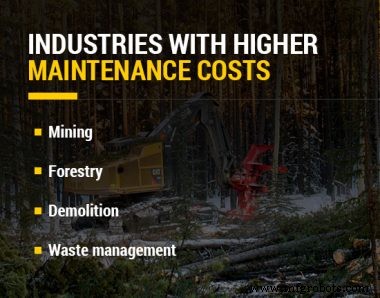
Elements that contribute to equipment wear and tear may include digging through tough material, repetitive use of a specific equipment component and more. That means industries like mining, forestry, demolition and landfill and waste management may incur higher overall maintenance costs than the road construction or general construction industries. If your heavy equipment will be doing heavy lifting, it’s likely you may spend more in maintenance costs compared to low-impact equipment.
Equipment Environment
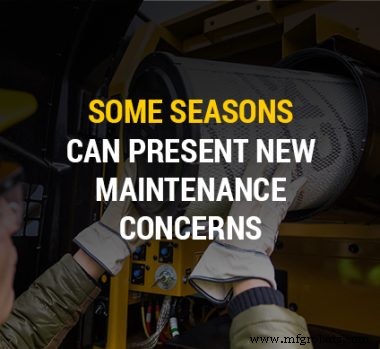 In addition to the type of work your equipment completes, your work environment and weather conditions can add maintenance concerns. If you’re working year-round, you may notice specific maintenance costs during some seasons:
- Spring and Fall: Frequent rain can create muddy working conditions. Mud can be a slippery work surface, as well as increase the amount of dirt that accumulates on and in your equipment. Without proper cleaning, excess dirt may cause issues and unexpected maintenance costs.
- Summer: Intense heat in a dirt-based work environment can cause the ground to dry up and harden. Tough ground may generate more wear for your digging equipment, and it will likely generate an excessive amount of dust. Dusty worksites may put a strain on your air filter and necessitate more frequent inspection and replacement.
- Winter: If your team operates in winter, you may combat ice, salt and freezing temperatures. Regardless of the type of equipment you use, operating in winter can increase wear. Equipment batteries, engines, brakes and fluid hoses may have to work harder in the cold temperatures. Batteries may also take longer to charge and die more quickly. Without proper coolant, oil, fuel and tire pressure, your equipment may wear out at a higher rate during winter than any other season.
Your schedule doesn’t pause when the weather goes sour, and quality heavy equipment is built to withstand the elements. Keep in mind, however, that equipment interacting with a harsh work environment on a consistent basis may require more overall maintenance.
New vs. Old Equipment
When comparing maintenance costs, new and old equipment often vary. New equipment has new parts that haven’t experienced wear. As old equipment depreciates and wears down, its maintenance costs increase and often become more frequent.
Some equipment managers use formulas like the Mitchell Curve to calculate equipment repair costs. This formula predicts costs by considering the number of hours a piece of equipment has worked. In general, the more hours equipment has worked, the greater its projected maintenance costs.
According to a recent study testing the effectiveness of these predictive formulas, equations like the Mitchell Curve may overestimate maintenance costs. The study used formulas to calculate projected maintenance costs and compared them with actual maintenance cost data for heavy equipment.
In an example with backhoe loaders, the usage and maintenance data showed that actual operating costs were lower over a nine-year period than those projected using a Mitchell Curve. In fact, the curve overestimated actual operating costs by 18 to 27%. This means fleet managers using a projection formula like this may retire their fleet earlier in an attempt to avoid maintenance costs, when they could ultimately keep their equipment running for longer and reduce long-term costs.
Though research and predictive models show that older equipment involves more maintenance costs, you can make a significant impact on any new or old piece of equipment simply by adhering to a preventative maintenance schedule.
Preventative maintenance can increase ROI in new and old equipment because:
- PM routines can reduce equipment repair bills by 25%.
- PM routines identify potential points of breakdown before breakdowns happen.
- Running a piece of equipment to failure can cost up to 10 times more in maintenance fees than a normal maintenance routine.
- Avoiding breakdowns can also help avoid the need to replace expensive equipment parts.
- PM routines can keep equipment functioning well from the beginning to the end of your ownership, which may boost its resale value.
Whether you’re working with a brand new bulldozer or an eight-year-old compactor, establishing regular inspections and a preventative maintenance routine can extend its life and make the most of your investment. Your PM routine may include:
- Total maintenance and repair agreements
- Equipment inspection programs
- Site inspections
- Field service
- Shop service
- S-O-S fluid analysis
- Failure analysis
- Product link on-board analysis
- Condition monitoring
- Electronic information collection
- Equipment inspection data
- Component rebuilds
- Component tracking
Another helpful maintenance practice to consider is establishing a preventative maintenance checklist. A checklist creates a uniform template for inspections and servicing to make sure nothing is missed. Check with your equipment manufacturer to ensure your routine covers the recommended areas and is performed at the recommended maintenance intervals for your specific equipment.
Given all of this data, if you plan to purchase used heavy equipment, you may spend more on overall maintenance costs. However, if you implement a preventative maintenance routine, you won’t be at a disadvantage with your used equipment.
Trusted Solutions for Your Equipment and Maintenance Needs
 At MacAllister Machinery, we have a comprehensive heavy equipment and maintenance solution for your fleet. You can start the process by shopping our huge inventory of Caterpillar® brand heavy equipment. Finding the right heavy equipment is vital to your productivity, and our knowledgeable staff is ready and able to assist you before, during and after your purchase.
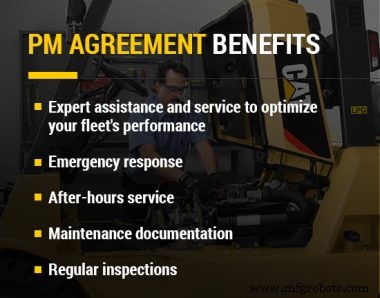
In addition to our unparalleled customer service, MacAllister Machinery offers a Customer Value Agreement (CVA). When you sign a CVA, you’ll receive expert assistance and service dedicated to optimizing your fleet’s performance. Our PM Agreements also cover emergency response, after-hours service, maintenance documentation and regular inspections at competitive, fixed pricing.
Understanding and addressing your equipment’s maintenance costs can help you increase your ROI and keep your fleet working hard. For quality assistance, products and continued support, contact MacAllister Machinery today.
Equipment Maintenance and Repair
- How Industrial Maintenance Has Evolved: From Reactive to Predictive
- Audit Your Preventive Maintenance Schedule to Maximize Team Efficiency and Cut Costs
- Comprehensive Guide to Heavy Equipment Maintenance: Boost Reliability, Safety, and ROI
- Maximizing Machinery Longevity: Professional Heavy Equipment Repair & Maintenance Guide
- How Winter Weather Impacts Heavy Equipment: Protecting Your Investment in Colorado
- Proven Engine Maintenance Strategies to Safeguard Heavy Equipment
- Winter Care for Heavy Equipment: Essential Cleaning & Maintenance Strategies
- How Regular Equipment Inspections Cut Maintenance Costs & Prevent Downtime
- Heavy Equipment Maintenance: Proven Dos & Don’ts for Longevity
- Why Regular Equipment Inspections Save Time, Money, and Ensure Safety