



Mastering Maintenance Contracts: Expert Tips for Facility Managers
Maintenance is the backbone of smooth operations in any facility. When internal teams lack the capacity, skill set, or resources to keep equipment running, outsourcing becomes the most efficient solution. A well‑structured maintenance contract is the legal framework that turns this outsourcing into a strategic partnership.
Before you start drafting or negotiating, understand the scenarios that warrant outsourcing and the types of contracts that fit those needs.
What Exactly Is a Service Maintenance Contract?
A service maintenance contract is a binding agreement between a facility owner and an external maintenance provider. It lays out the scope of work, performance expectations, pricing, and legal responsibilities. By codifying these details, both parties can rely on a clear, enforceable standard of service.
All negotiated terms—whether they involve routine upkeep or emergency repairs—are captured in the document, ensuring mutual accountability.
Why Outsource Maintenance?
Equipment and facility upkeep can be organized in four primary ways:
- In‑house maintenance staff handle all tasks.
- OEM technicians maintain the equipment.
- Third‑party contractors perform every maintenance job.
- A hybrid mix of the above options.
Outsourcing is rarely unnecessary. A 2021 survey found that only 10% of facilities manage all maintenance internally. When a third‑party is involved, a contract is essential.
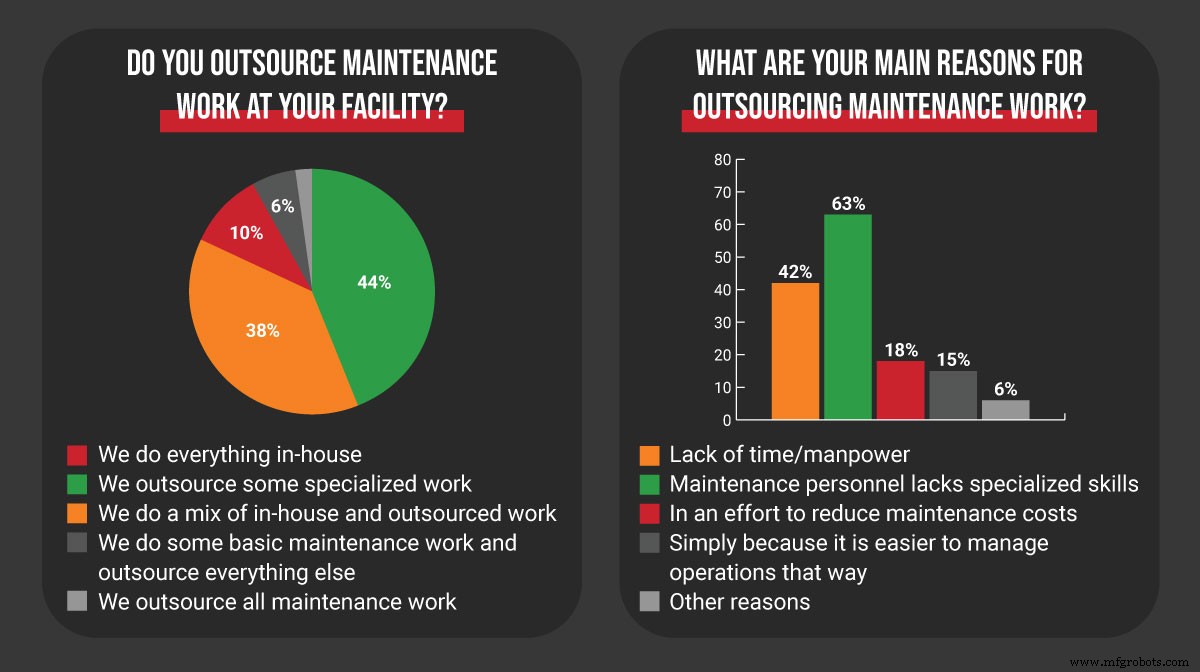
Common reasons to outsource include:
- Workload exceeds the capacity of the internal team.
- Specialized tasks that don’t justify full‑time staff.
- Lack of in‑house expertise or equipment.
- OEMs offering maintenance as part of the sale.
- Cost‑effectiveness compared to hiring new staff.
- Simplification of operations.
A reliable contract guarantees high‑quality service at predictable costs.
Long‑Term Contracts: AMC vs. CMC
Two principal long‑term agreements dominate the market:
- AMC – Annual Maintenance Contract: Covers routine upkeep and emergency repairs but excludes unforeseen expenses.
- CMC – Comprehensive Maintenance Contract: Includes all labor, parts, and transportation costs, eliminating surprise invoices.
Choosing AMC offers a lower upfront fee with the risk of additional charges; CMC provides a fixed total cost, simplifying budgeting.
Typical Contract Length
Most contracts span one year, though 3‑ or 5‑year terms are common when the relationship proves strong.
Benefits to the facility owner include:
- Consistent quality control, leading to fewer breakdowns.
- Extended asset life and improved performance.
- Peace of mind by delegating maintenance management.
- Discounted rates and predictable budgeting.
Vendors also favor long‑term deals because they guarantee steady revenue and foster stronger brand loyalty.
Pricing Models
Contract cost depends on scope, frequency of repairs, number of assets, and term length. Common pricing structures are:
- Time‑Based: Fixed hourly rate multiplied by actual labor hours.
- Per‑Device: Flat fee per equipment unit, scaled by total devices.
- Asset‑Lifetime: Pricing increases as equipment ages and maintenance needs grow.
- Repair vs. Replace: Fees vary based on whether parts are repaired or replaced.
Additional client‑specific requirements can add to the final price.
Key Elements of a Maintenance Contract
Essential clauses include:
- Parties & Contact: Full legal names, addresses, signatories, and service locations.
- Equipment Details: Technical specs, operating conditions, and placement.
- Scope of Work: Clear delineation of responsibilities to avoid ambiguity.
- Client Expectations: Cooperation requirements and access provisions.
- Response Times: Defined maximum response for critical assets.
- Completion Times: Reasonable turnaround for each service activity.
- Compensation & Liability: Damages, delays, and indemnification terms.
- Pricing & Payment: Total cost, payment schedule, and invoicing details.
- Force Majeure: Release from obligations during extraordinary events.
Additional negotiated items may also be incorporated.
Drafting a Robust Maintenance Contract
While no one‑size‑fits‑all rule exists, the contract must be legally enforceable and clearly articulated. Tailor terms to local laws, industry norms, and your specific operational context. A concise, well‑structured agreement protects both parties and facilitates smooth execution.
Practical Templates for Quick Start
Instead of building a contract from scratch, consider these proven templates:
- Equipment Maintenance Contract
- HVAC Maintenance Agreement
- Building Maintenance Contract
- IT Maintenance Agreement
- Preventive Maintenance Contract
- Home Maintenance Agreement
Adapt each template to reflect your unique requirements before finalizing.
Managing Contracts & Vendors with Limble CMMS
Efficient vendor management hinges on quick access to contract details and performance metrics. Modern CMMS solutions, like Limble, centralize vendor data and streamline work order workflows.
Key features:
- Comprehensive vendor profiles (names, contacts, assets serviced).
- Automated work order dispatch and tracking.
- Integrated time, parts, and invoicing records.
- Customizable reporting for cost analysis.
Limble’s interface keeps all vendor information in one place, and allows contractors limited access to create and close work orders directly within the system.
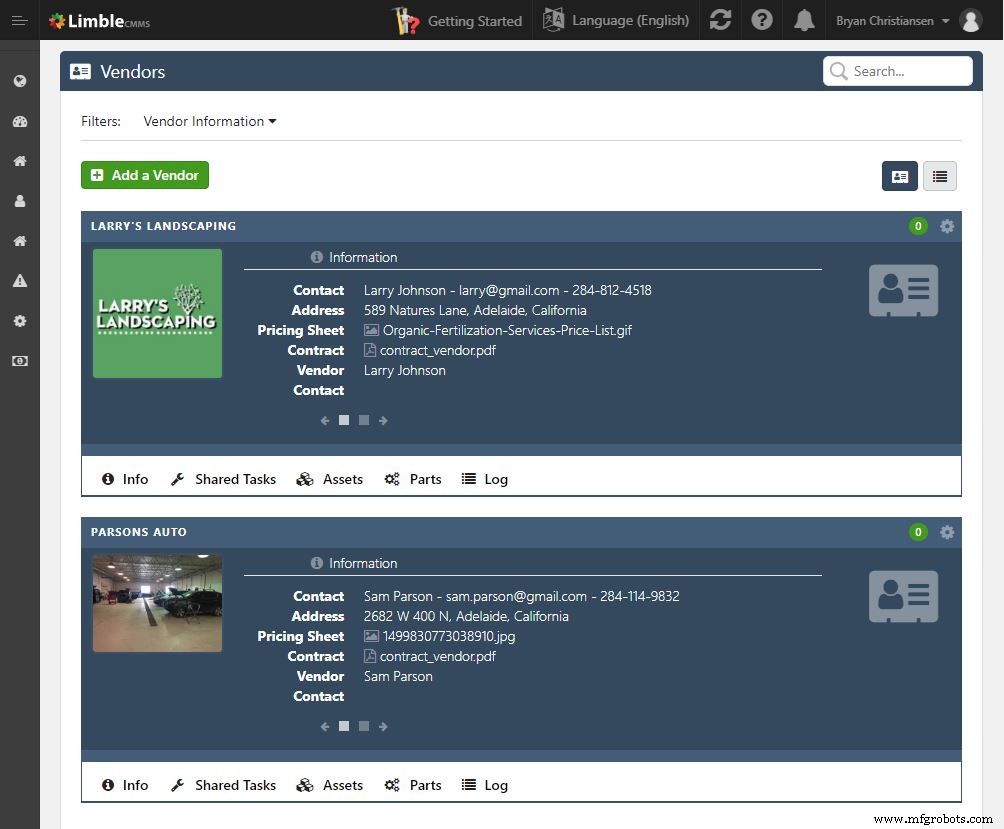
With this visibility, facility managers can confidently track spend, evaluate performance, and ensure contractual compliance.
Discover more about Limble’s vendor management capabilities here. For further questions, feel free to start a conversation in the comments.
Equipment Maintenance and Repair
- Expert Contract Maintenance Services: Boost Efficiency & Reduce Downtime
- Modernizing Facilities Management: Key Trends for a 40% Construction Growth
- Optimizing Maintenance Contracts: Long‑Term Strategies for Reliability
- Contracting Maintenance: When to Outsource and When to Keep It In-House (Part I)
- Reliability and Safety: A Symbiotic Path to Operational Excellence
- Lockheed Martin Secures $126M U.S. Army Contract for RF‑ITV Operations and Maintenance
- Enhancing Operations‑Maintenance Collaboration for Superior Manufacturing Outcomes
- How to Build an Efficient Maintenance Work Request System
- Comprehensive Guide to Automatic Bar Feeders: Features, Benefits, and Best Practices
- Robotic Workcells Unveiled: Design, Options, and Benefits